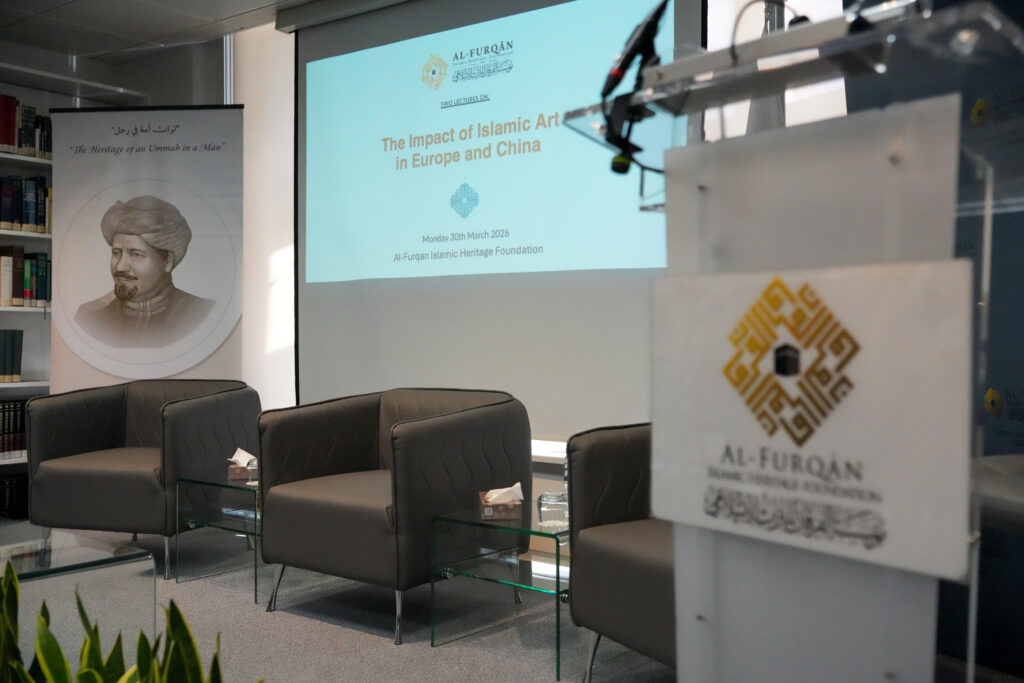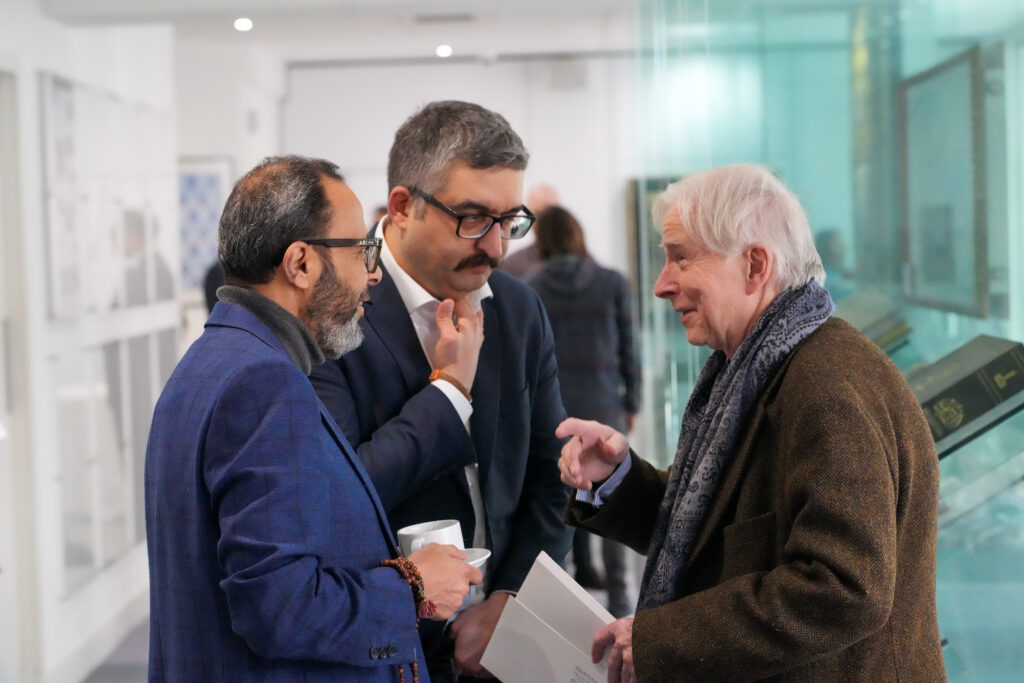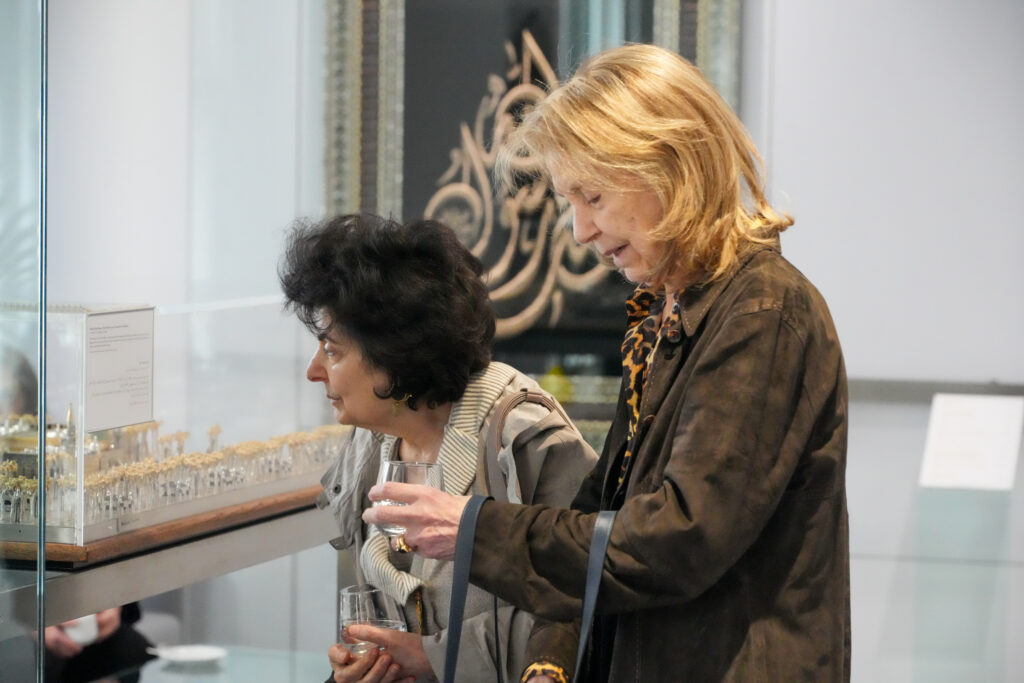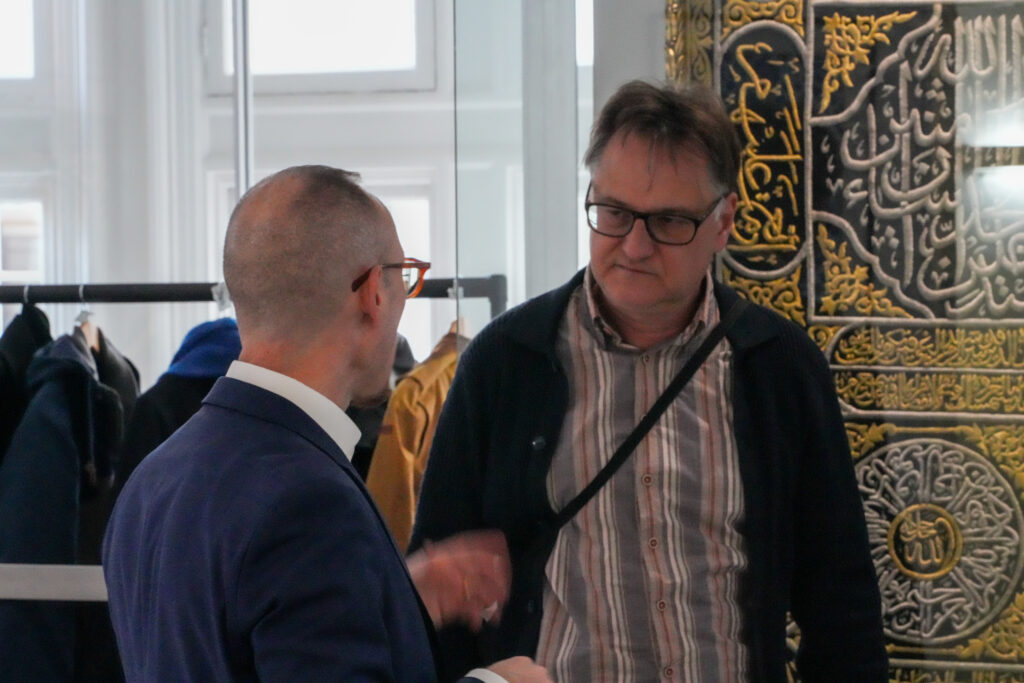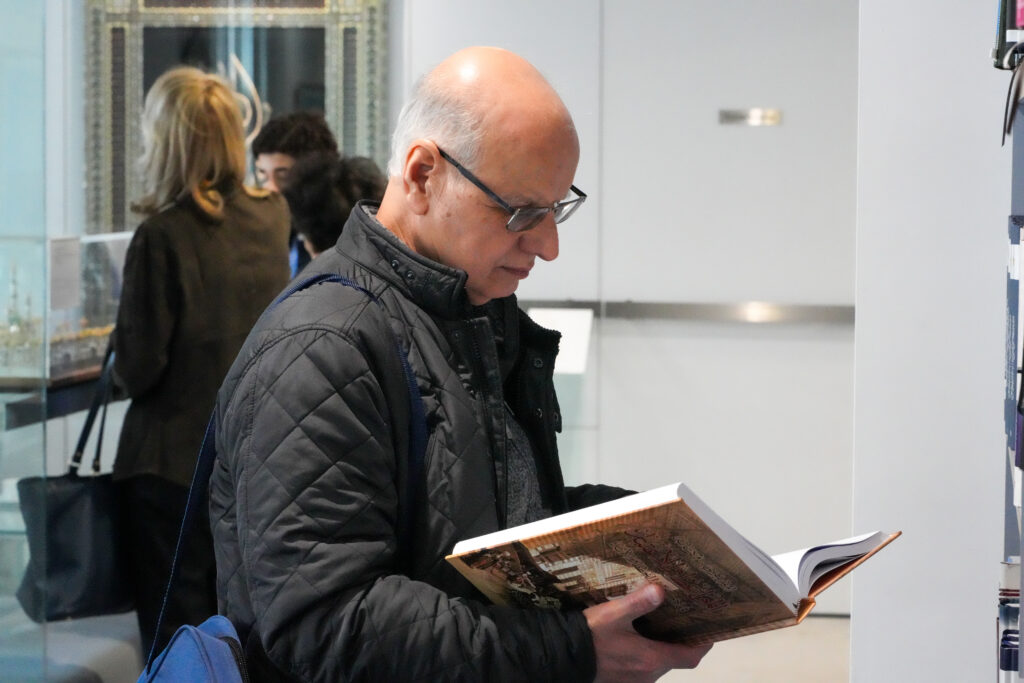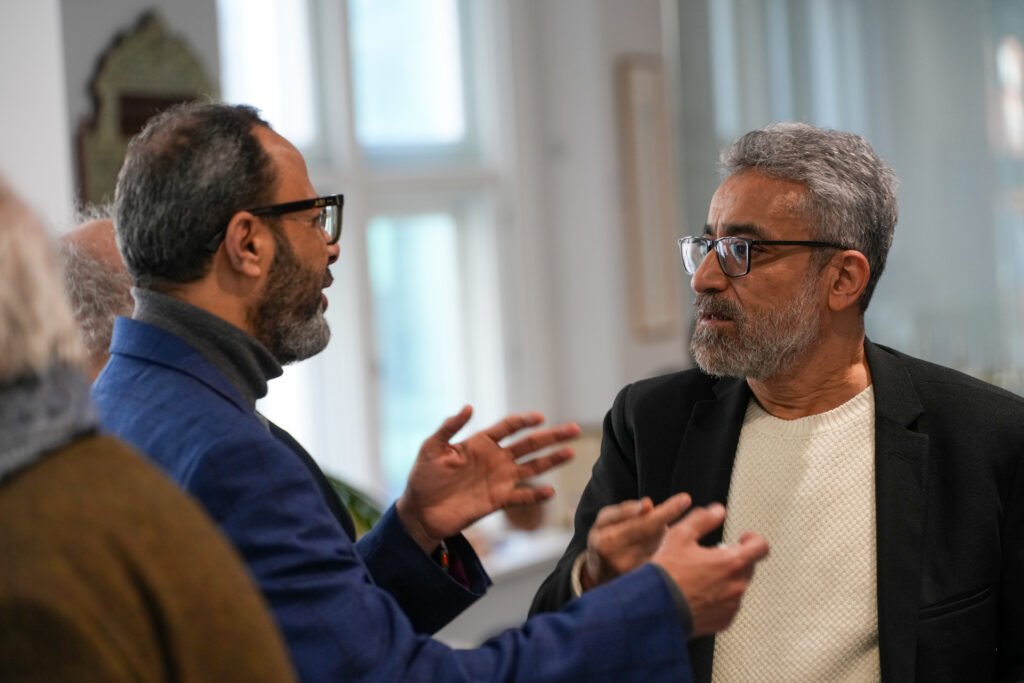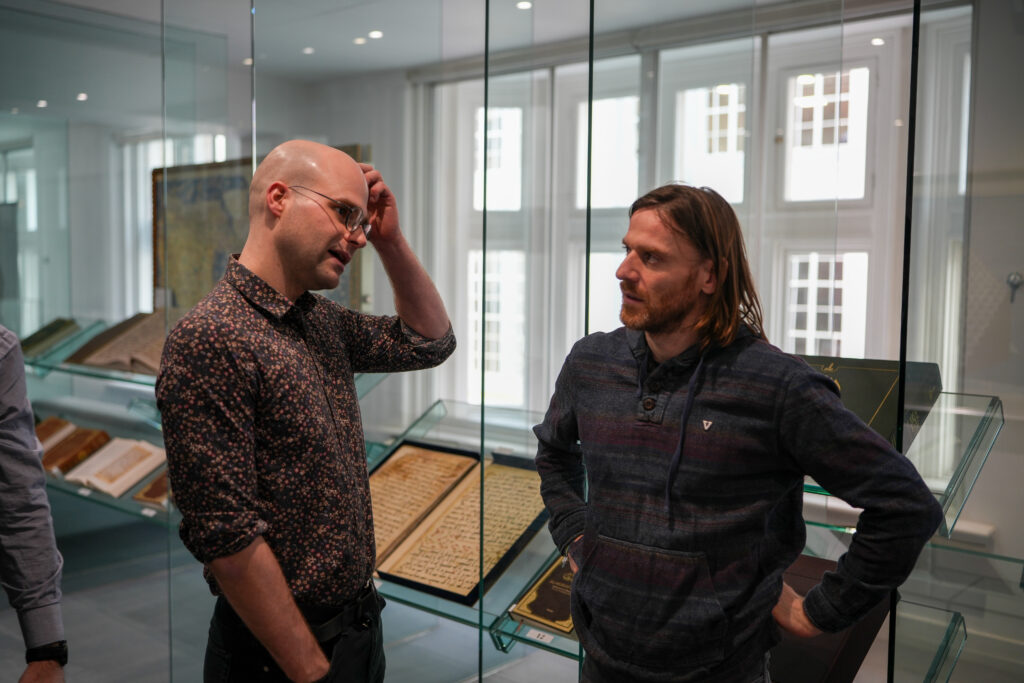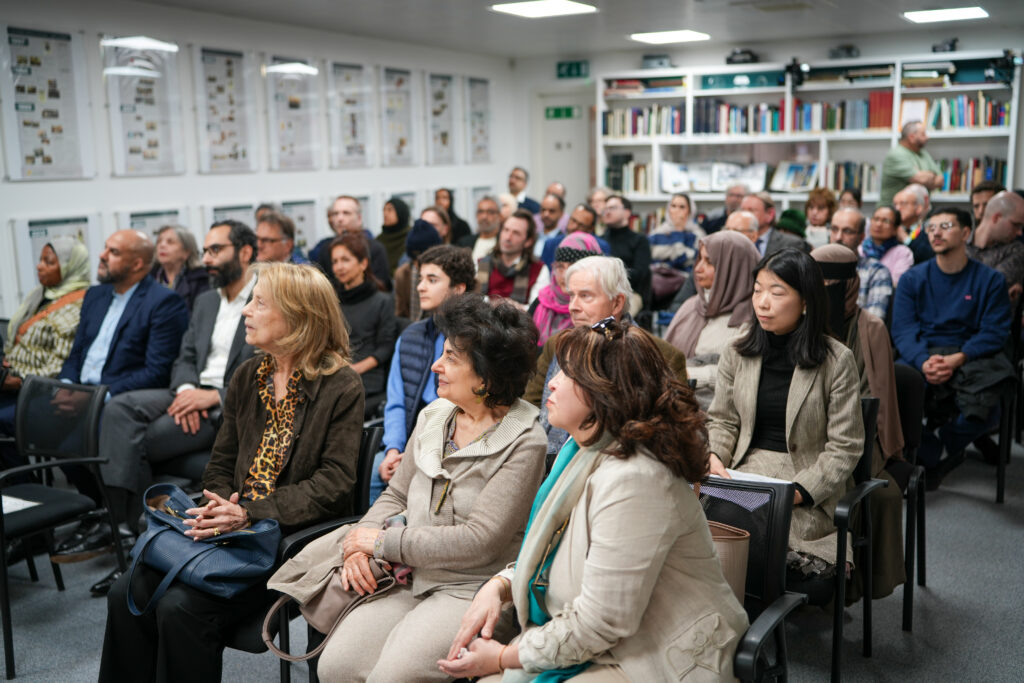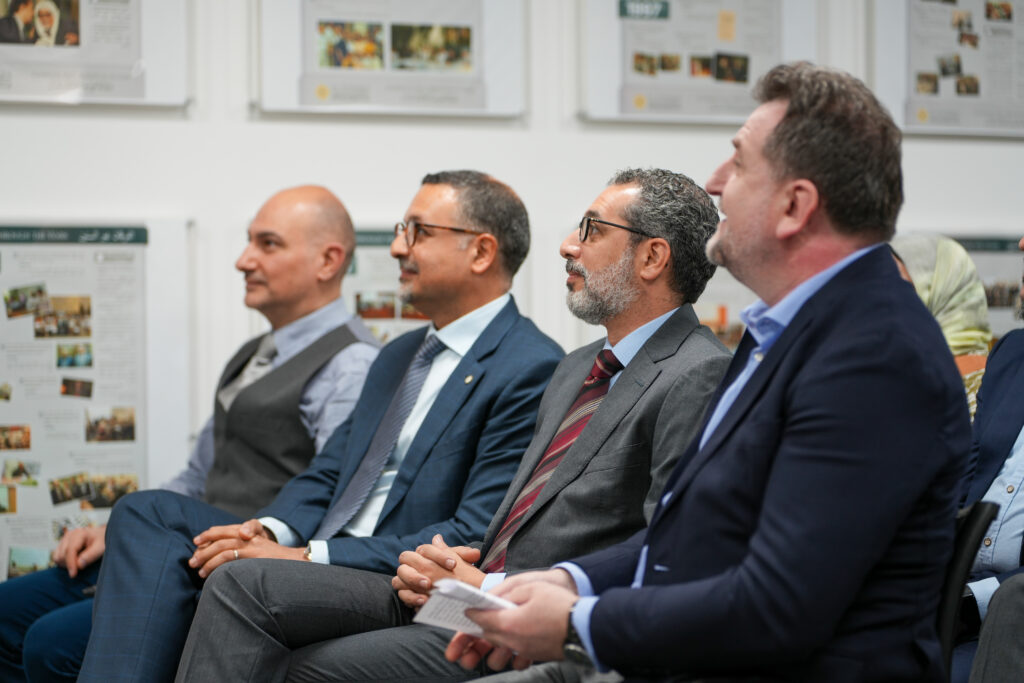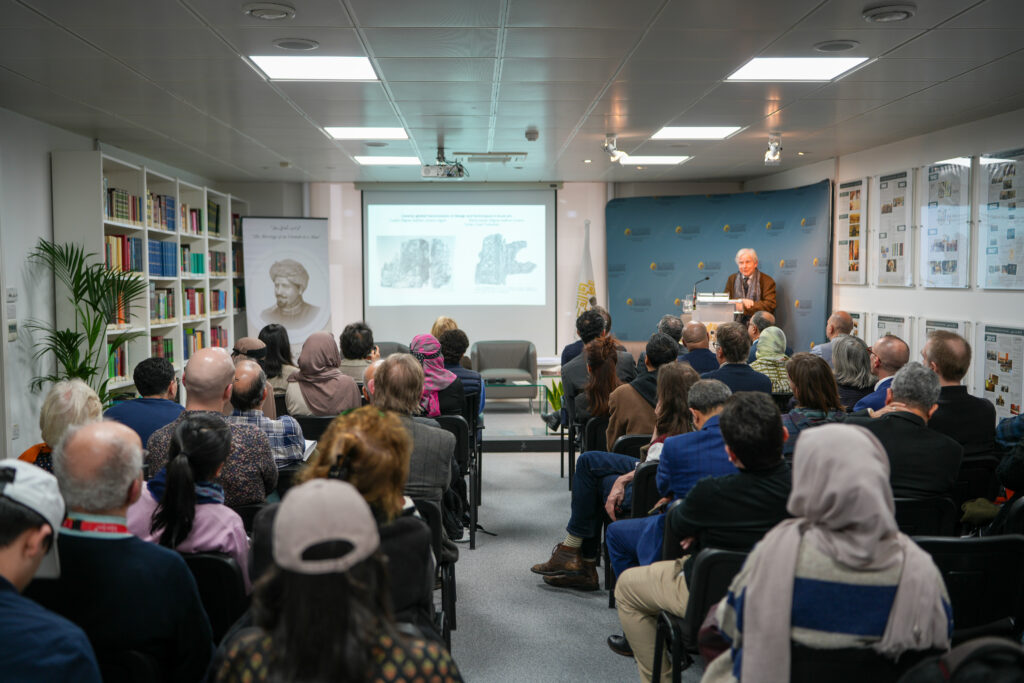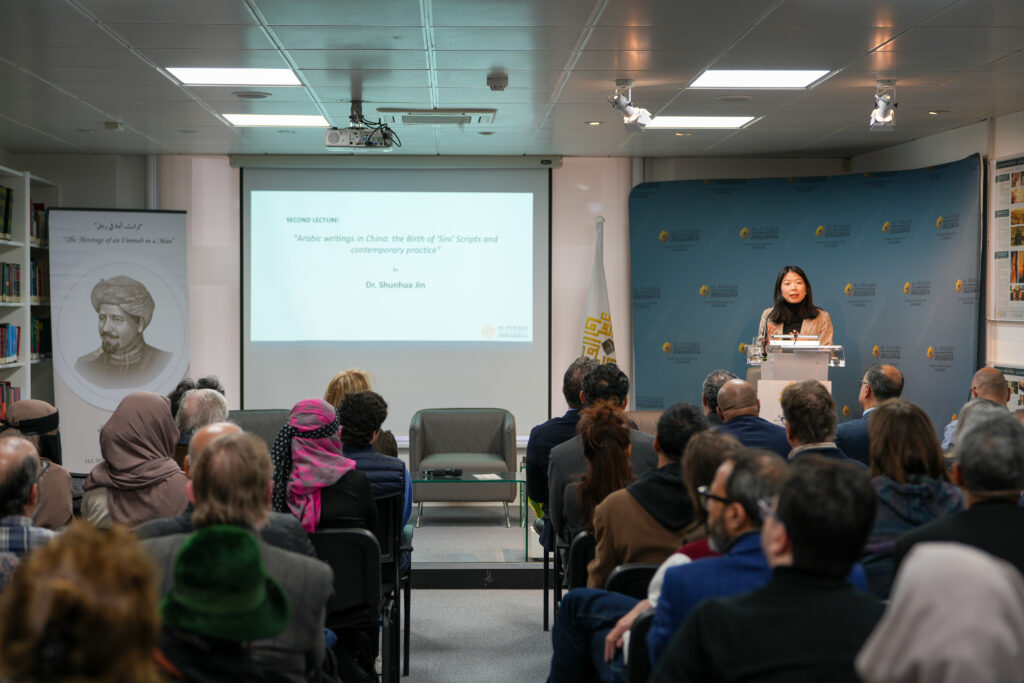

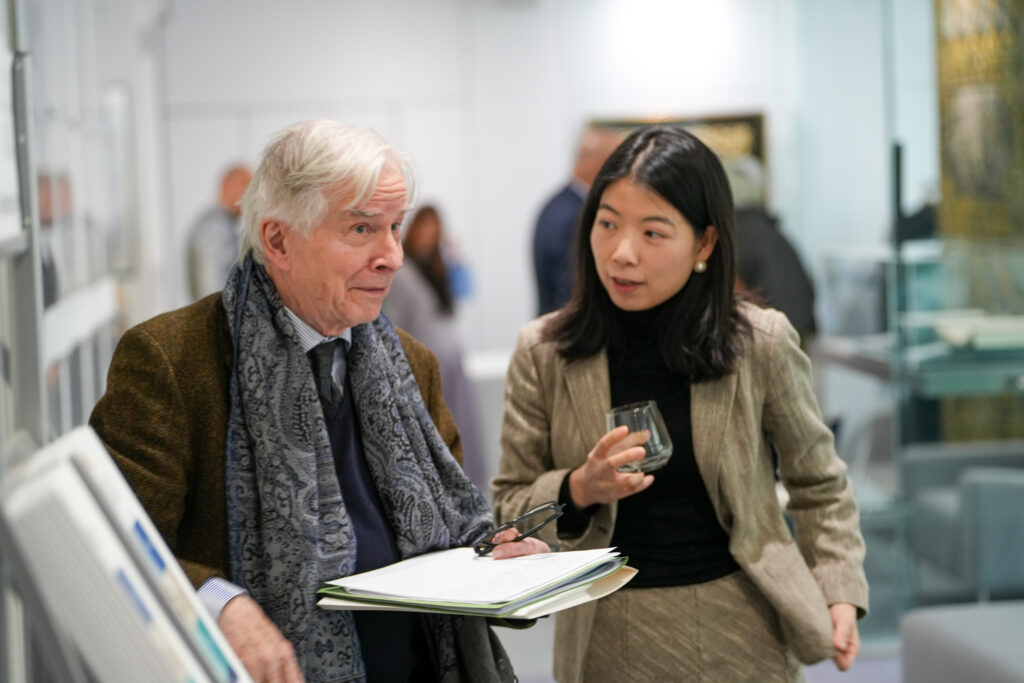
Al-Furqan Islamic Heritage Foundation organised a public event under the title "The Impact of Islamic Art in Europe and China", on Monday 30th March 2026. The event comprises two lectures: the first was entitled "A Successful Islamic Impact on European Aesthetics: Structures and Techniques of Book Cover Design Since the 15th Century", delivered by Prof. Claus-Peter Haase; while the second was entitled "Arabic writings in China: The Birth of 'Sini' Scripts and contemporary practice" delivered by Dr. Shunhua Jin.
Mr Sali Shahsivari, the Managing Director of Al-Furqan, noted that the lectures have followed a recent trend by the Foundation to organise lectures that focus on the topic of Islamic art and architecture, its global reach and influence. He gave a brief introduction of the two lecturers: Prof. Claus-Peter Haase, who has been honorary professor of Islamic Art and Archaeology at Freie Universität Berlin since 2004 as well as Director of the Museum of Islamic Art, Berlin (2001-2009); and Dr. Shunhua Jin, who is an Alexander von Humboldt Postdoctoral Fellow at the Museum für Islamische Kunst, Staatliche Museen zu Berlin (2024–2026).
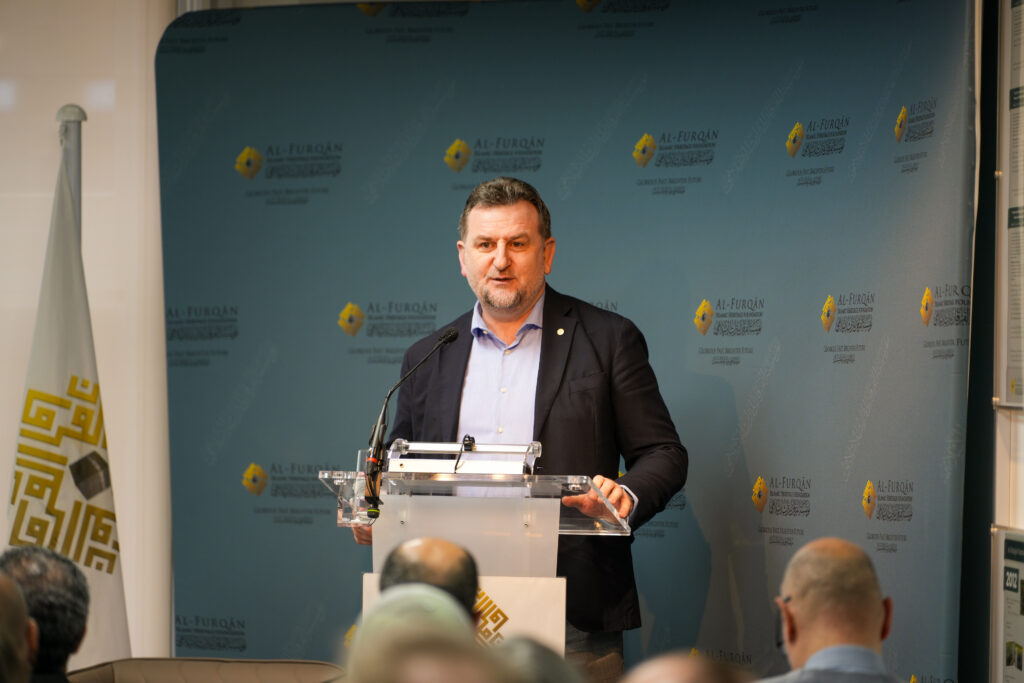
In his opening remarks, Mr. Sharaf Yamani, Chairman of the Board of Directors of Al-Furqan Foundation, welcomed the lecturers and attendants. He said: "At Al-Furqan, our work is guided by a simple but important conviction, that the intellectual and artistic heritage of the Islamic world forms an essential part of the broader history of human civilisation. For almost four decades, the Foundation has worked to preserve, to study, to promote, to bring to light the rich written heritage, through our publications, our manuscript studies and cataloguing efforts and our public lectures, as we have tonight."
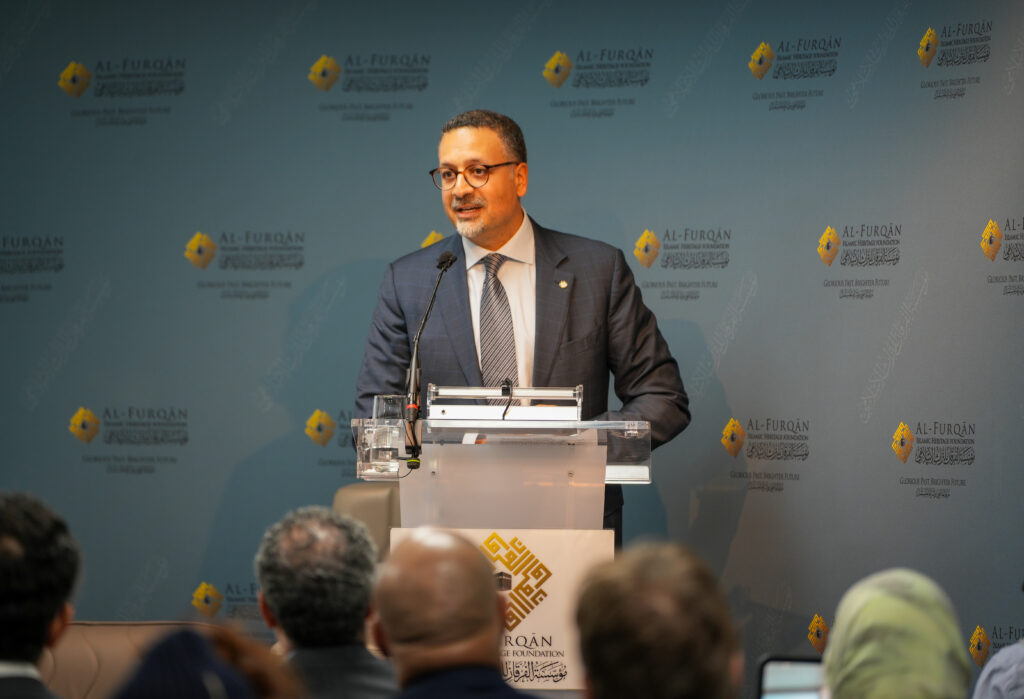
Mr. Yamani added: "In doing so, we are constantly reminded that the knowledge that we see does not develop in isolation. It travels across regions, languages and cultures. And when we look closely at manuscripts and books, we begin to see traces of exchanges that connect societies far beyond its origins…We are also reminded that the history of civilisation is not a one-way story; Islamic scholarship itself grew in conversations with earlier civilisations, absorbing knowledge from Greek, Persian, Chinese and Indian traditions. And those ideas were studied, expanded, and refined, and in time travelled outward, shaping other societies in return. When we study history carefully, we begin to see the constant ebb and flow of knowledge across generations and cultures."
FIRST LECTURE:
In his lecture, Prof. Claus-Peter Haase discussed the impact of early Islamic book art on European manuscripts and prints, which have more recently been studied under new aspects. Especially since the early 15th century through to the 19th Persian, Mamluk and Ottoman illuminations and motifs were introduced in waves. At first, Italian ateliers had the chance to get to know new developments in Islamic manuscripts through the intensive trade of Venice and other mercantile cities in the Eastern Mediterranean. In the high quality artisanate, new techniques of tooling and gilding the ornaments on leather and using filigree cuttings with textile and paper infills spread all over Europe.
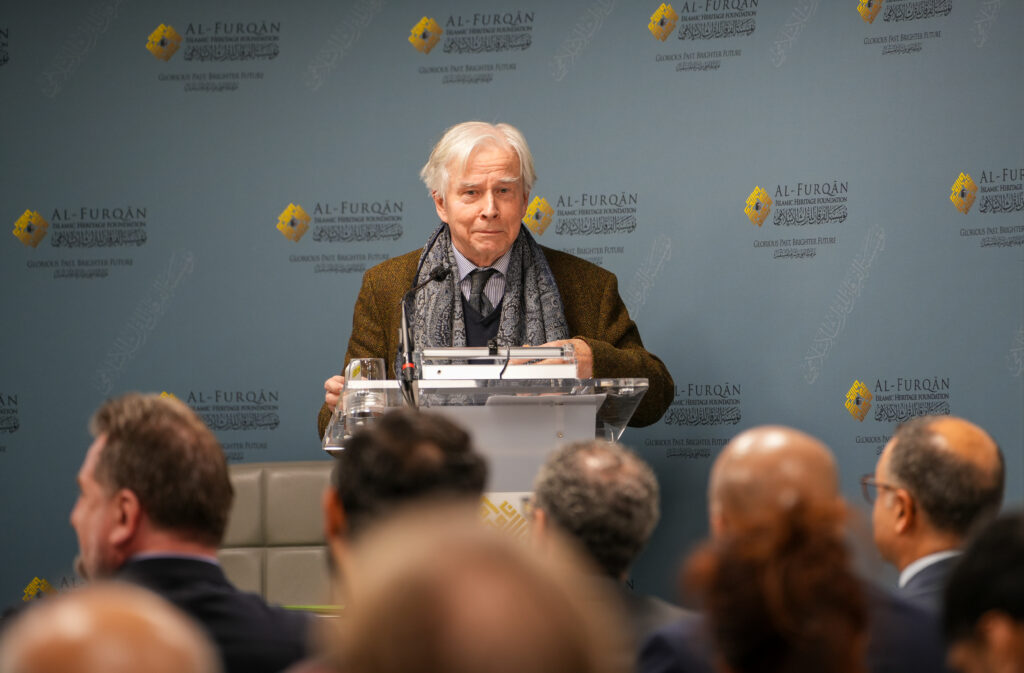
The Eastern elements continued to be developed slowly into the baroque and finally in the 19th century into the historicist styles. It wasn’t until the 18th century that a turnaround occurred in the style movement, and some European motives appeared in the so-called Ottoman Baroque book art. No matter what texts were bound in these exclusive boards – the Bible, prayers, antique authors and contemporary poetry – they were embellished by some of the most typical Islamic geometric or vegetal ornaments, sometimes combined with others and in different composition, but often coming very close to the originals (except for the flap or tongue of Islamic covers which was never used in the West).
SECOND LECTURE:
In her lecture, Dr. Shunhua Jin noted that the term Sini (al-khaṭṭ al-ṣīnī) is widely used to describe Arabic calligraphy produced in China, yet its status as a geographical label or an aesthetic category shaped by Chinese calligraphic practice remains unsettled. She discussed the various historical phenomena of Arabic writing in China proper, including epigraphy, manuscripts, and inscriptions on objects. She then identified and compared the two main traditions of Arabic calligraphy in China. The first is the manuscript tradition, which includes Quranic and other Islamic manuscripts. The second is Arabic writing found mainly inside mosques, relating to the calligraphic practice of contemporary Chinese Muslims.
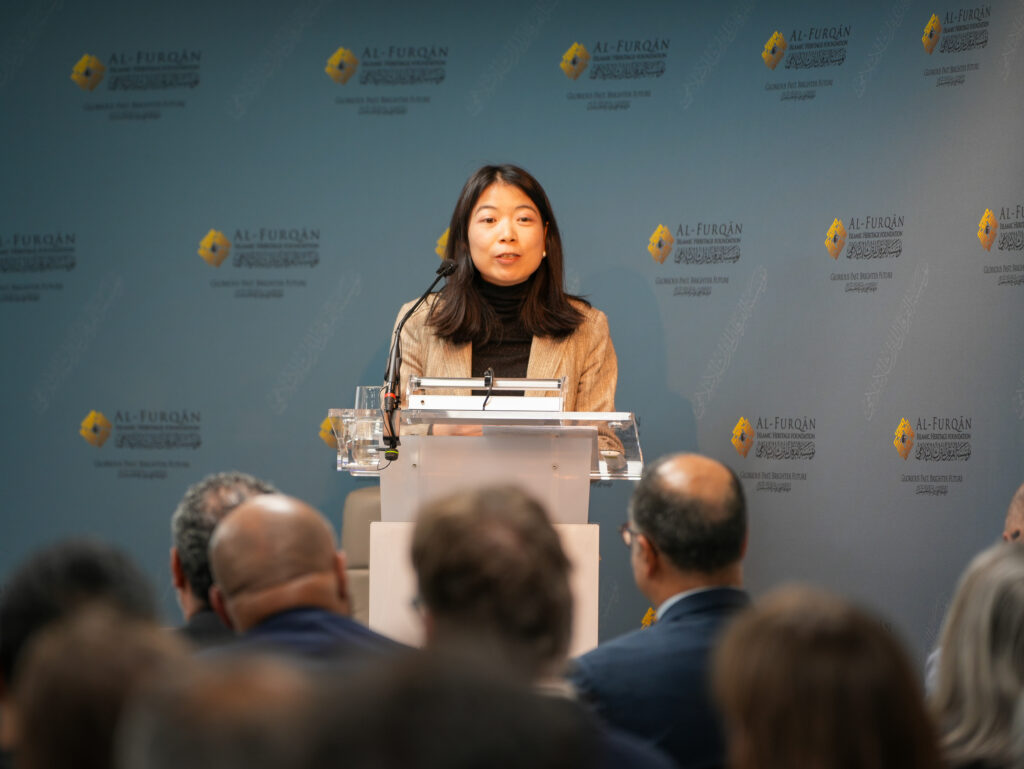
The lecturer posed a number of questions: How can we devise an analytical model to understand the connection between these two traditions? How do Chinese writing materials, such as paper and brush, affect the writing of Arabic in China? Have the concepts of Chinese writing, such as pictography, played a role in the aesthetics of 'Sini' scripts? She argued that Chinese Muslim scribes engaged in a dynamic negotiation between textual transmission and aesthetic refinement, adapting Arabic writing to diverse cultural contexts and material environments.
At the end of the second lecture, the audience was invited to put their questions or comments to both lectures during a period of discussion.
The event concluded with closing remarks by Mr. Shahsivari.