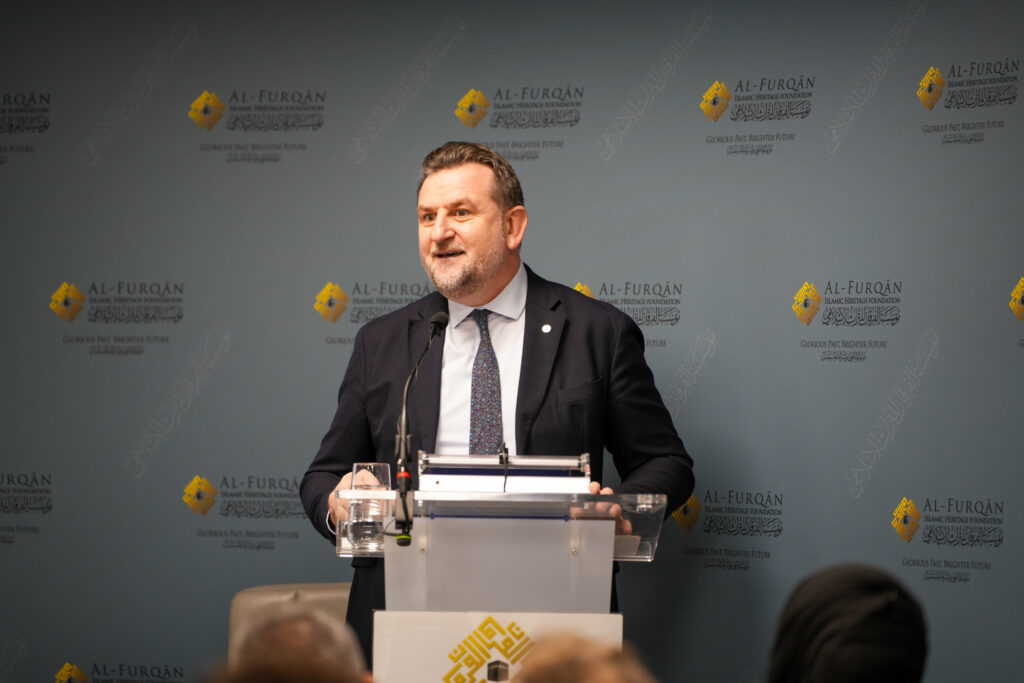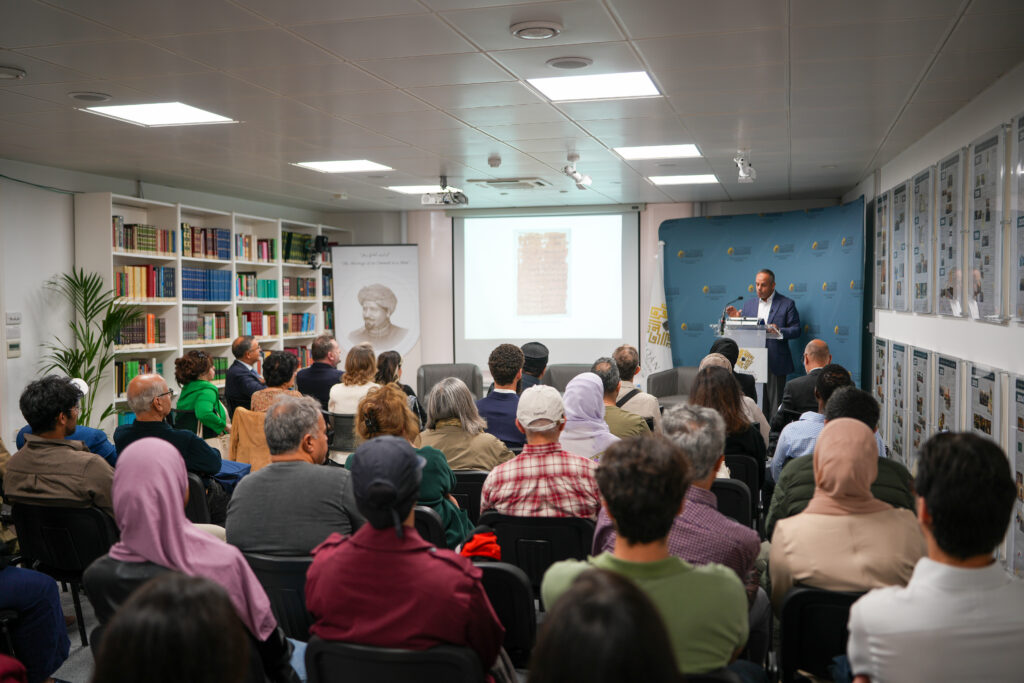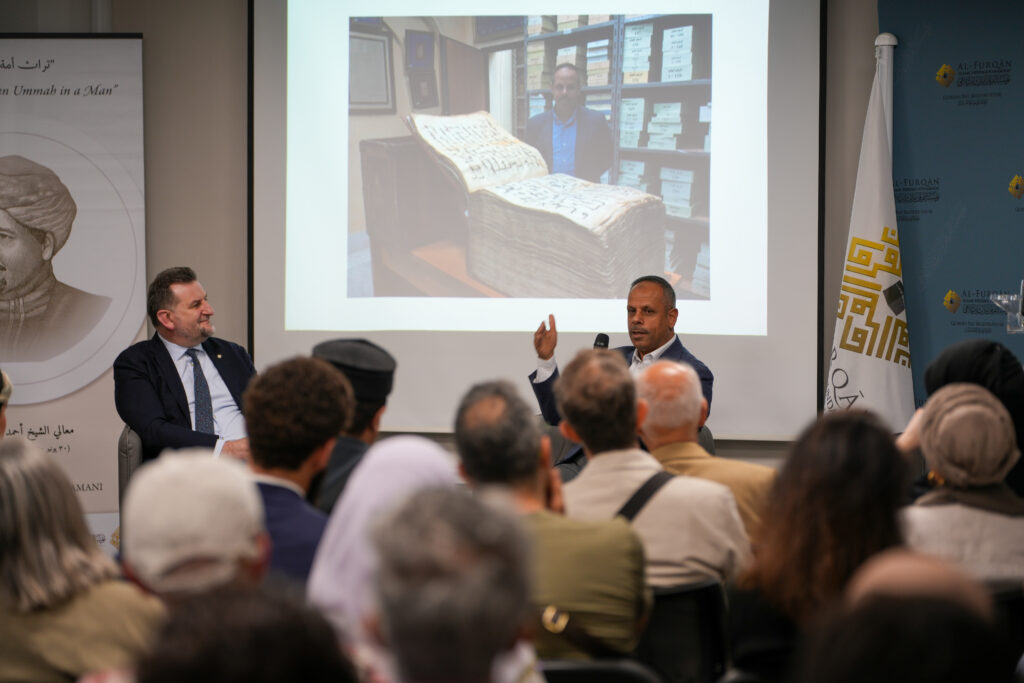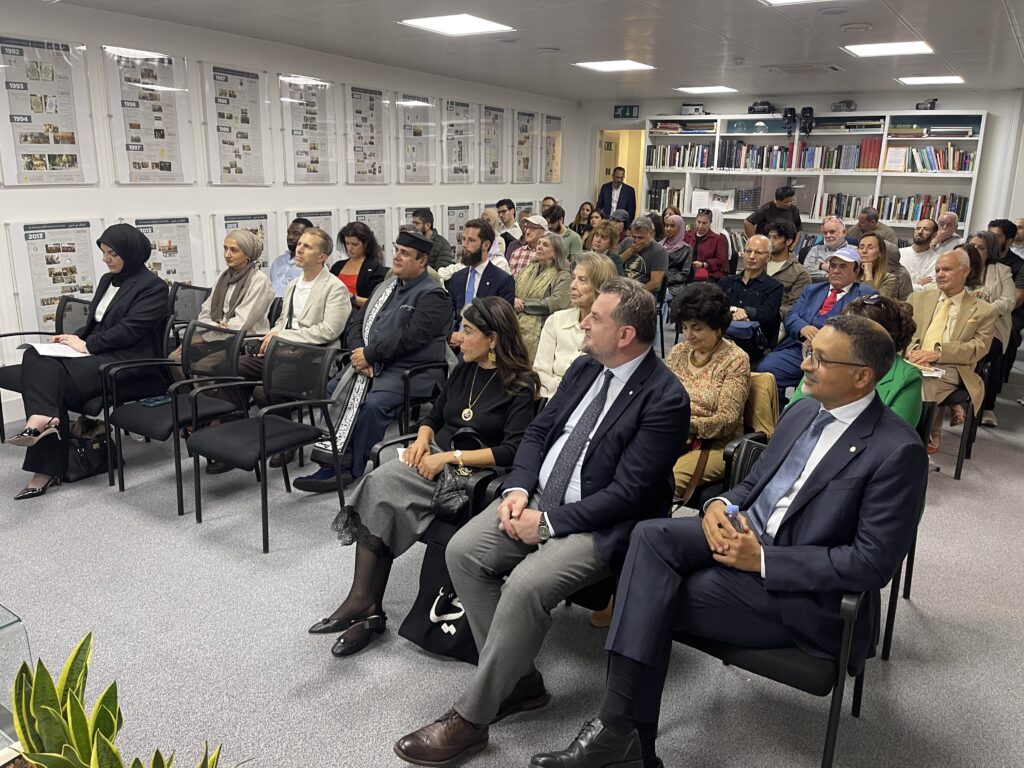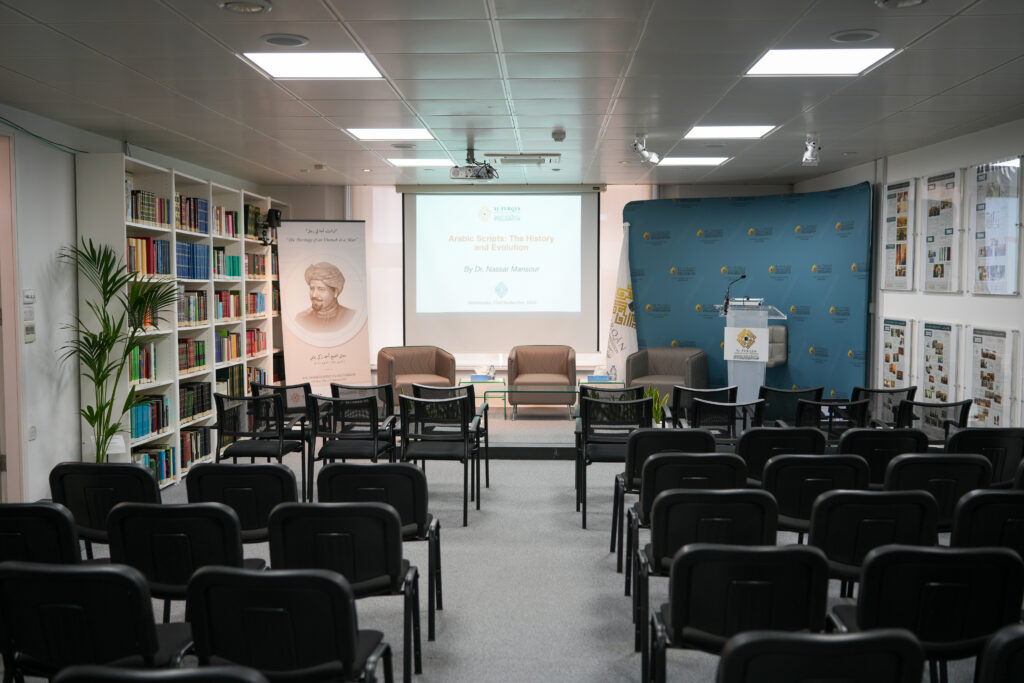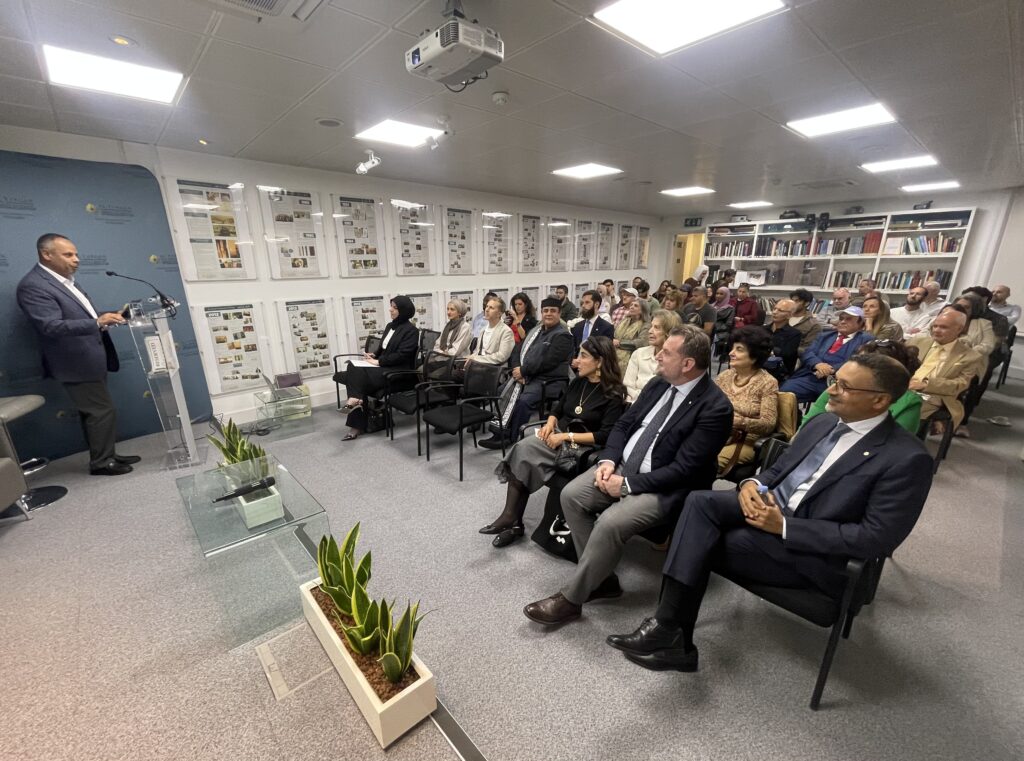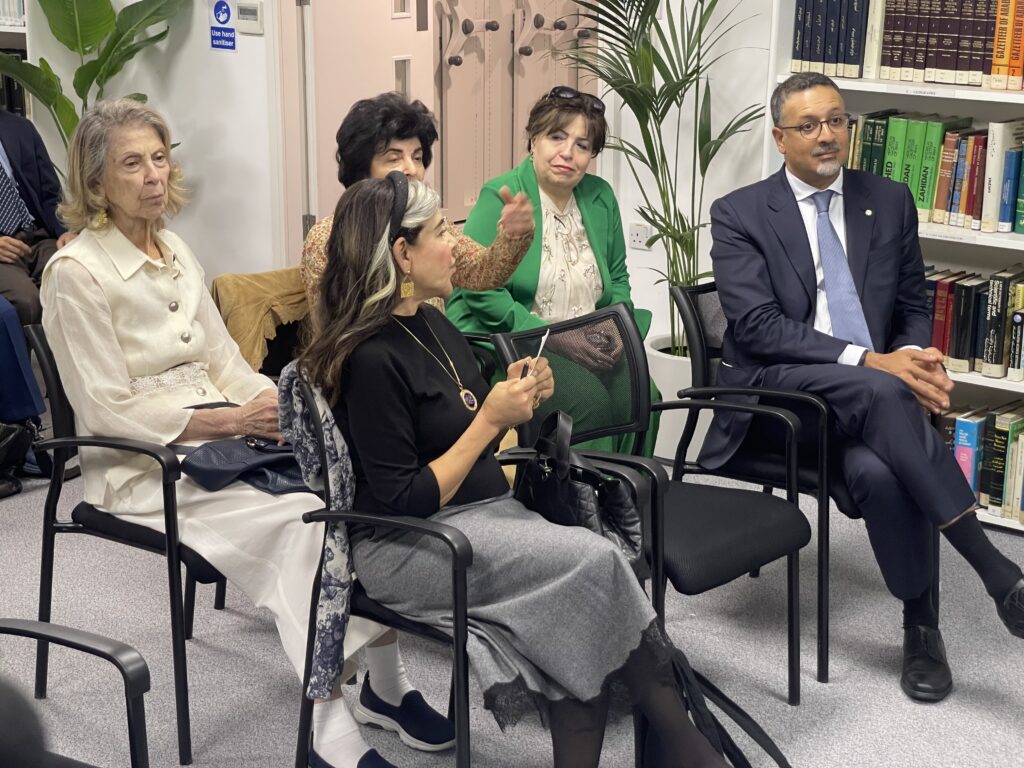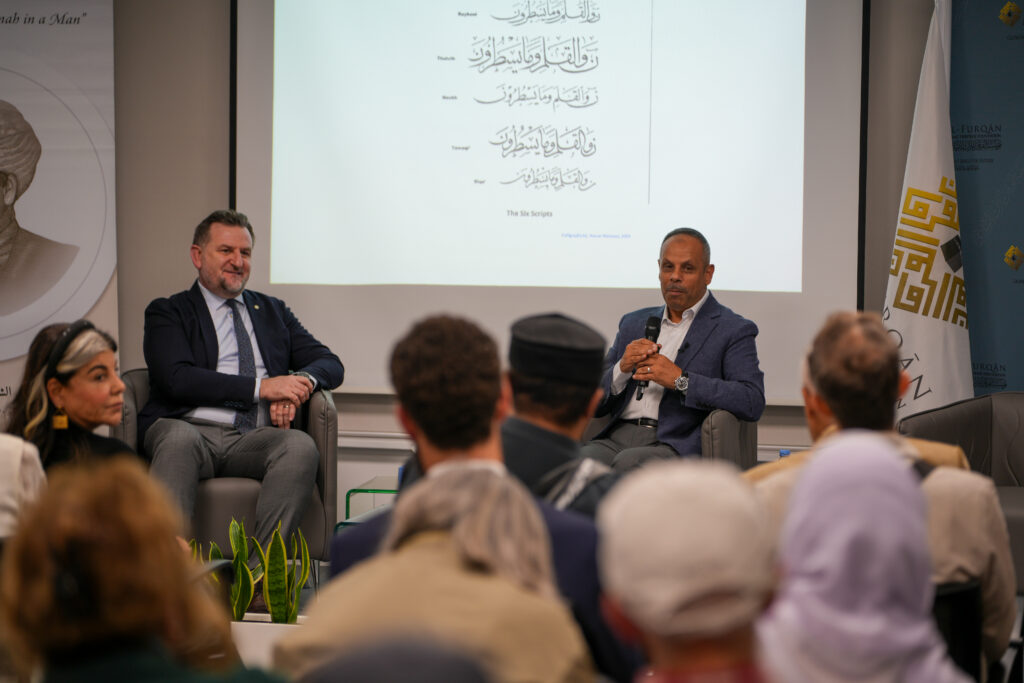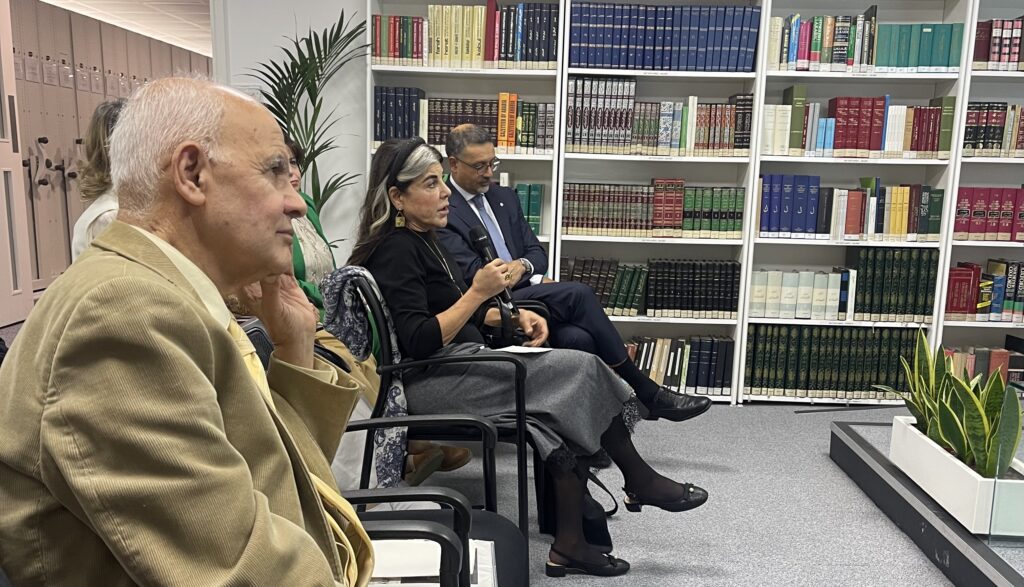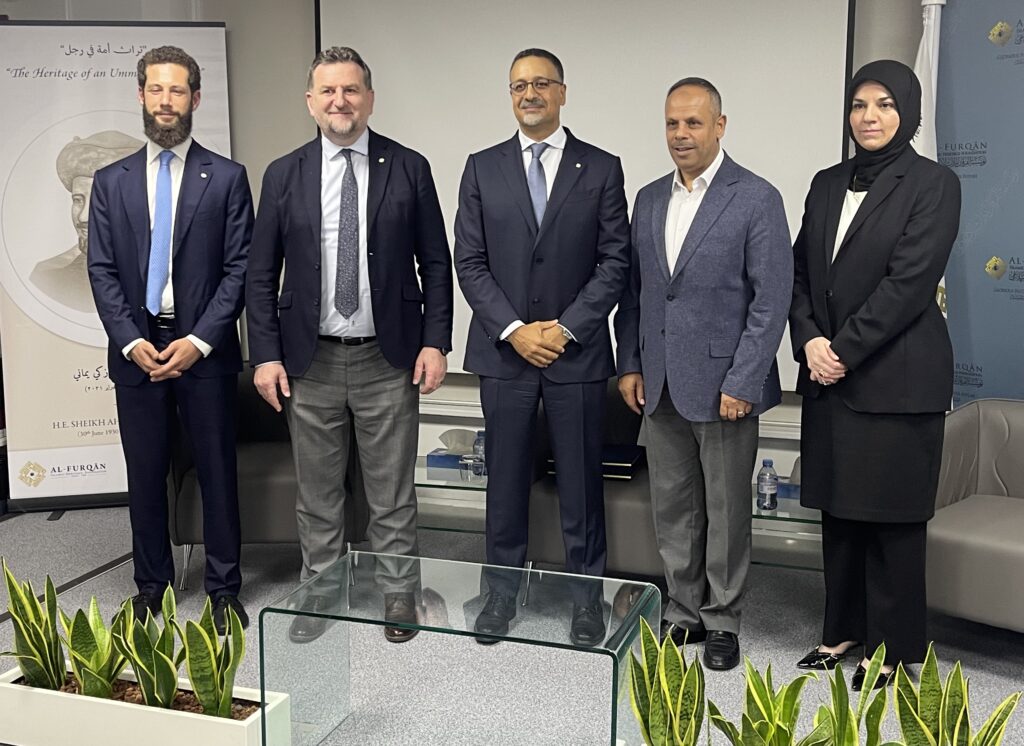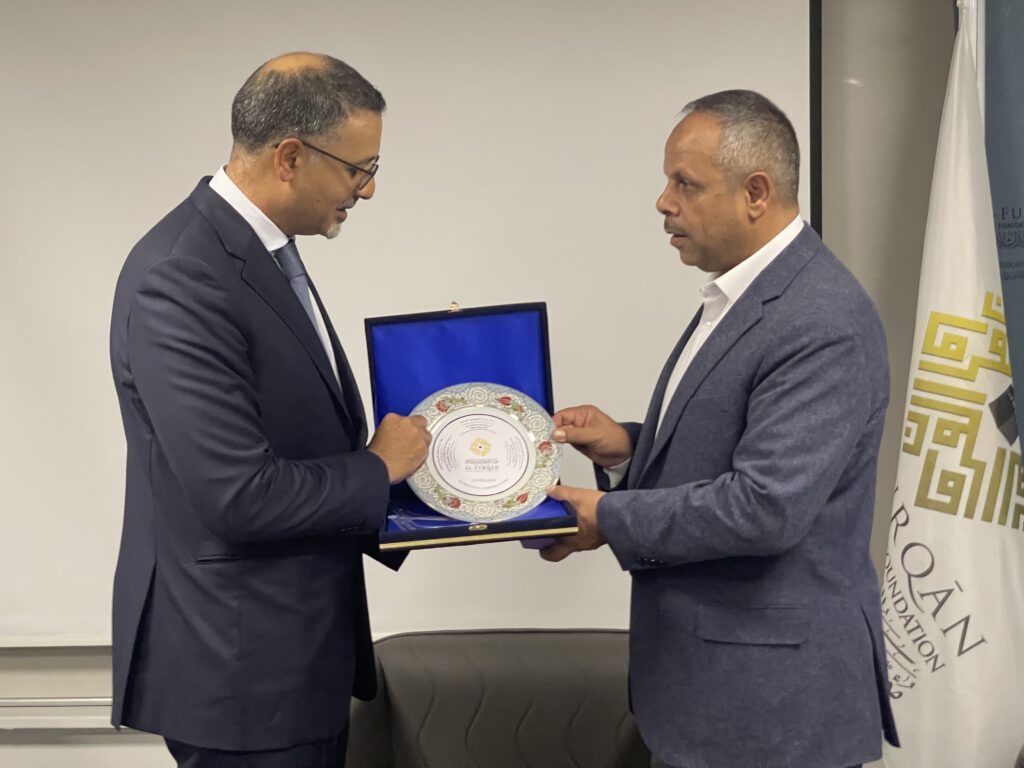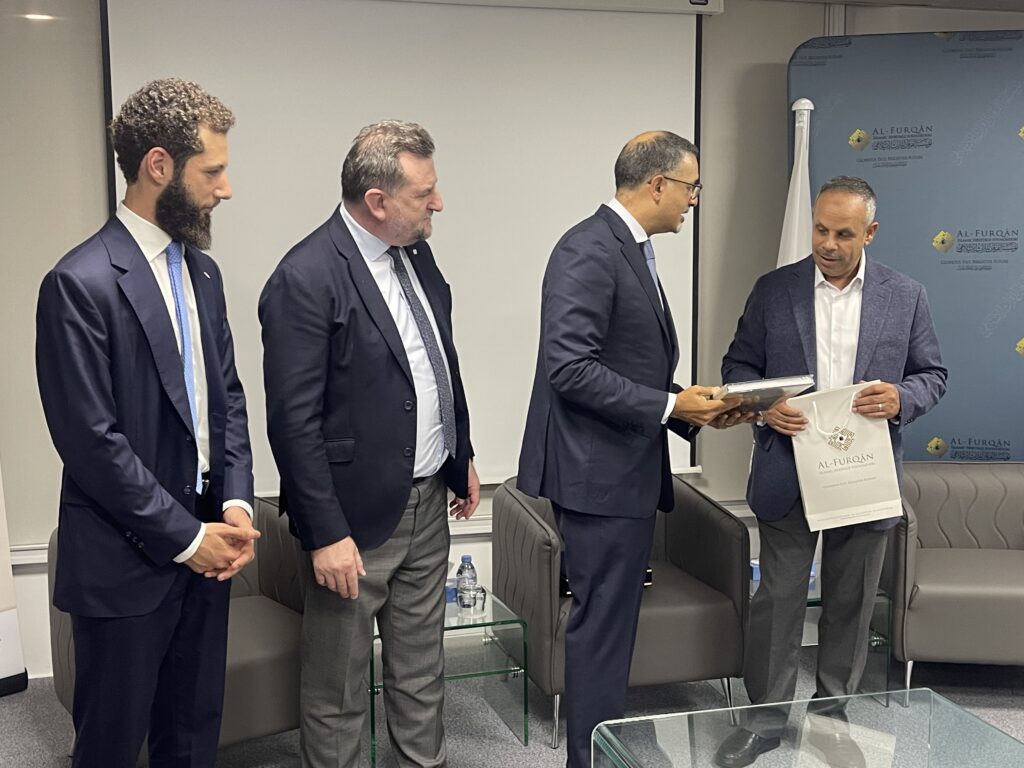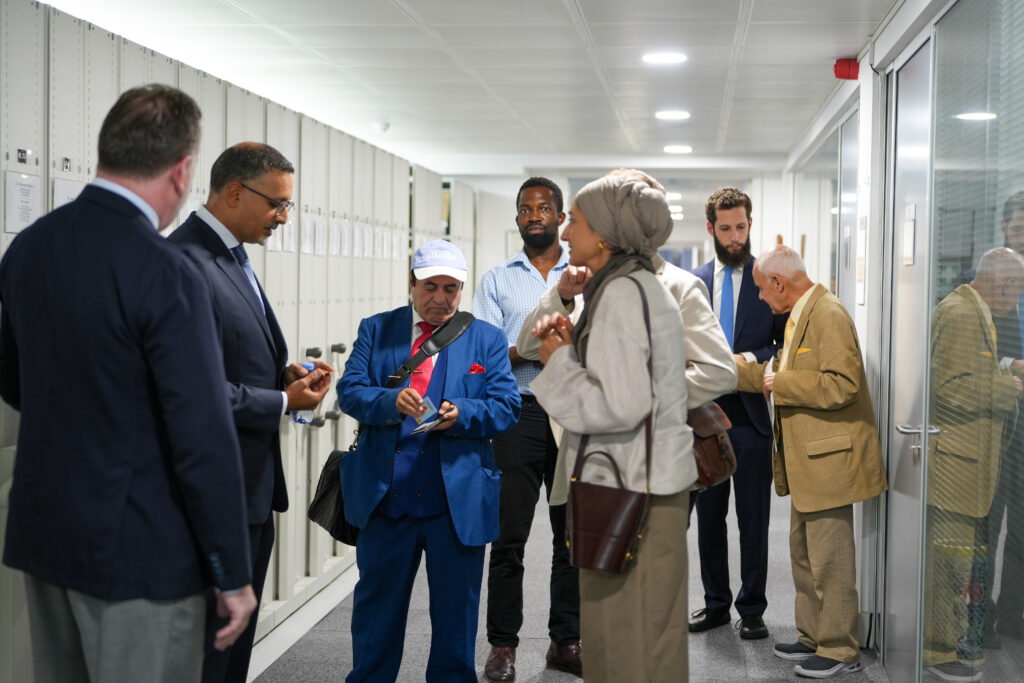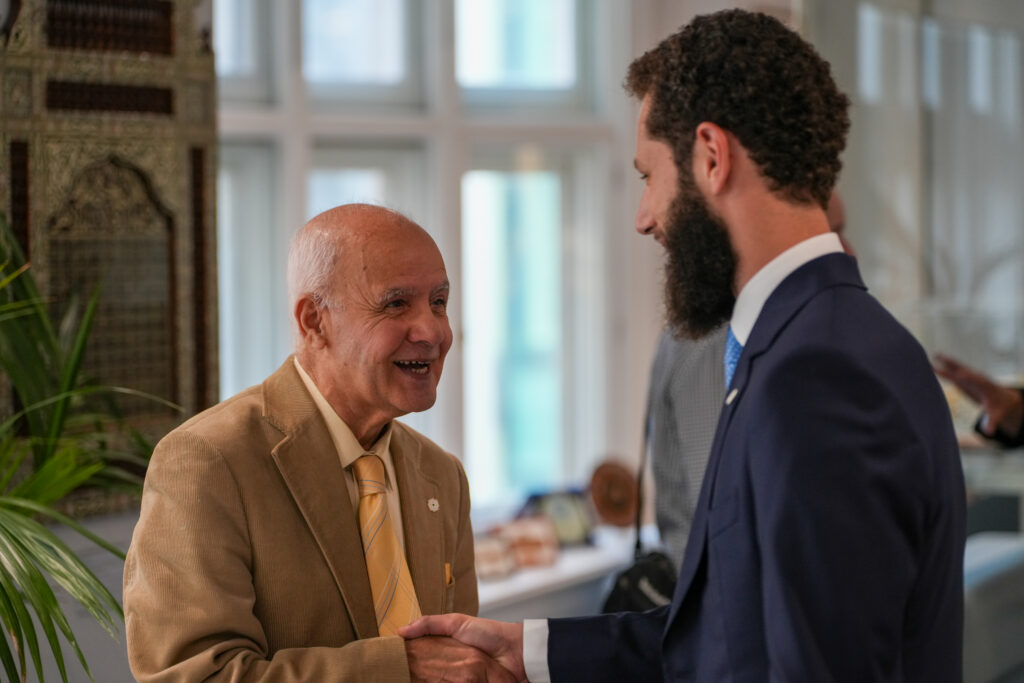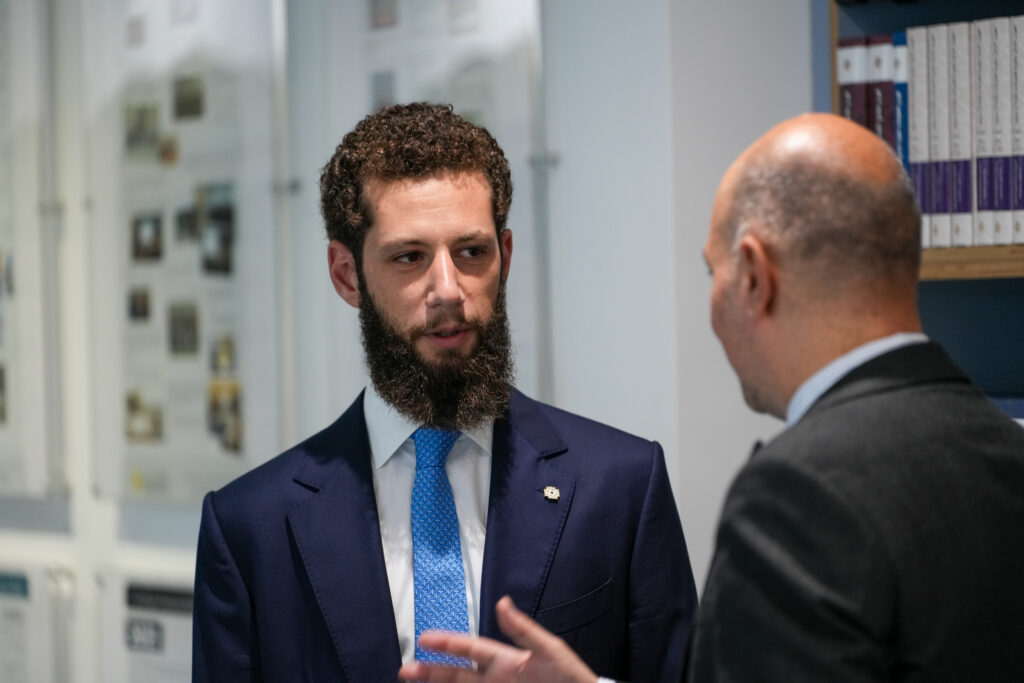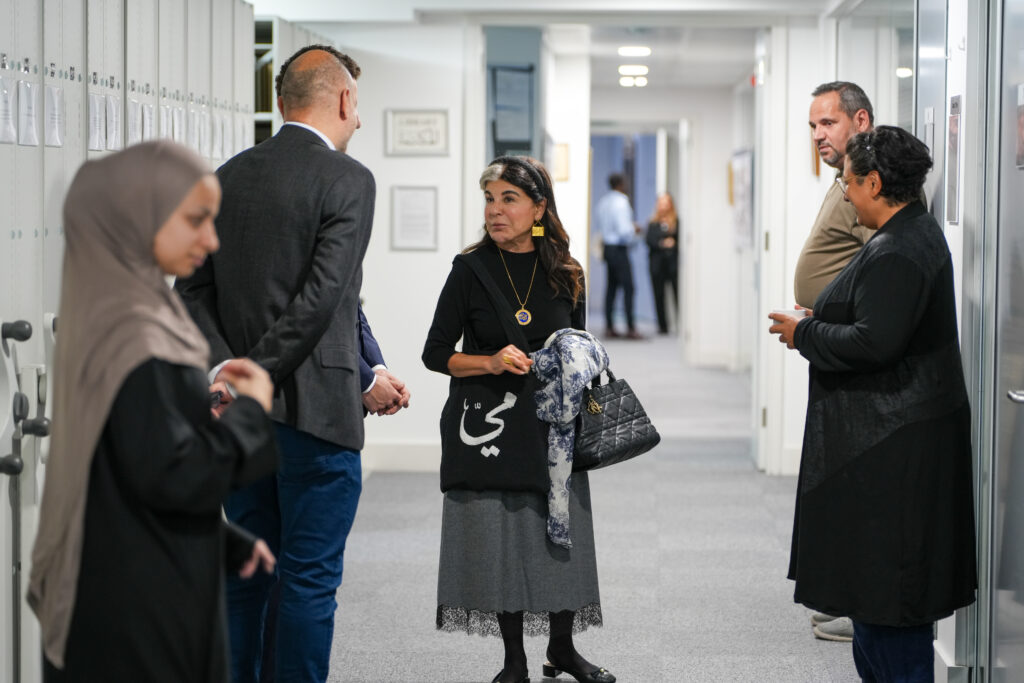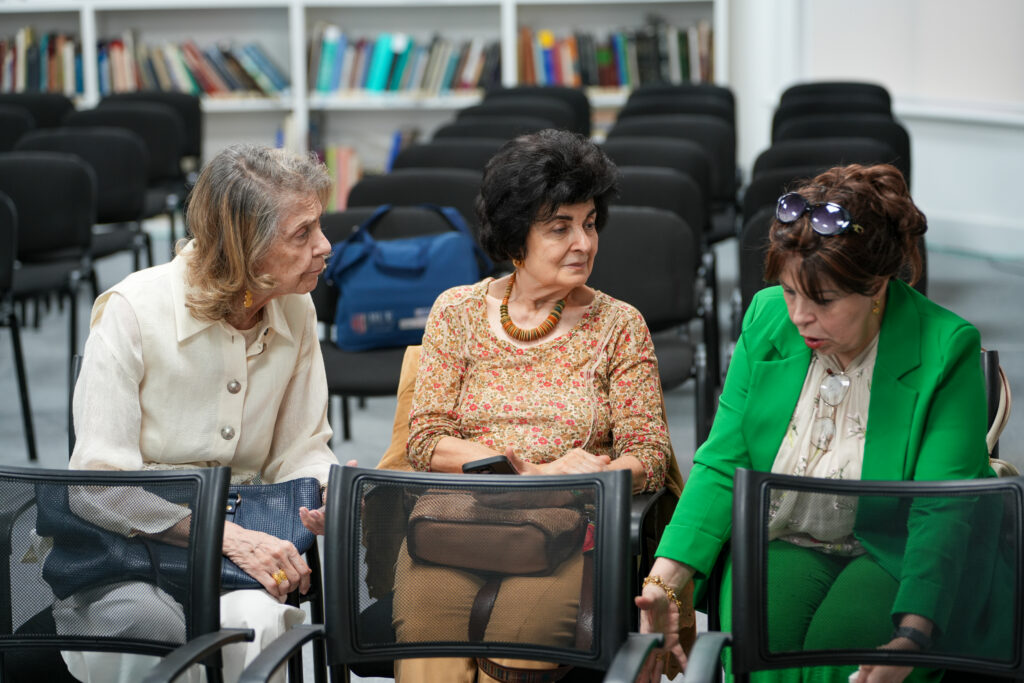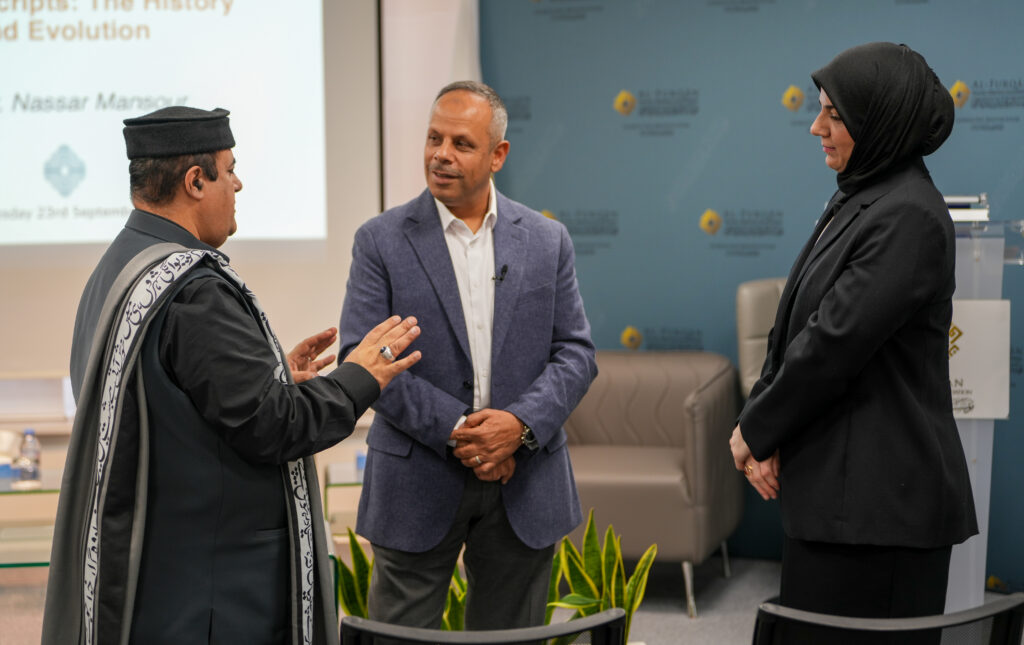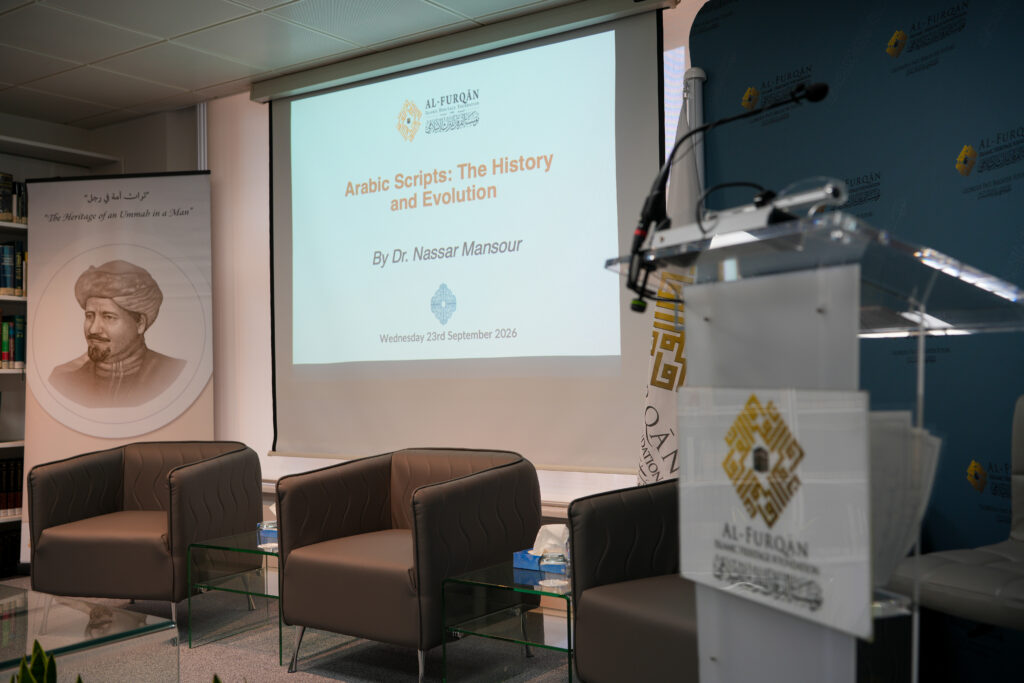

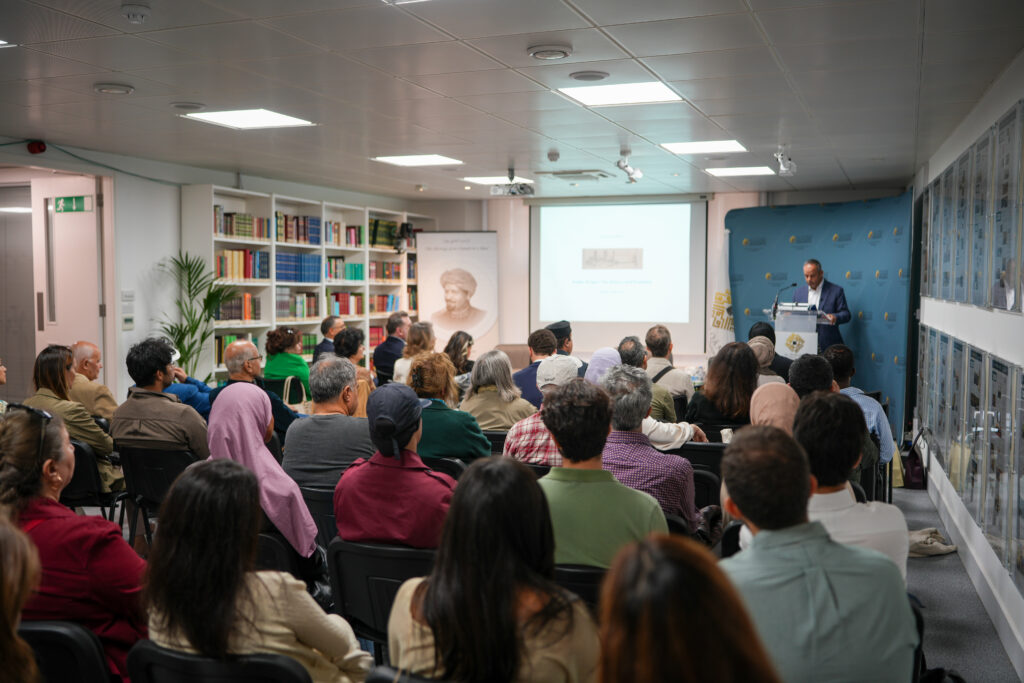
Within the series of Al-Furqan London Lectures on Islamic Heritage, Al-Furqan Islamic Heritage Foundation hosted a lecture entitled "Arabic Scripts: The History and Evolution", delivered by Dr Nassar Mansour, a scholar and practising Arabic calligrapher specialising in the history and development of Arabic calligraphy and Qur’anic manuscripts. The lecture took place on Wednesday, 23 September, 2026, at the Foundation's headquarters in London.
In his opening remarks, Mr Sharaf Yamani, Chairman of Al-Furqan Foundation, after welcoming the lecturer and attendants, noted that the “script is not just a decoration on the surface of our heritage. It is the vehicle that carried it.”
“That story begins long before the great calligraphic traditions we recognise today,” said Mr Yamani. “Its earliest chapters are written in stone (literally) — in Arabic inscriptions scattered across Arabia, some of which are being uncovered and studied today in Saudi Arabia, at AlUla, Ḥimā, Jabal Ikmah and elsewhere,” he added.
“With the coming of Islam, and above all through the copying of the Qur’ān, Arabic writing took on a new importance. It became not only a means of recording language, but a vehicle for preserving and transmitting revelation — and, over time, one of the great art forms of Islamic civilisation,” explained Mr Yamani.
Highlighting the efforts of the Foundation in this regards, Mr Yamani said: “Here at the Al-Furqan Islamic Heritage Foundation, for nearly four decades, we have gone looking for what those hands left behind — surveying manuscripts wherever they survive, cataloguing them, studying and publishing them, and now bringing them into the digital age, so that scholars and researchers everywhere can access them.”
He added: “But before we can understand a manuscript, we must first learn to read the hand that made it. Read a script correctly, and it gives up its secrets — where it was made, when, and in whose circle. Read it wrongly, and centuries are misplaced.”
For his part, Mr Sali Shahsivari, the Managing Director of Al-Furqan, gave a brief introduction about the lecturer and the lecture, highlighting its importance in shedding “light on a very interesting topic of Islamic heritage, i.e. the Arabic Script, which, is not only known as being the tool and vehicle that carried the God’s word (the Qur’an) and the Islamic Heritage, but a unique art as well, given the fact that the letters and the written word had never been a visual art form in any nation before the art of Arabic calligraphy in Islamic civilization.”
Lecture highlights
Dr Nassar Mansour began his lecture by examining how Arabic scripts gradually took shape from an earlier writing tradition, with particular attention to the Qur’an as the most important field in the early formation of Arabic calligraphy.
“Arabic writing existed before Islam, but with Islam its use expanded enormously, and over time it developed into an art with its own rules and systems of proportion. Different scripts and styles gradually appeared and developed. Some became major scripts, travelled to different regions, and developed further through different schools. But this was not a simple story of one script replacing another,” said Dr Mansour.
“A script could keep the same name while its forms changed; a new script could develop gradually from an older one; and old and new traditions could continue side by side,” explained Dr Mansour.
The lecture then considered the main factors that contributed to the diversity of scripts, including the different functions and needs of writing, the visual possibilities of the Arabic letter, writing tools and materials, and the individual talent of scribes and calligraphers.
“By the 9th century, Arabic writing had become genuinely diverse— a real range of scripts and traditions connected to function, size, place, or manner of execution, with scribes who built reputations around particular scripts,” said Dr Mansour.
“The question was no longer simply how writing could diversify further. It was also how all this diversity could be organised into a more coherent system: how letter proportions could be controlled more precisely, and how individual scripts could develop identities clear enough to be recognised at a glance,” he added.
The lecture then turned to the names of Arabic scripts: how these names emerged, what they referred to, and the different ways in which scripts came to be named according to place, function, size, or other characteristics.
“Scripts do not move as fixed objects— their rules, proportions, and teaching methods travel with them, and each new setting reworks the inherited tradition to suit its own tools and taste,” said Dr Mansour.
“It helps here to separate three things: a script, which keeps a general identity and basic characteristics; a school, an artistic direction that develops within that script in a given place or period; and an individual style, the particular touch of one calligrapher,” he further explained.
Finally, the lecture considered the question of identifying scripts in surviving manuscripts. Since historical sources often preserve the names of scripts without providing visual examples, while manuscripts preserve their written forms without necessarily naming them, identifying a script requires careful consideration of historical evidence, visual characteristics, and calligraphic practice.
“Arabic scripts never acquired their names through one consistent system. Some were named for a place— Makki, Madani, Basri, Kufi. Others for a function— Tawqi'at, Riqa', etc. Others for size or type of pen used, , such as: Tumar and Nisf,” noted Dr Mansour.
“So historical name, on its own, does not necessarily tell us what the script actually looked like. We need to keep the history of the name separate from the history of the form, because a script can keep its name for centuries while its form continue to change over time,” he added.
Bio
Dr Nassar Mansour holds a PhD in Traditional Arts from The King’s Foundation School of Traditional Arts in London, where he currently teaches Arabic calligraphy.
His academic and artistic practice brings together historical research, manuscript studies, and the traditional methods of learning and practising Arabic calligraphy. In 2003, he became the first Jordanian to receive the traditional ijazah in Arabic calligraphy from the renowned master Hasan Çelebi in Istanbul.
Dr Mansour is particularly known for his research and artistic work on the revival of the Muhaqqaq script, for which he received the Artistic Creativity Award from the Arab Thought Foundation in 2018, as well as for his wider research into the history, classification, and development of Arabic scripts.