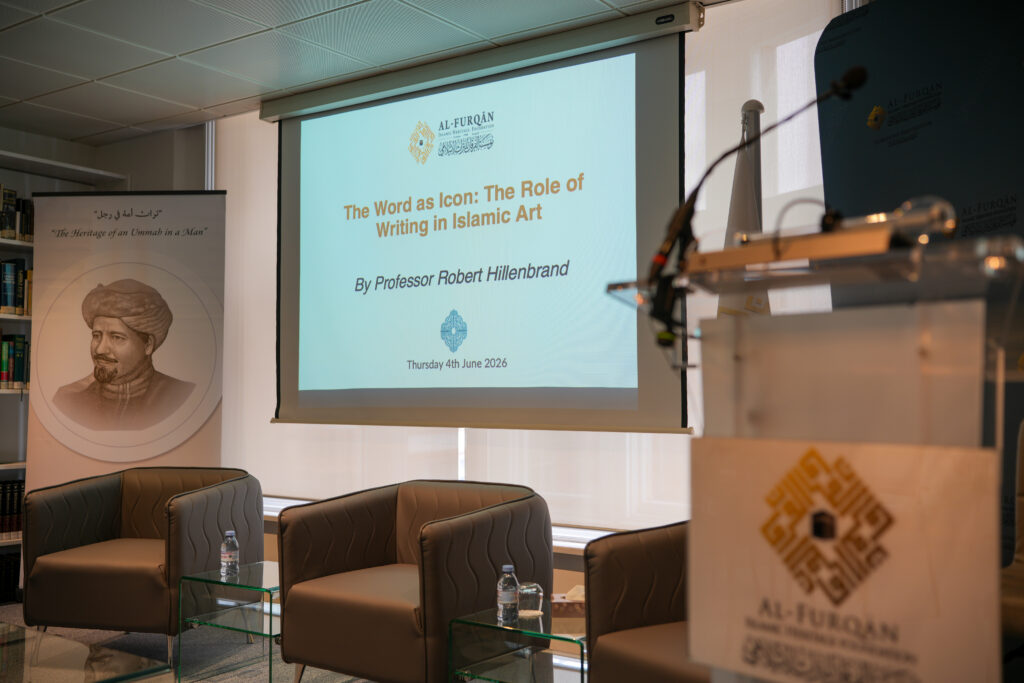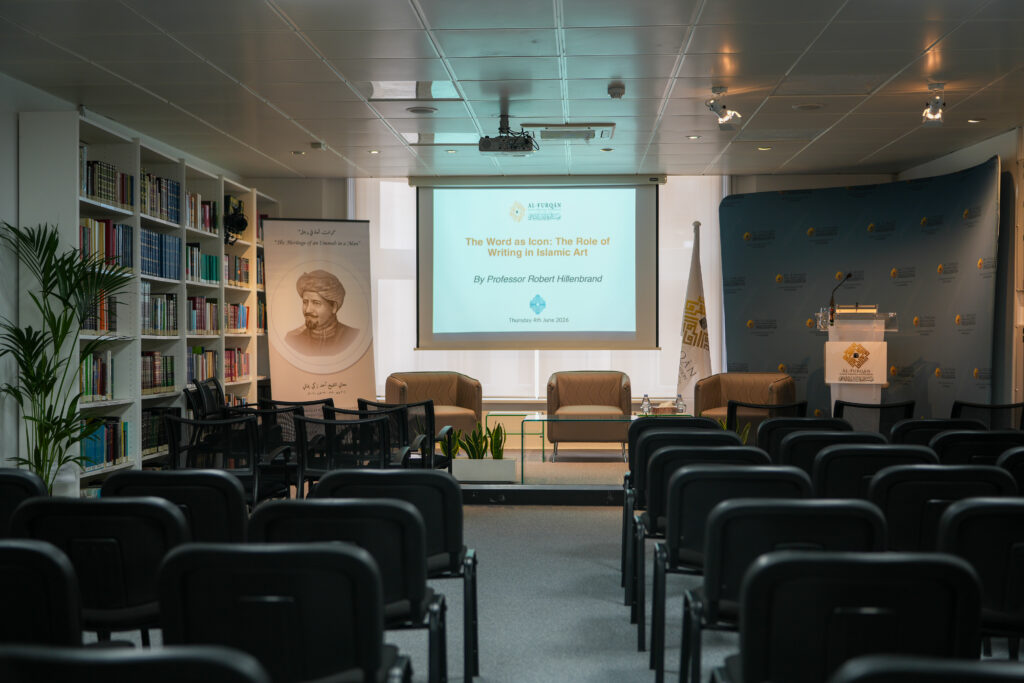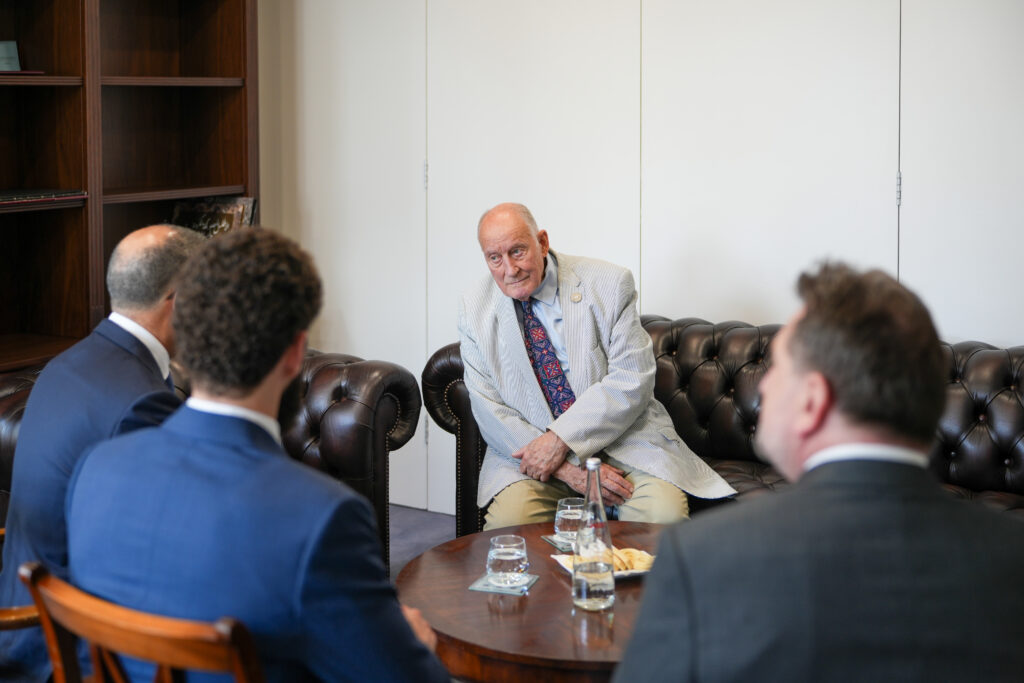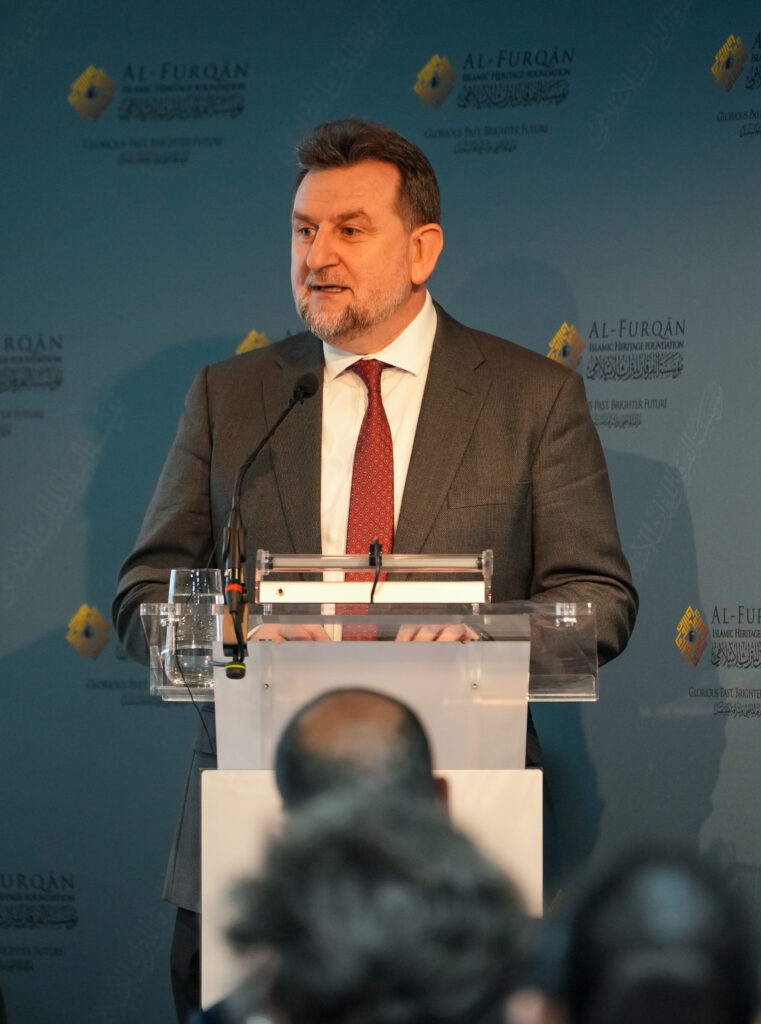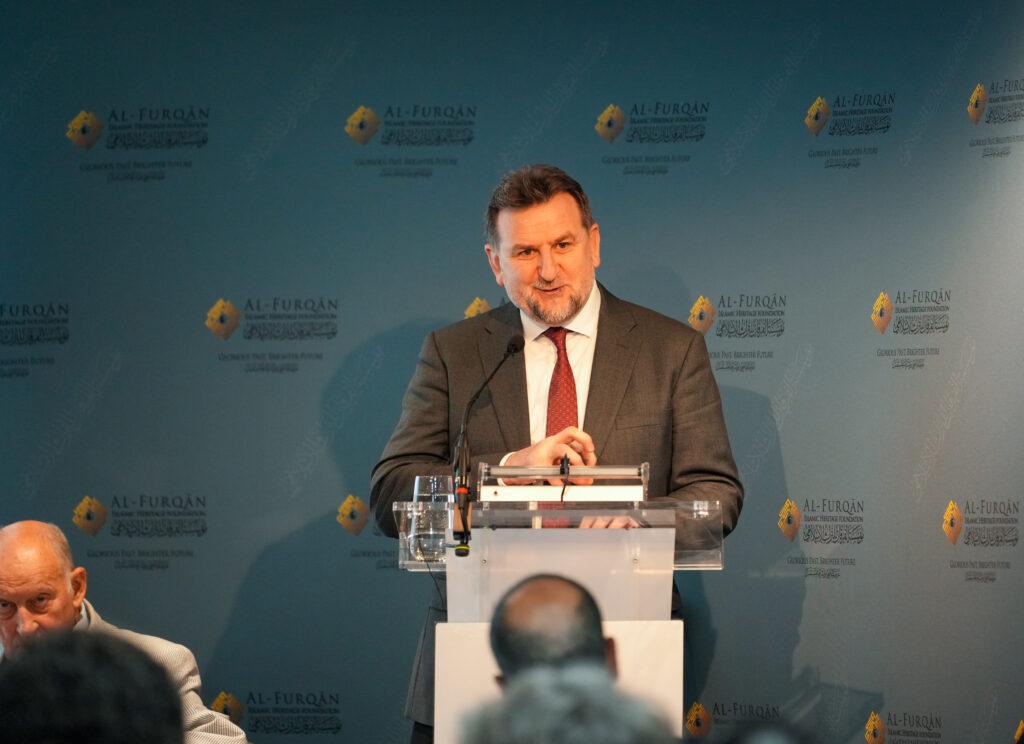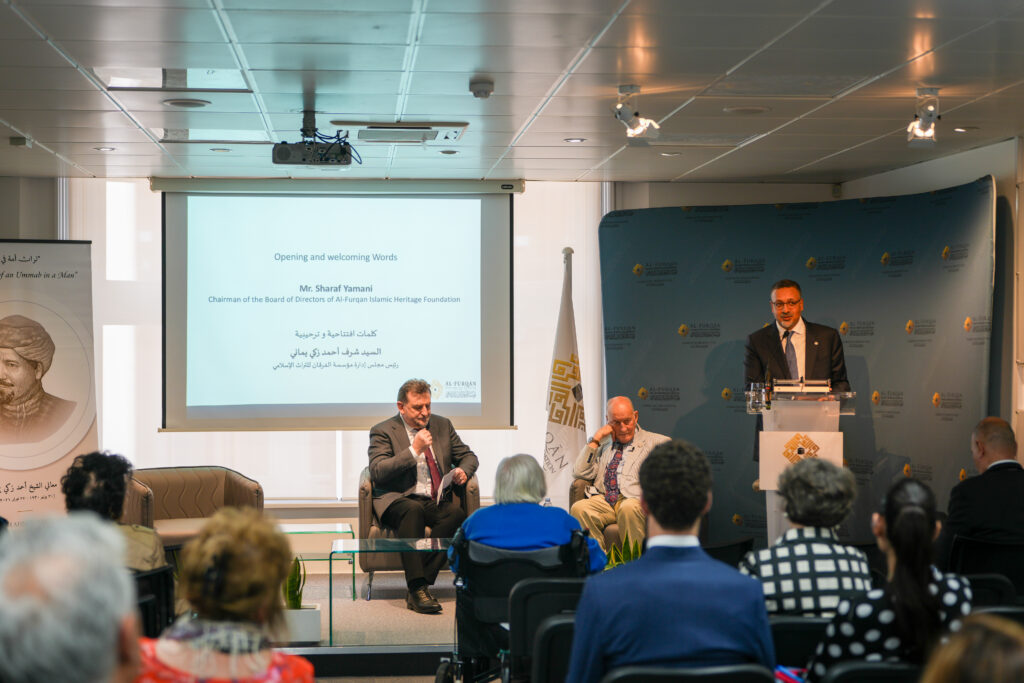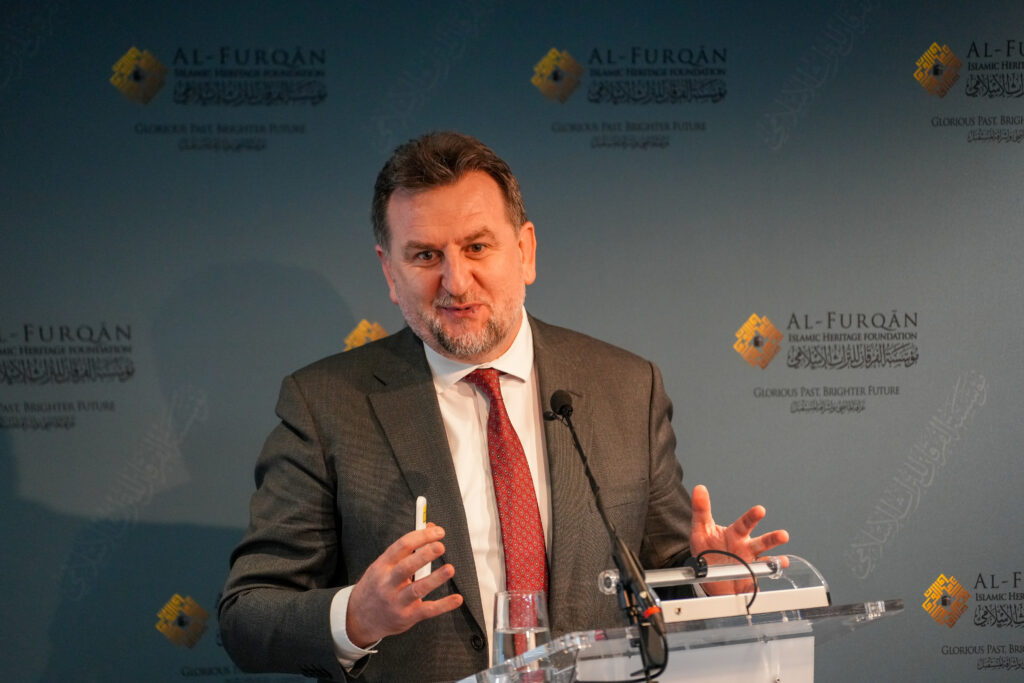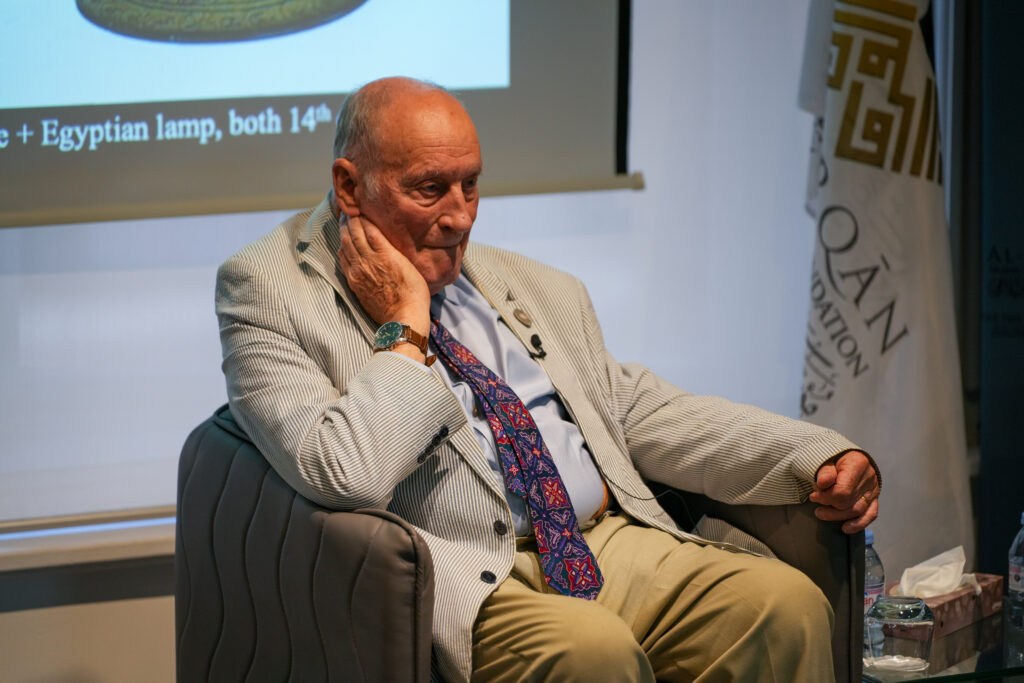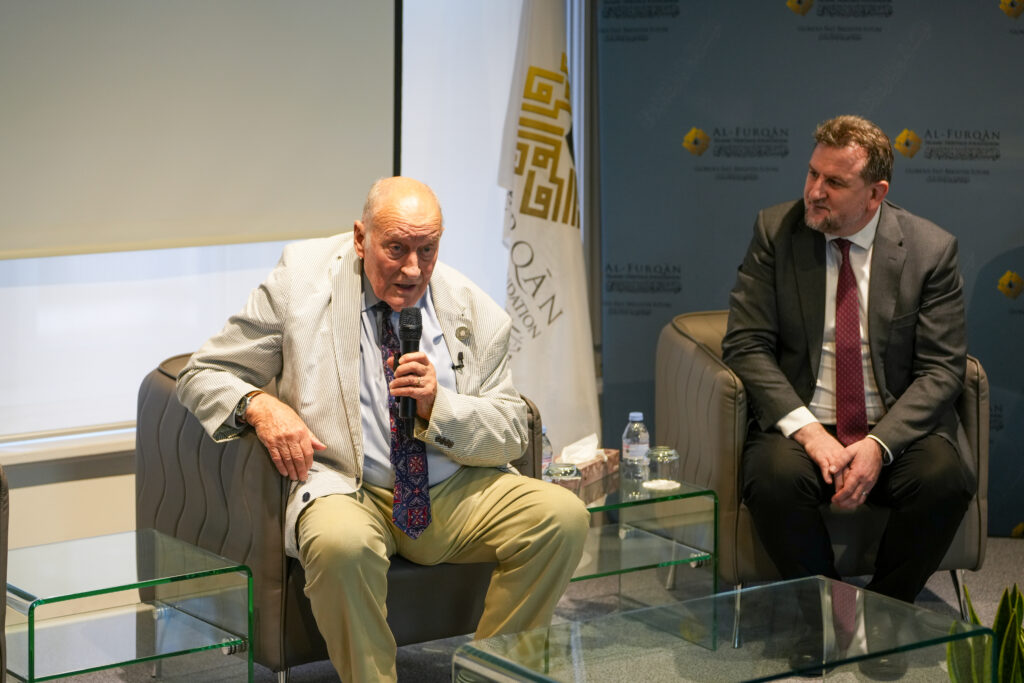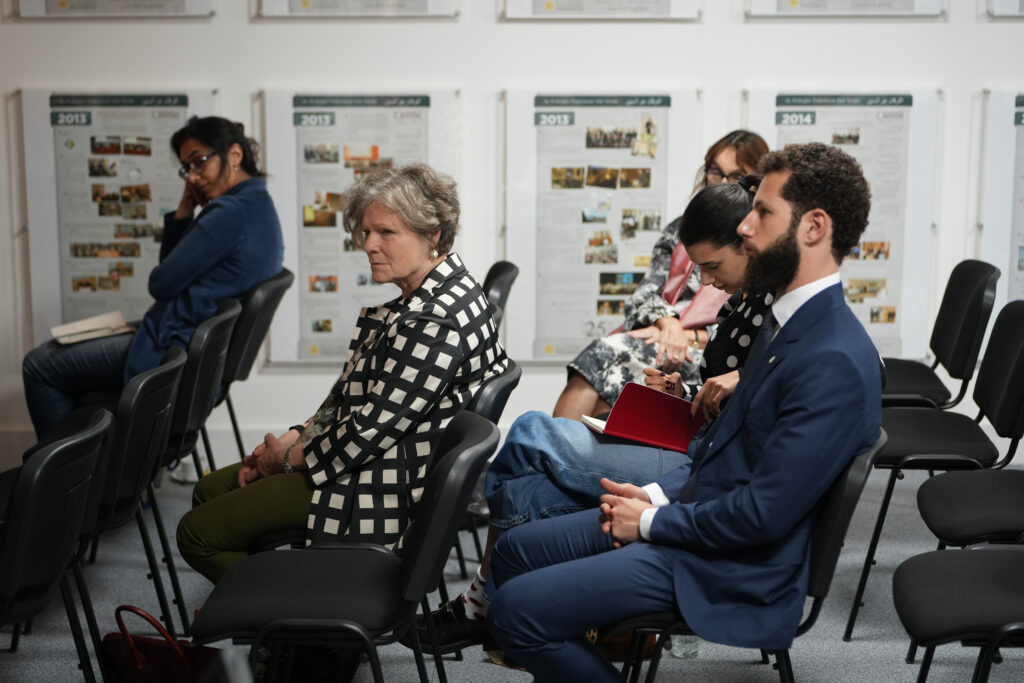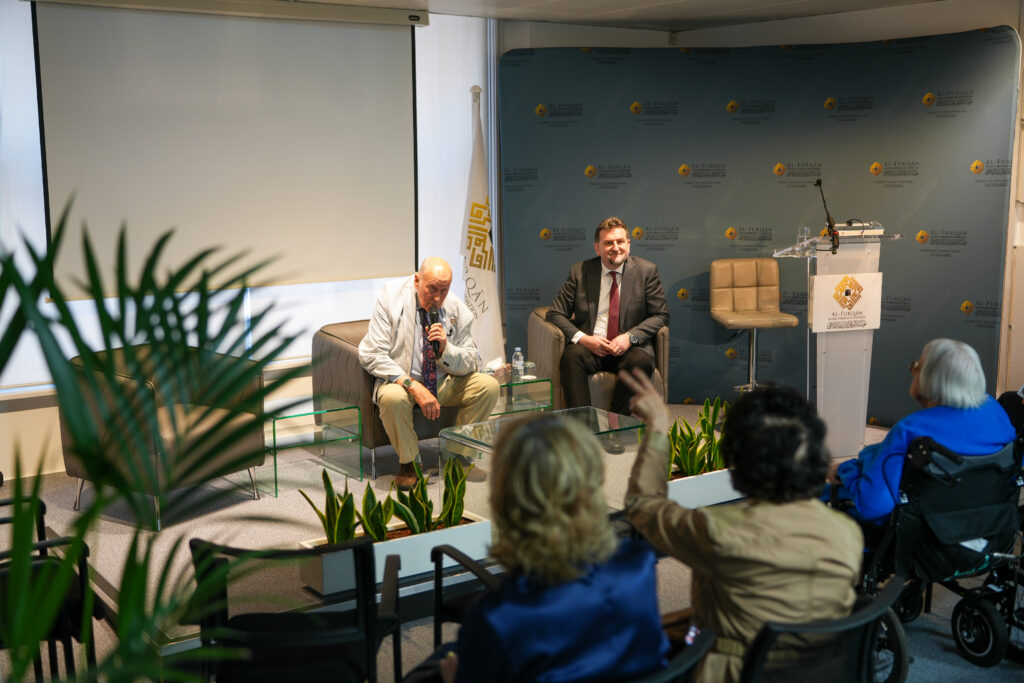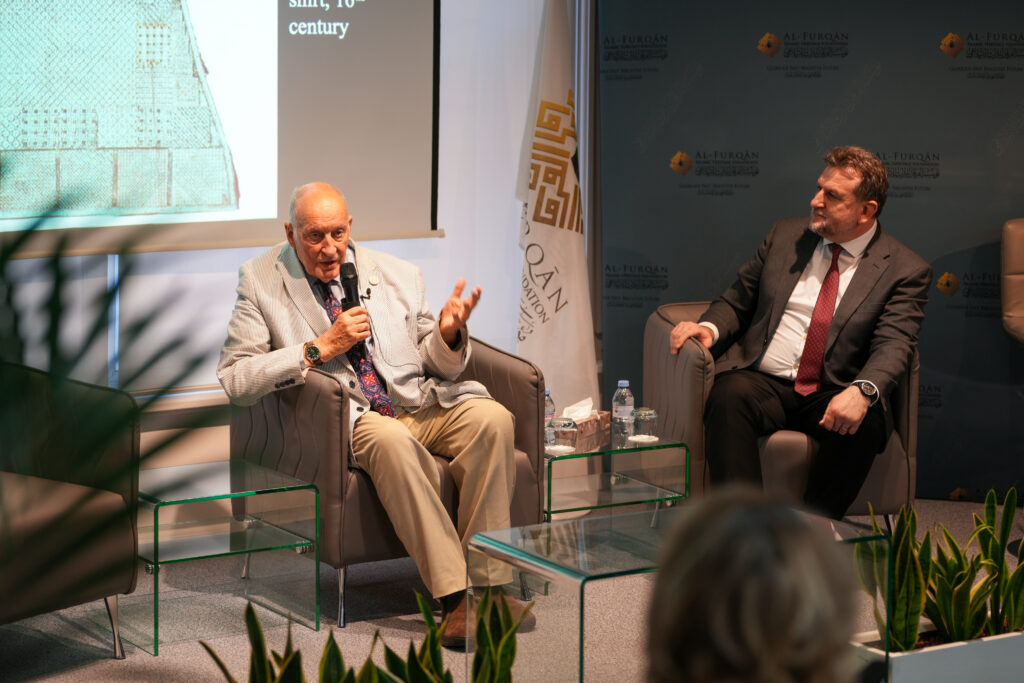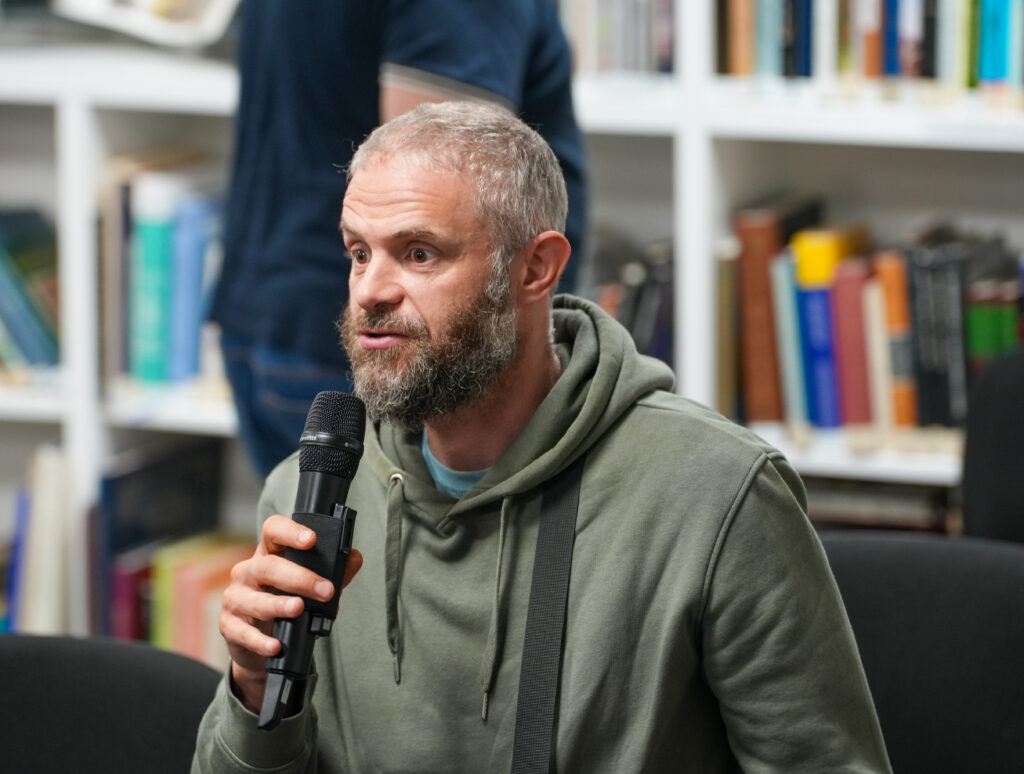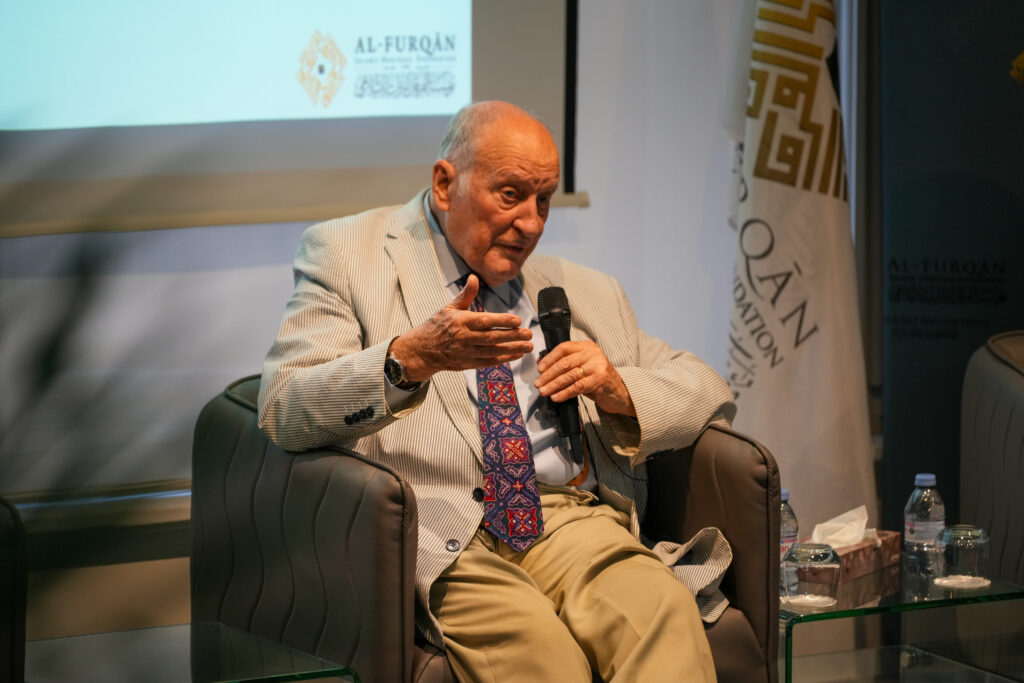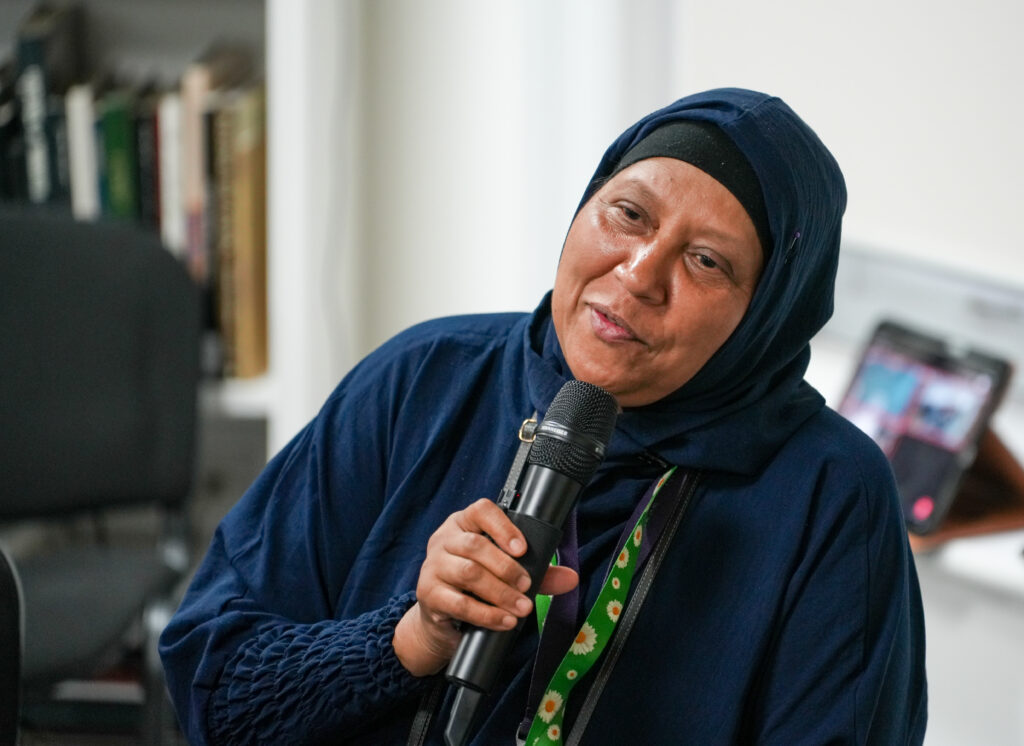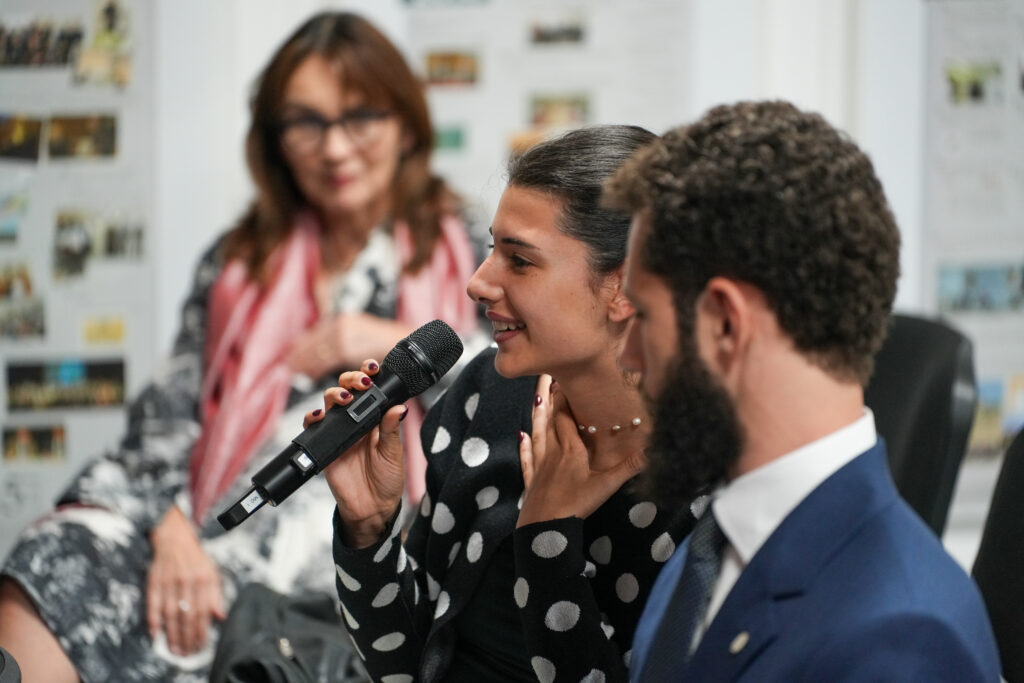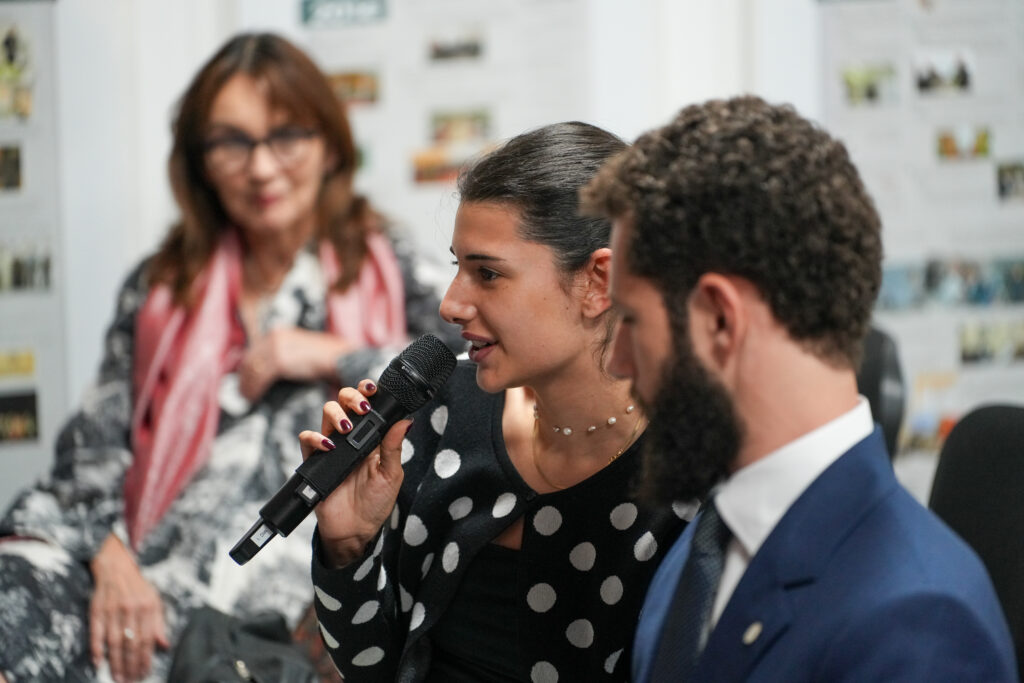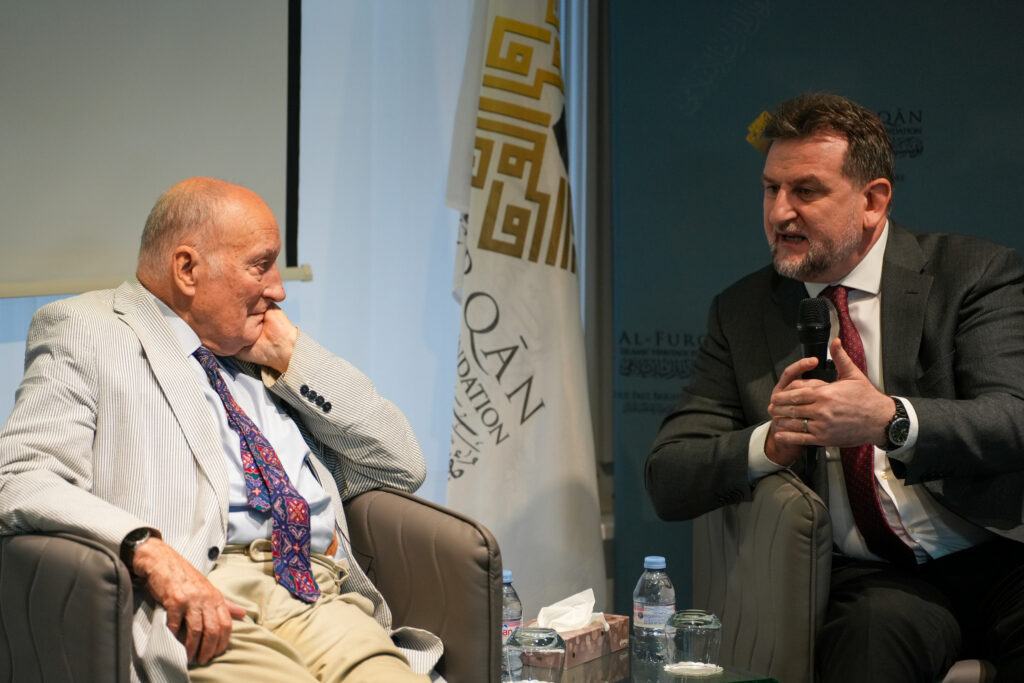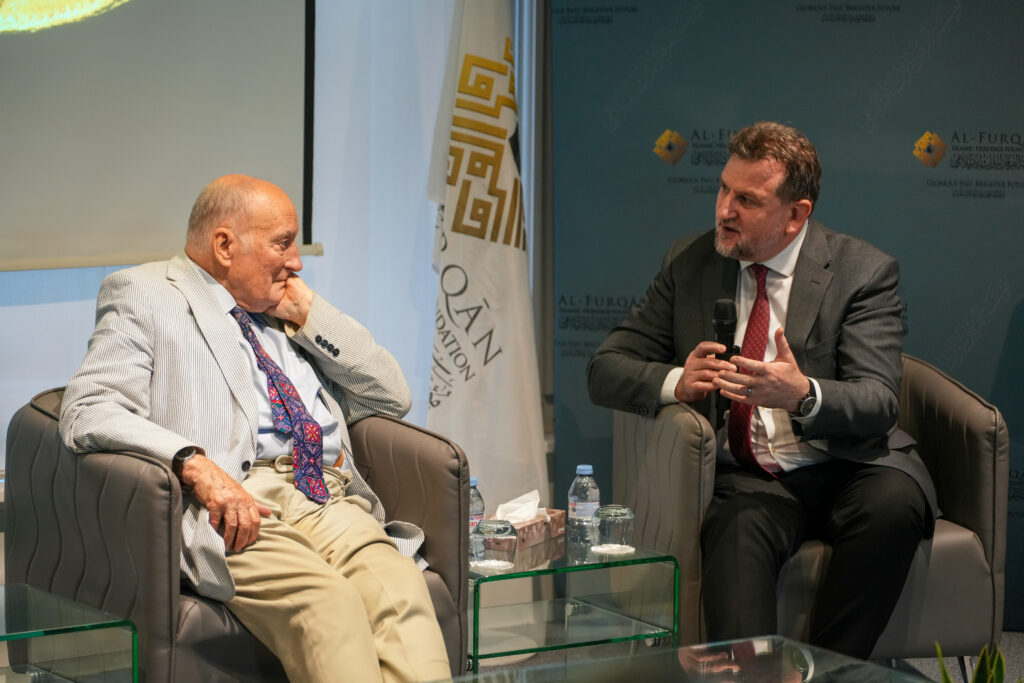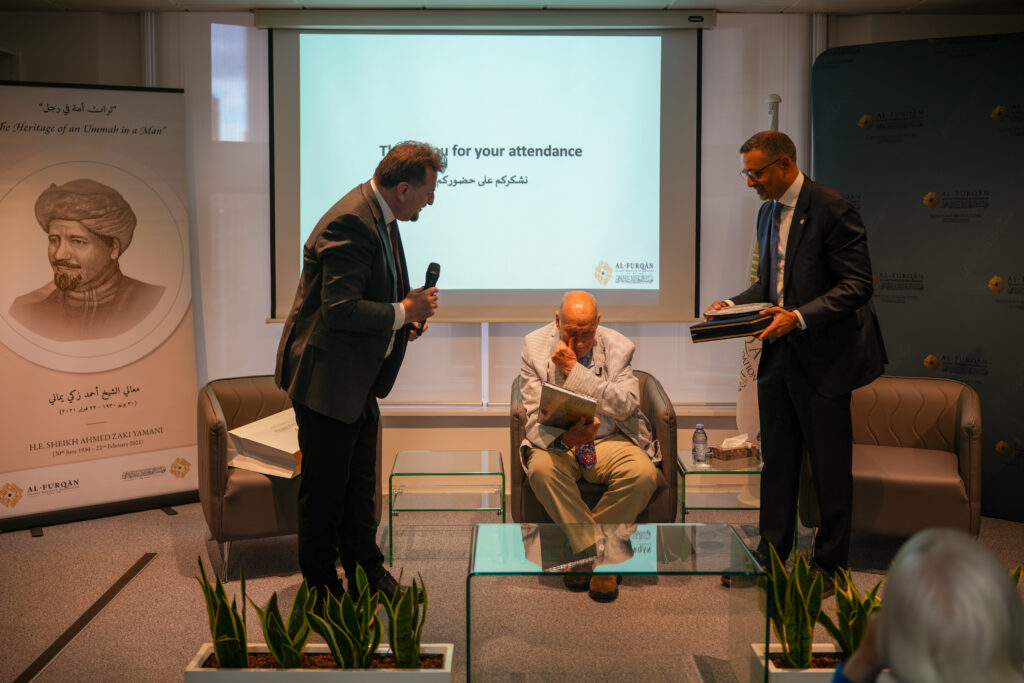

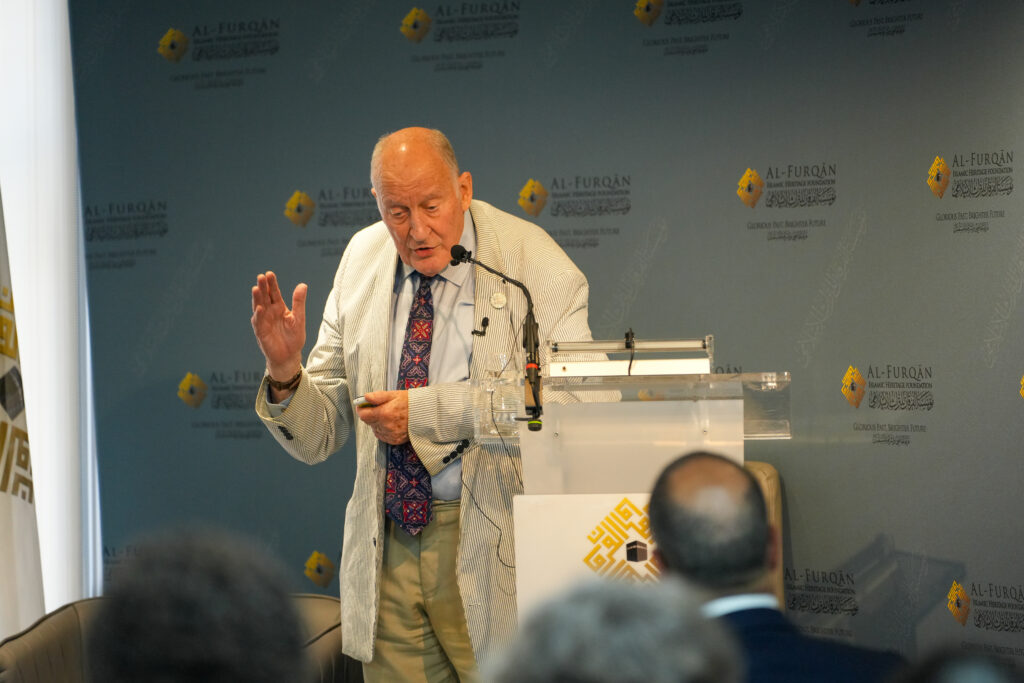
Within the series of Al-Furqan London Lectures on Islamic Heritage, Al-Furqan Islamic Heritage Foundation hosted a lecture entitled "The Word as Icon: The Role of Writing in Islamic Art", delivered by Prof. Robert Hillenbrand, Emeritus Professor of Islamic Art at the University of Edinburgh, and Professorial Fellow of Art History at the University of St Andrews. The lecture took place on Thursday, 4 June, 2026, at the Foundation's headquarters in London.
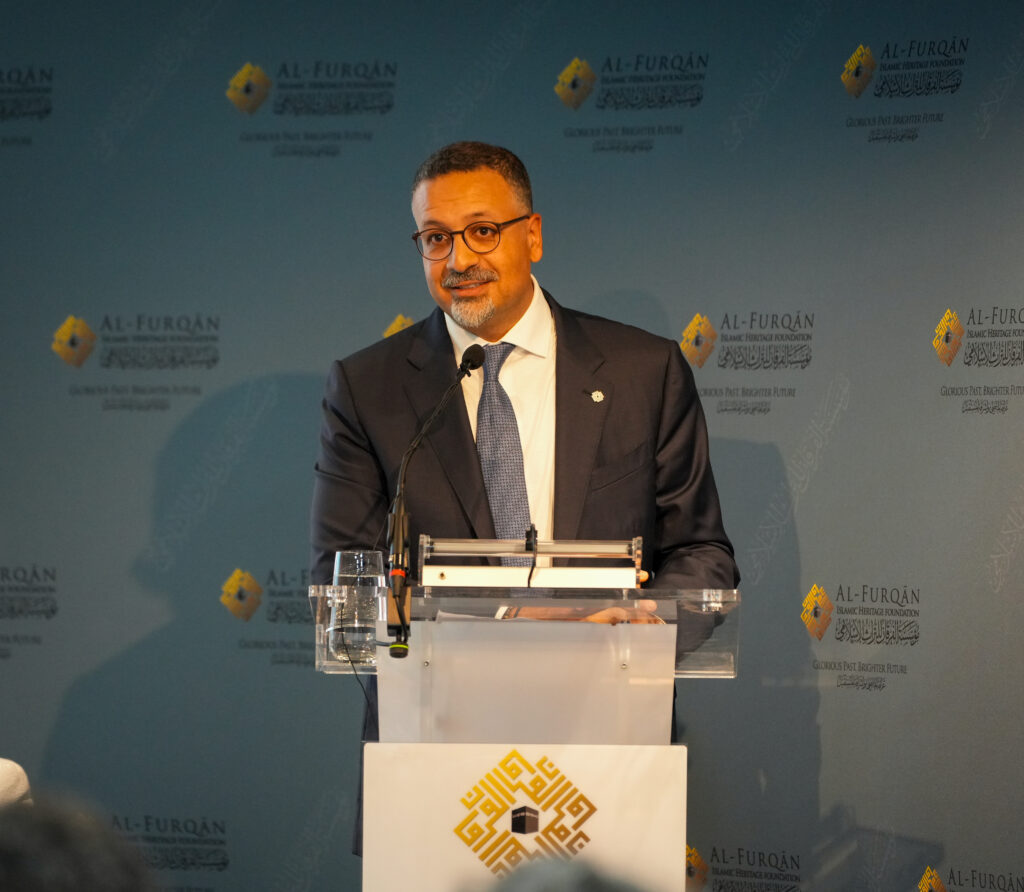
In his opening remarks, Mr Sharaf Yamani, Chairman of Al-Furqan Foundation, after welcoming the lecturer and attendants, noted that inscriptions “are the visible memory of a civilisation…” and “to preserve them, is to keep that trust alive, and to remind the world that Islamic heritage is not a closed chapter, but a living conversation.”
“Islamic artists made writing itself sacred,” said Mr Yamani, because “they believed that the divine word deserved divine beauty, and that calligraphy could embody the infinite perfection of God’s revelation.”
Then, Mr Sali Shahsivari, the Managing Director of Al-Furqan, gave a brief introduction about the lecturer and the lecture, highlighting its importance in shedding light on a very interesting aspect of Islamic art and heritage, i.e. the writing and its use as a sacred visual symbol / or “icon”.
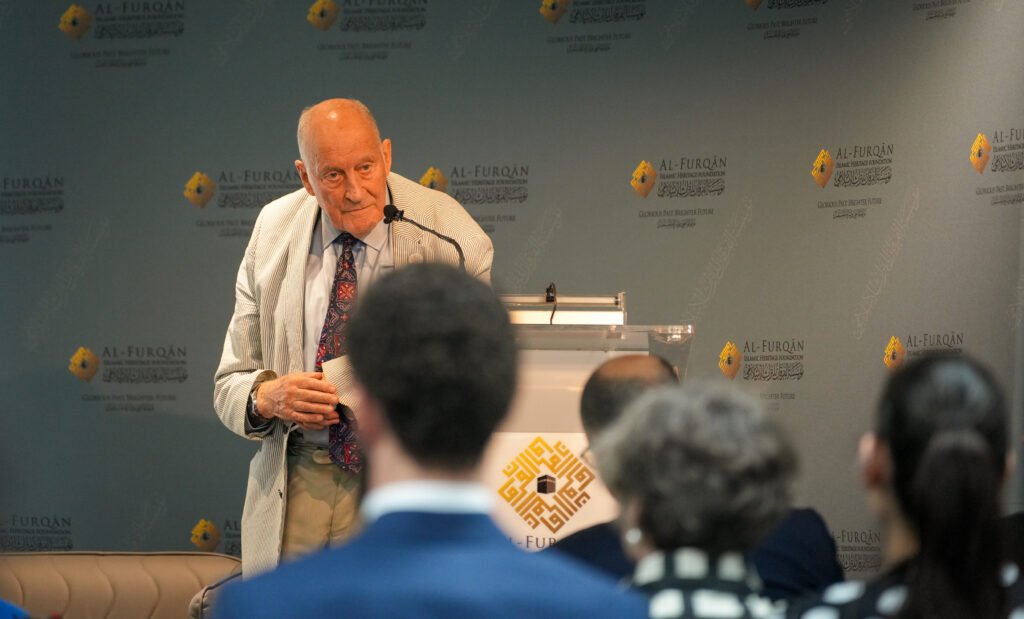
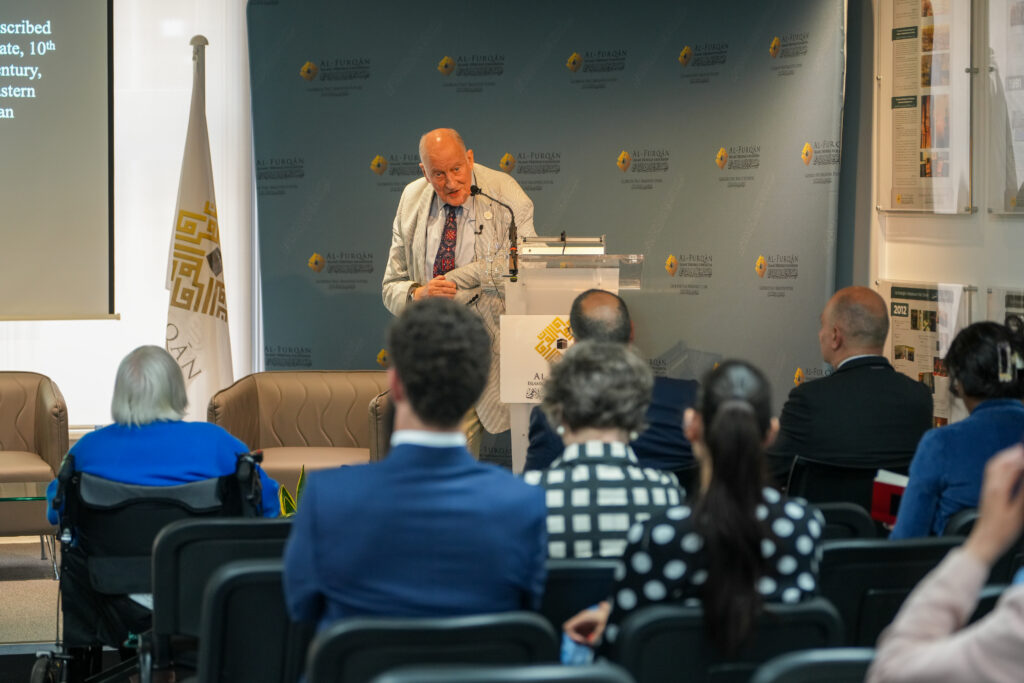
In his lecture, Prof. Robert Hillenbrand gave an overview on the different uses to which writing is put in Islamic art, notably as a way not just to decorate and articulate architecture, but to add meaning to it and to proclaim the faith in public places.
Prof. Hillenbrand noted that, unlike the art of almost every other culture, Islamic art celebrates writing by using it to cover surfaces - large and small, and thereby to make them say something, whether to give them religious significance, drive home political messages, glorify a patron or a poet, or to identify the person whose technical skill made them beautiful.
He argued that pots and pans, buckets and bowls, robes and carpets, hangings and coins, tables and lamps, doors and incense burners were all transformed by writing. He added that, the desire to honour the sacred text of Islam - the Qur’an - by a style of writing worthy of it, spurred calligraphers to endless innovation, creating scripts whose idiosyncratic spacing and complex lettering slowed down the very process of reading, an objective correlative to the awesome enigmas of the text itself.
About the lecturer
Prof. Hillenbrand was educated at Cambridge and Oxford and has spent most of his career teaching at the University of Edinburgh, with visiting professorships at Princeton, UCLA, Bamberg, Dartmouth College, Leiden, New York, Cairo and Groningen.
He was Professor of Art History at the University of St Andrews for seven years. He has organised nine symposia on Islamic art plus a major exhibition on Persian painting. His scholarly interests focus on Islamic architecture, painting and iconography, with particular reference to Iran and early Islamic Syria.
He has written twelve books and co-authored, edited or co-edited a further fourteen. He has also published some 208 articles on aspects of Islamic art and architecture. He has been Slade Professor of Art at Cambridge, is a Fellow of the British Academy and won the King Faisal Prize for Islamic Studies in 2023. He is the founding editor of the Journal of Islamic Art and Architecture.