
In recent years, heritage and manuscript studies—long grounded in disciplines such as philology, codicology, and palaeography—have increasingly engaged with digitisation and rapidly advancing technologies, including artificial intelligence, machine learning, and large language models. While adoption within the heritage field remains careful and often gradual, these developments are beginning to shape how manuscripts and heritage materials are accessed, analysed, and connected, offering researchers new ways to navigate large corpora, identify relationships across collections, and pursue research questions that were previously difficult or time-consuming.
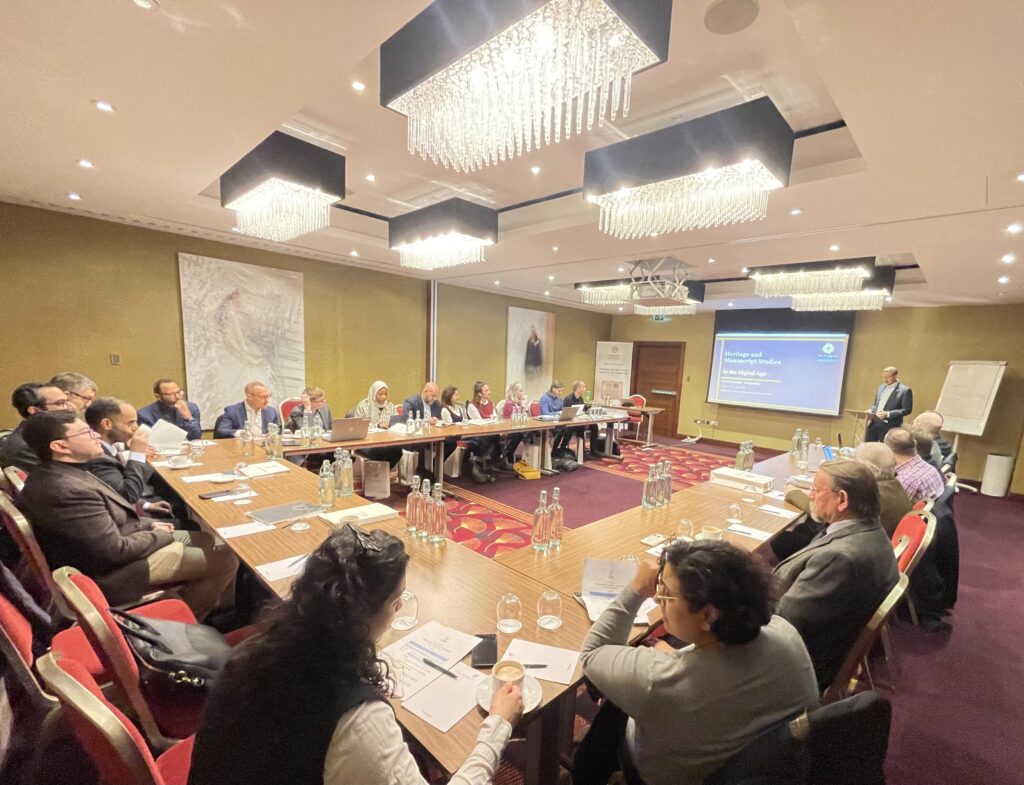
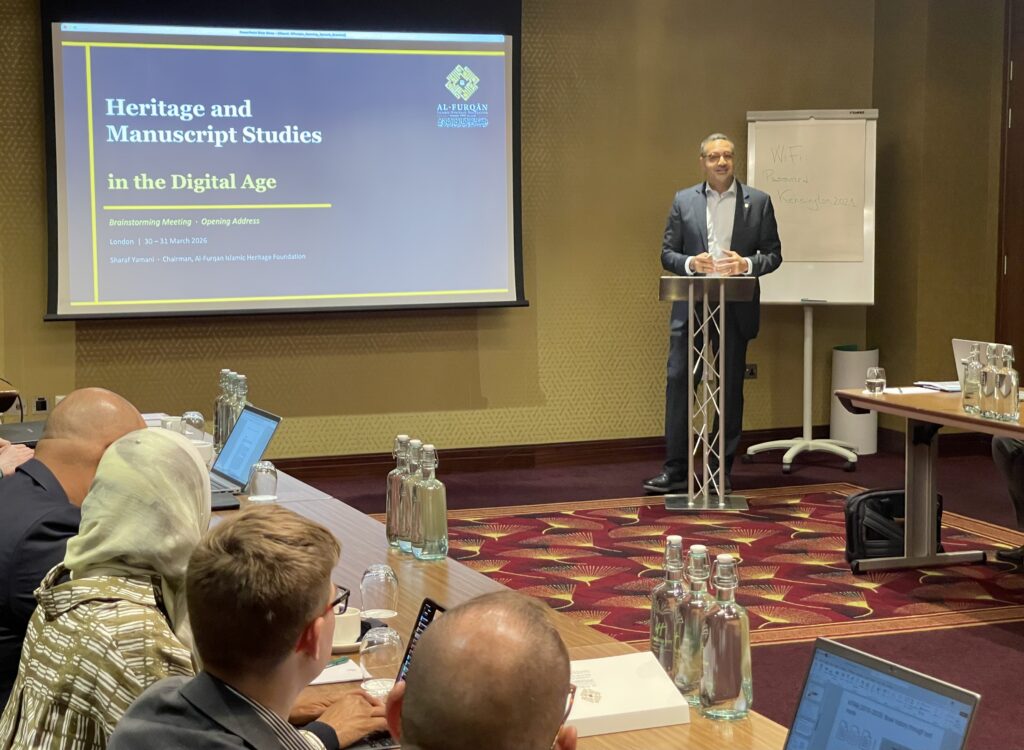
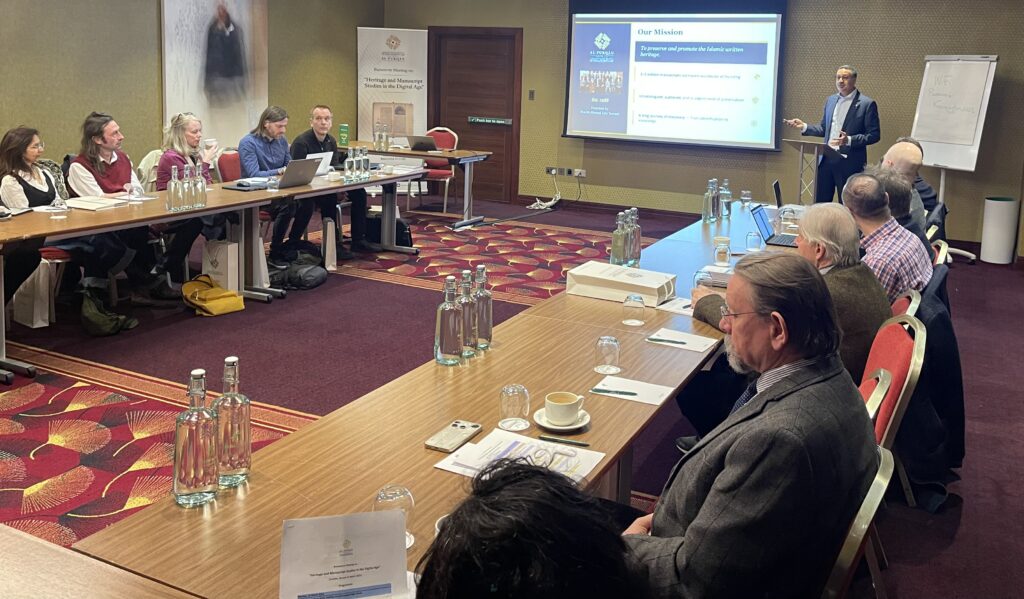
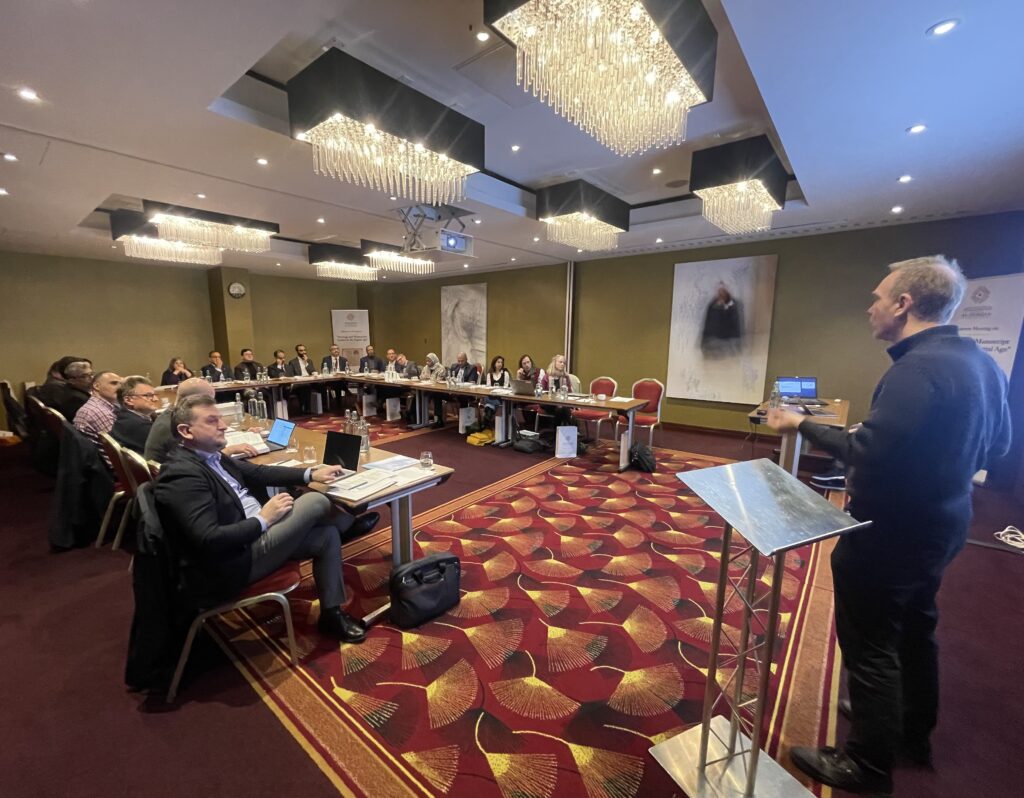
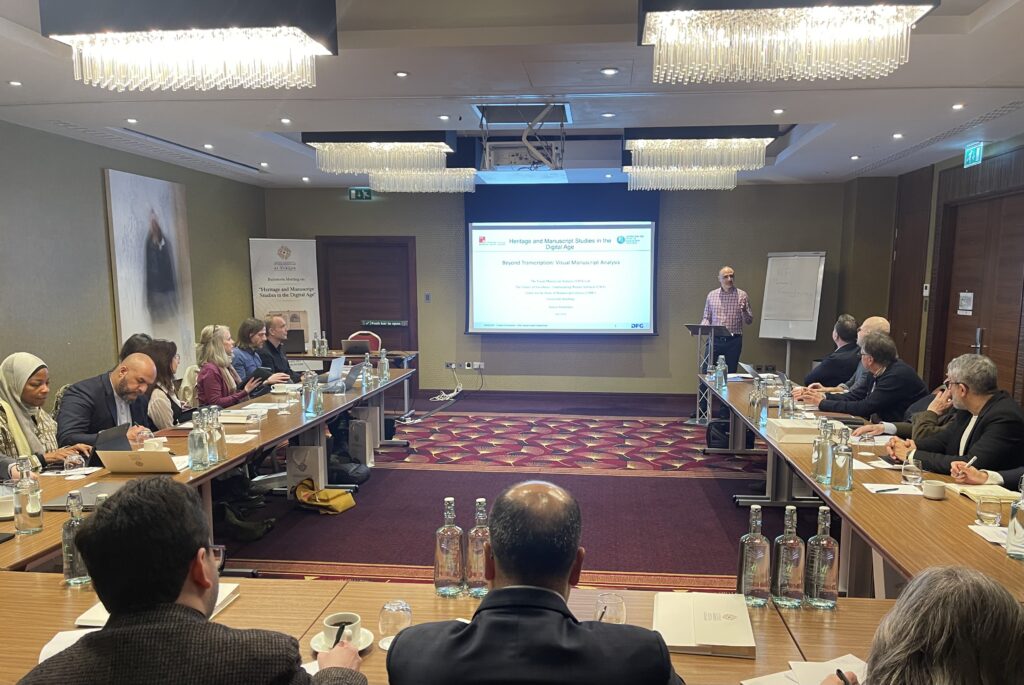
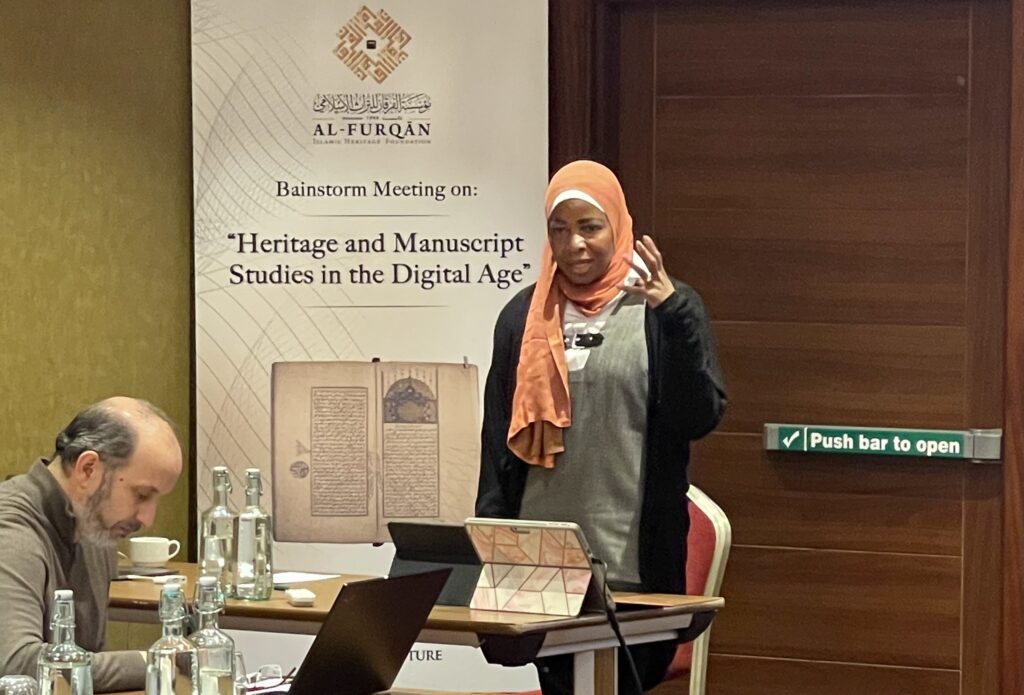
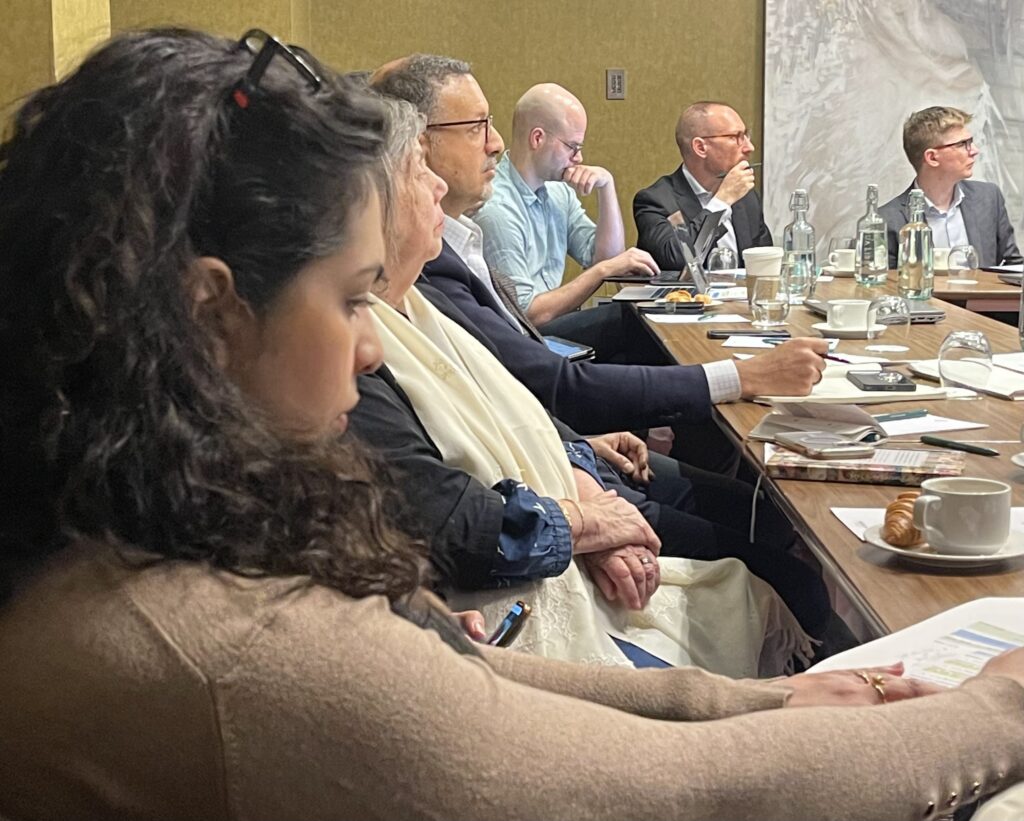
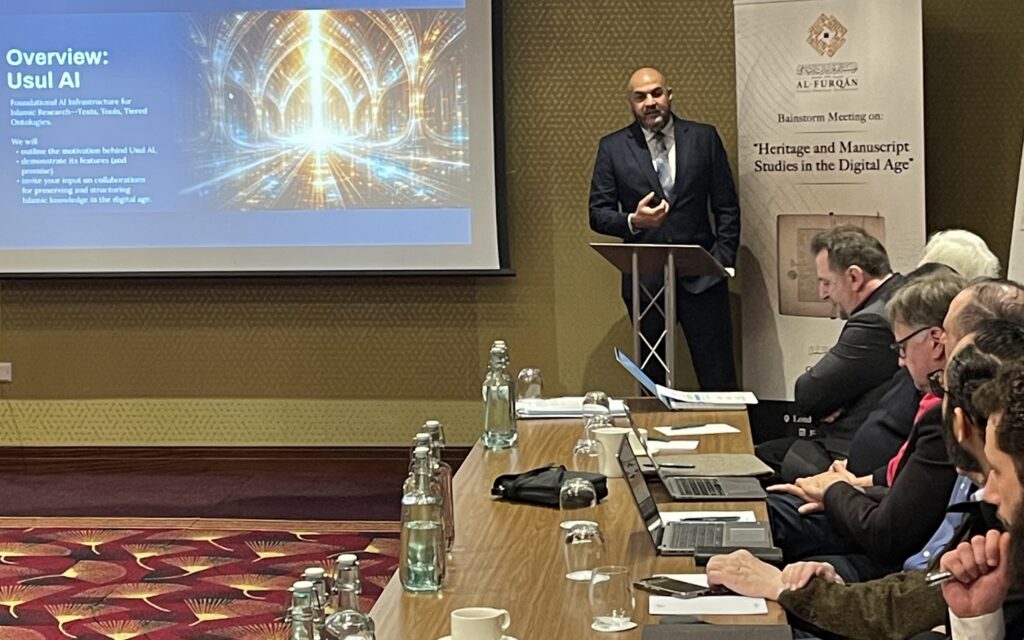
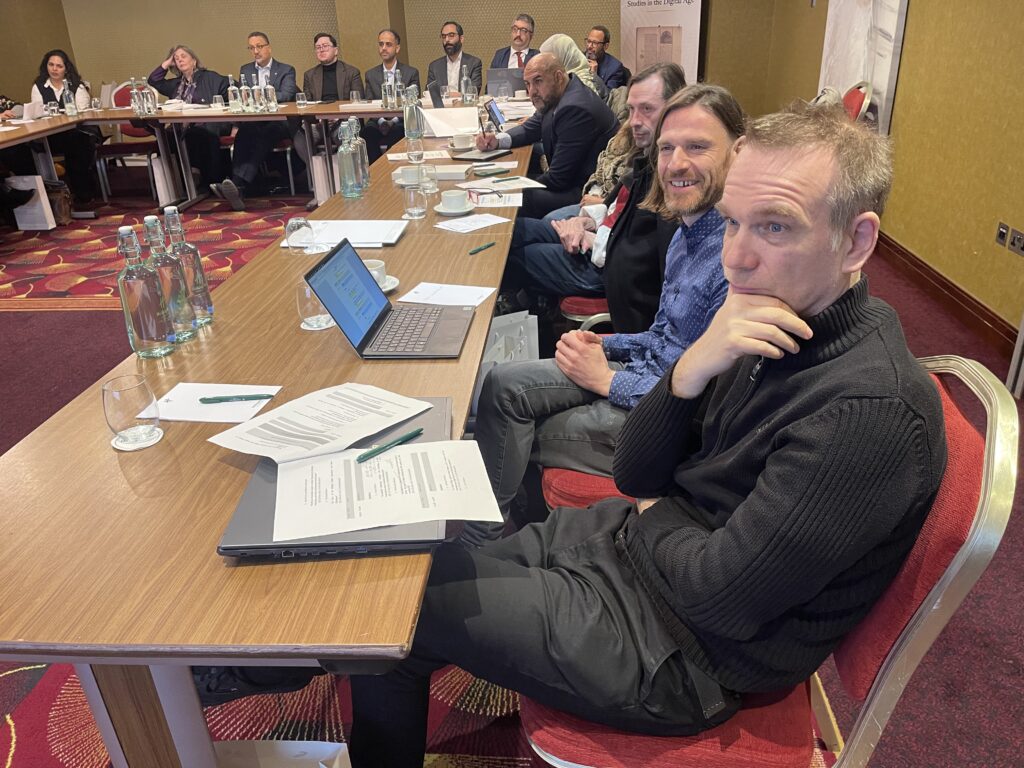
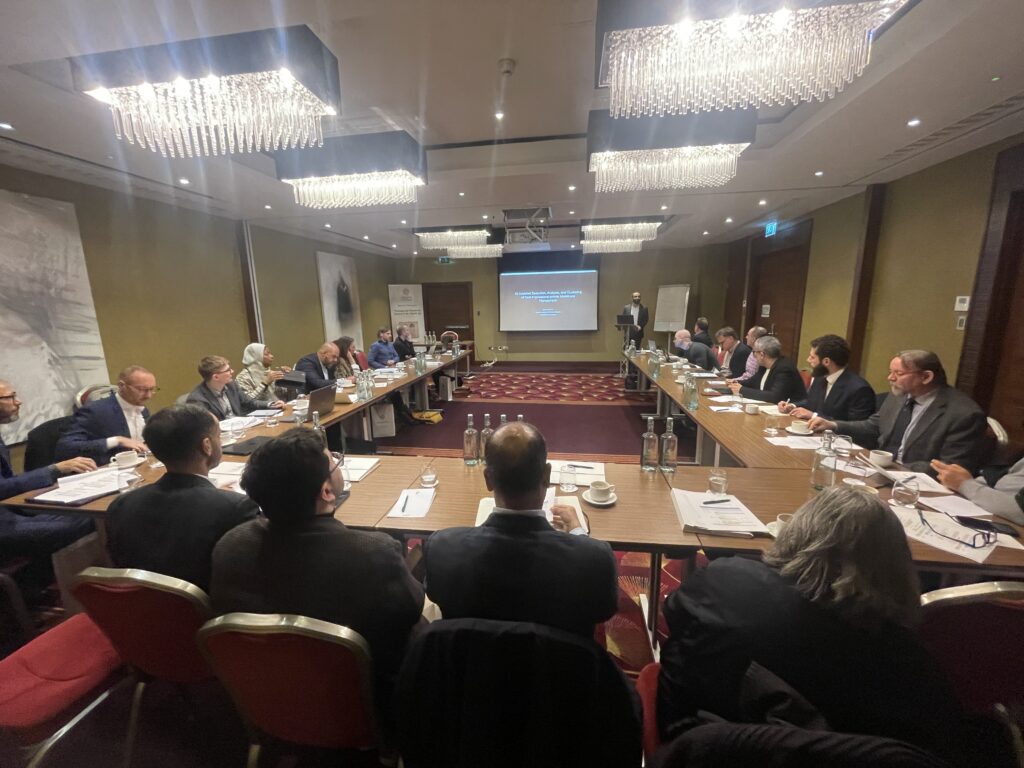
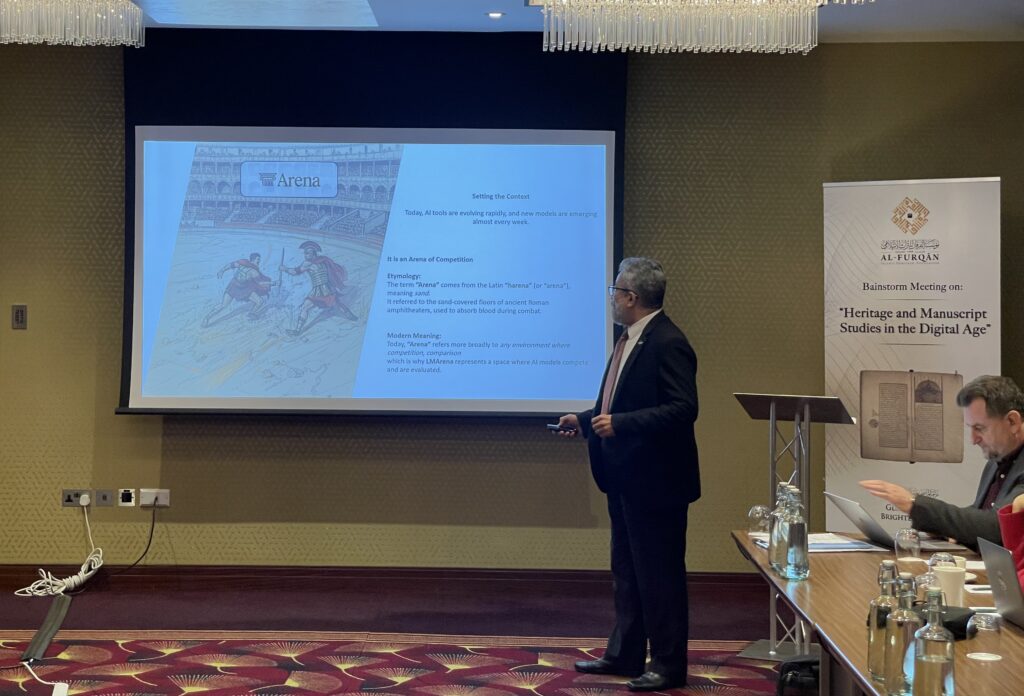
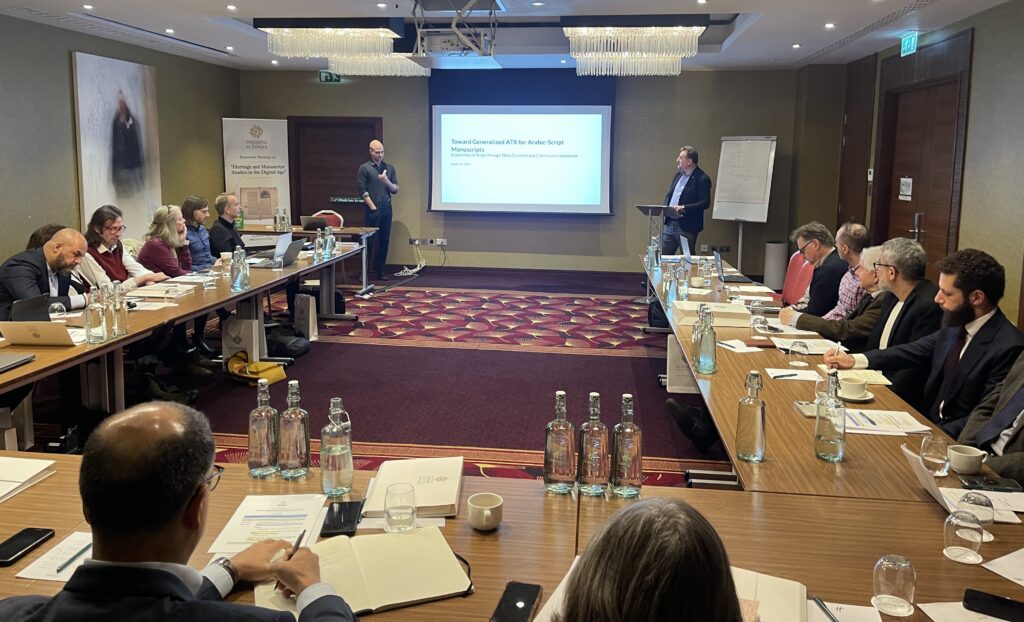
In this context, Al-Furqan Islamic Heritage Foundation organised a closed brainstorming meeting entitled: "Heritage and Manuscript Studies in the Digital Age", on 30-31 March 2026, in London.
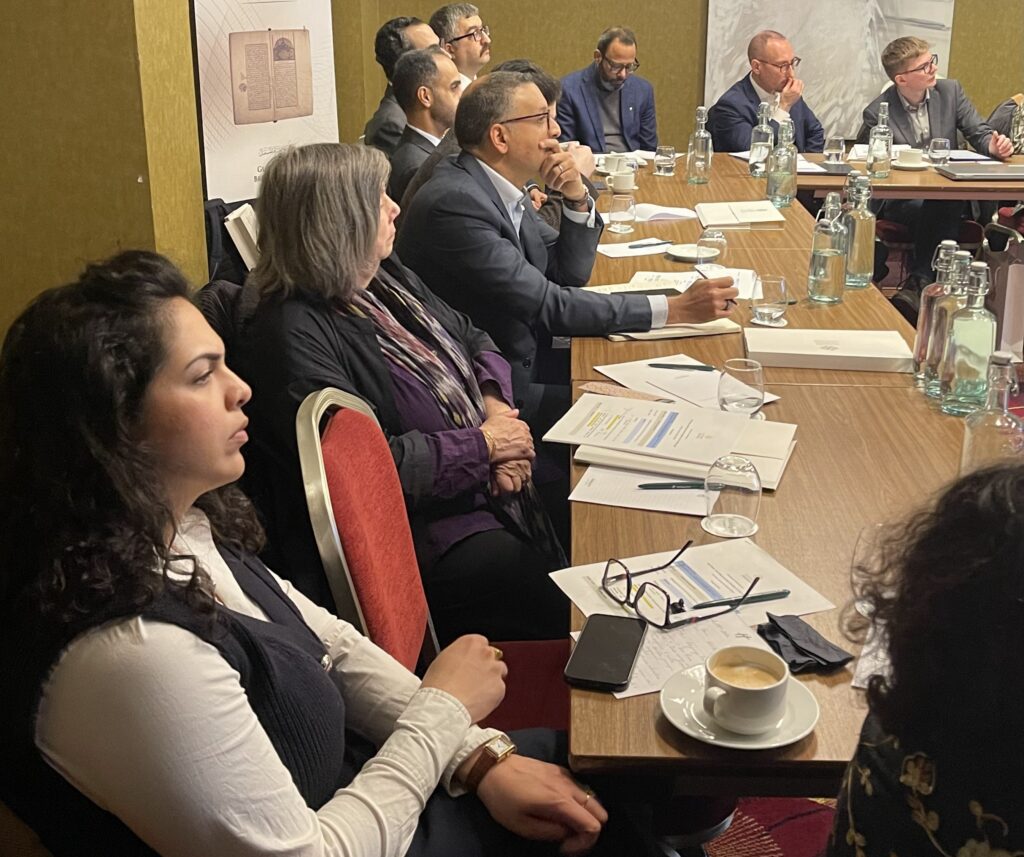
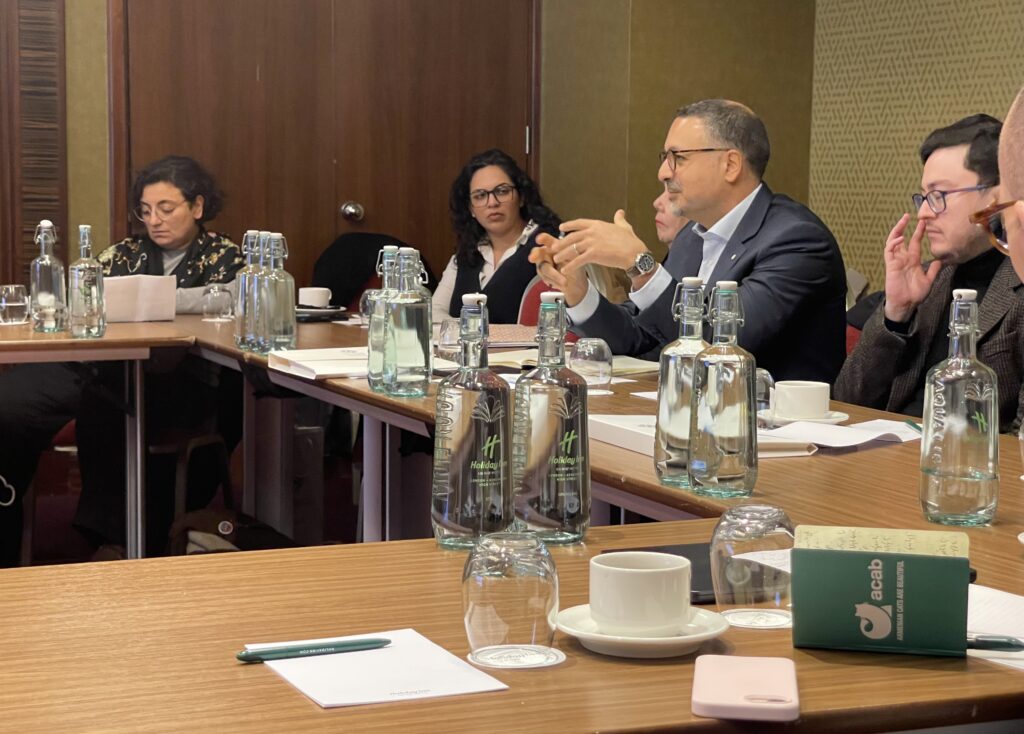
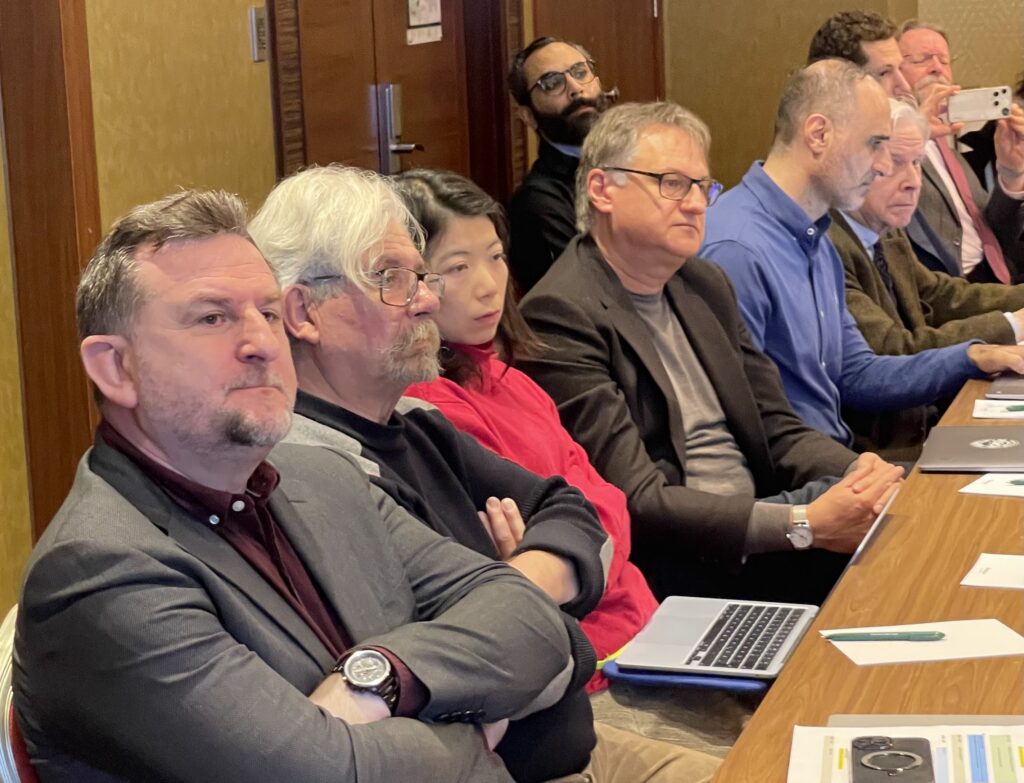
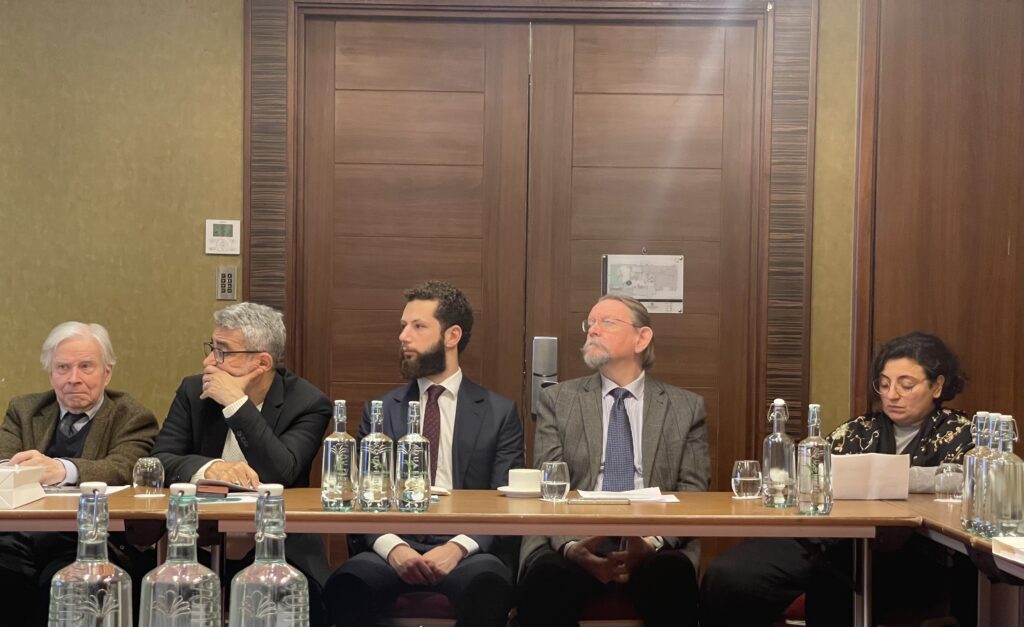
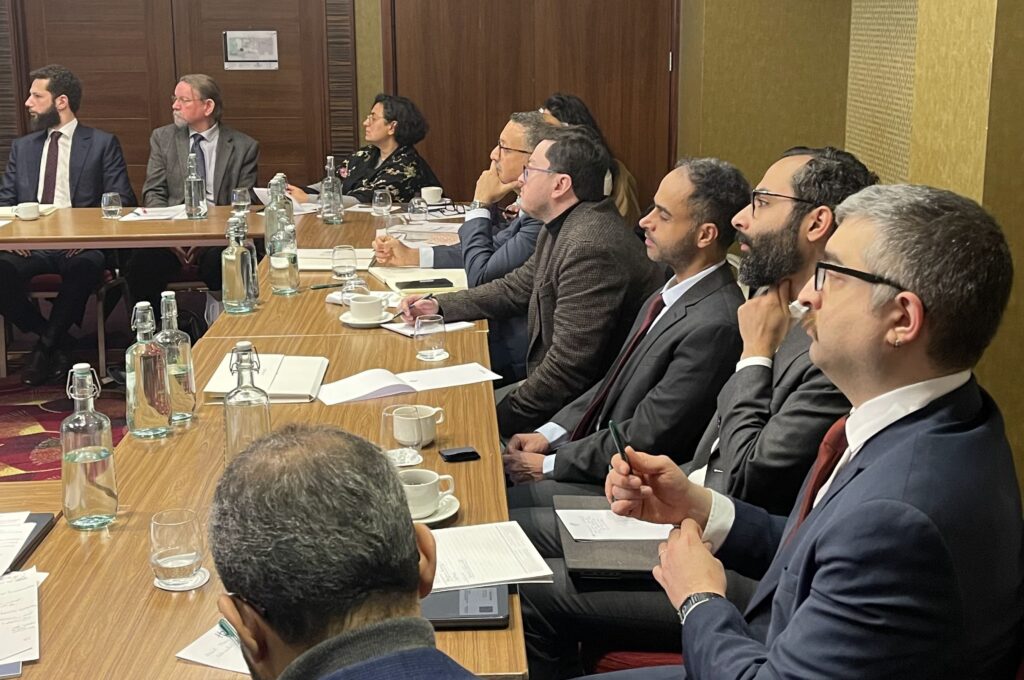
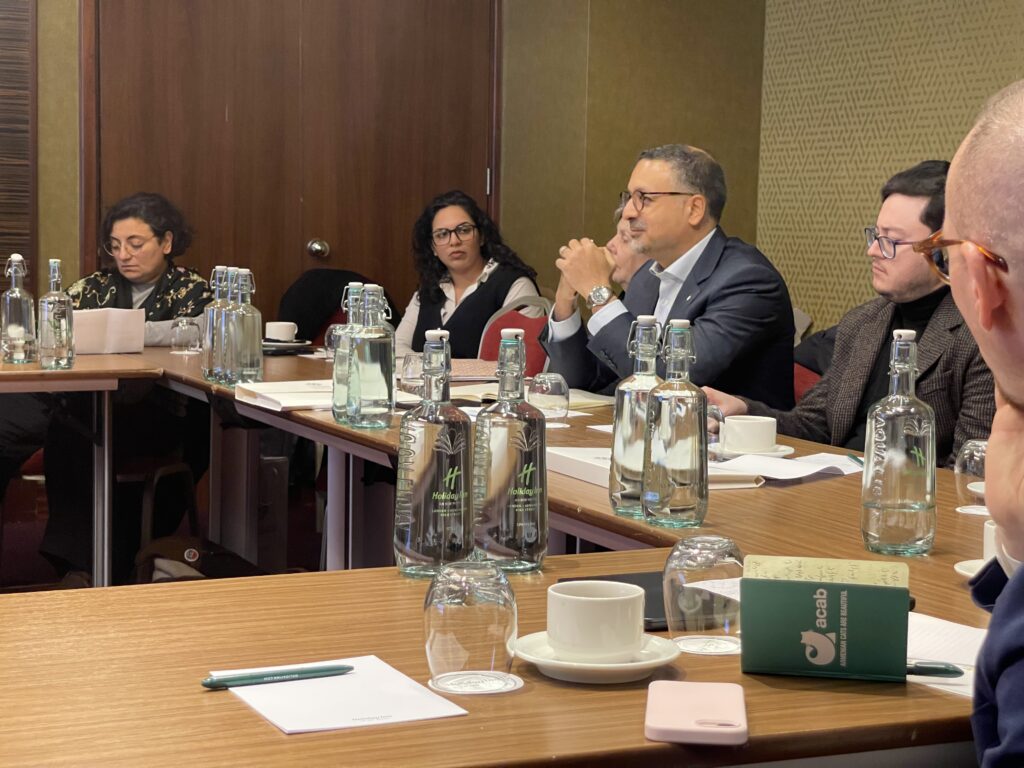
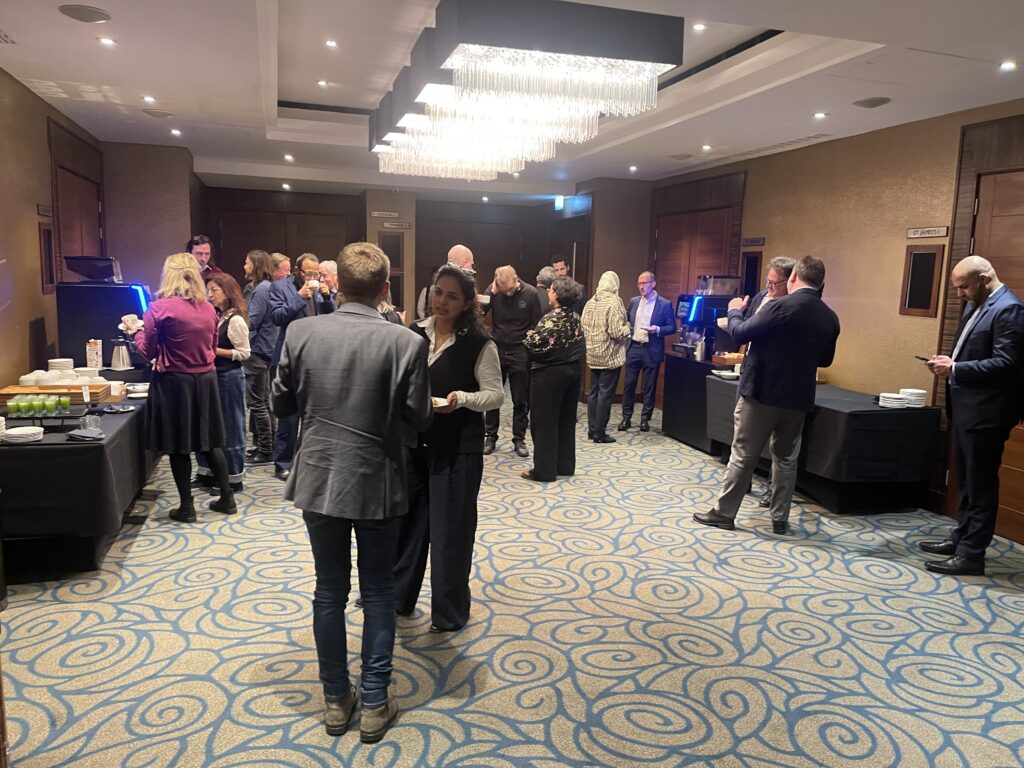
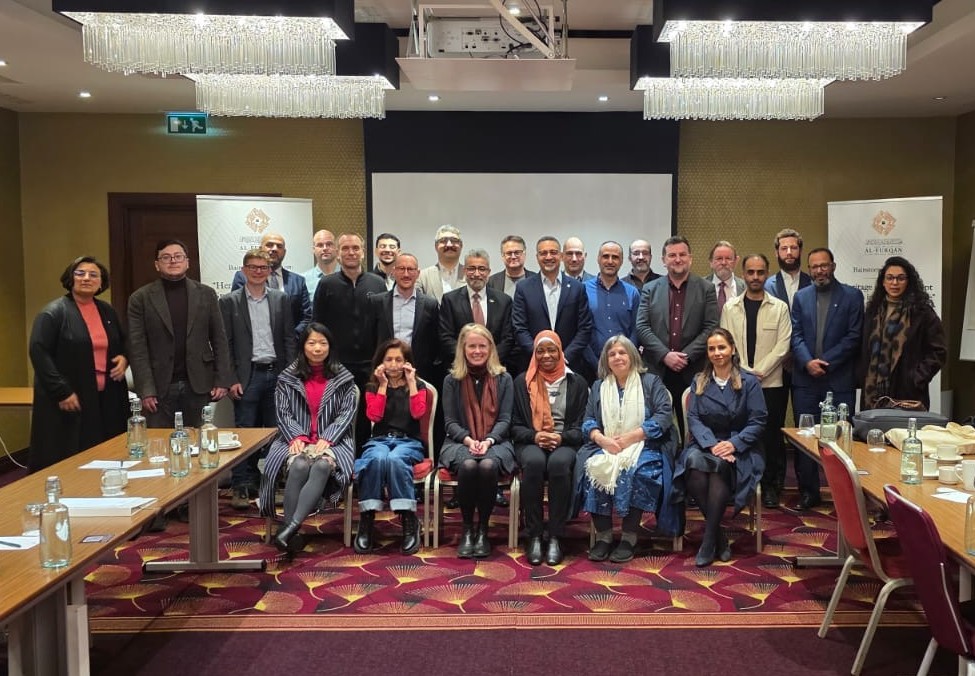
The meeting brought together a small group of scholars, researchers, librarians, and practitioners working across heritage, manuscripts, and related digital initiatives, to exchange experiences and reflect on current work, methods, challenges, and emerging opportunities.
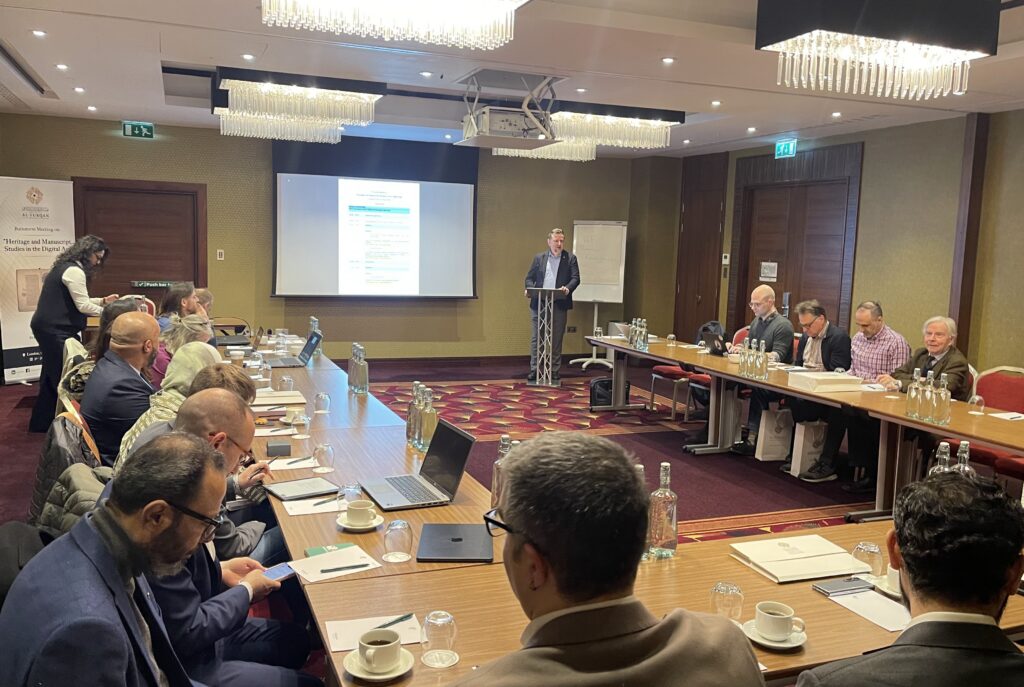
Among the main outcomes of the meeting were: gaining a clearer understanding of ongoing efforts in this field, sharing practical lessons learned, and exploring possibilities for cooperation between researchers and institutions, particularly in relation to data exchange and inter-linking.
Day 1
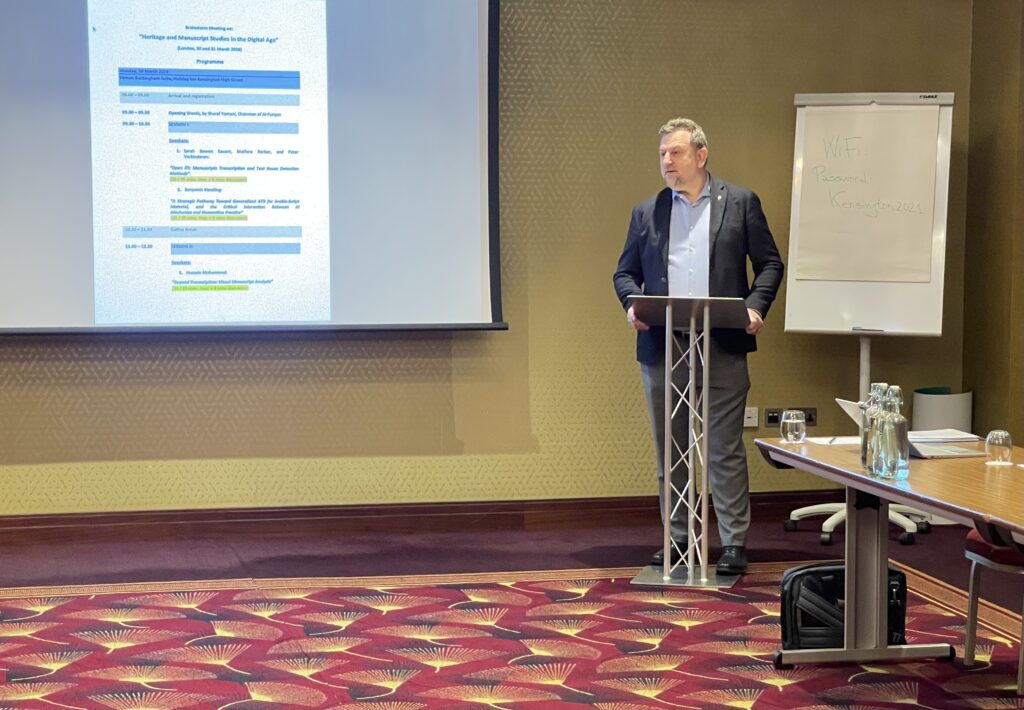
The meeting commenced with the opening words of Mr. Sharaf Yamani, Chairman of Al-Furqan Foundation. He said: "Our challenge is managing a large volume of data and finding the most efficient way to simplify and expand access to it. Over the past four decades, we have tried to keep pace with technology—first by improving our cataloguing processes (making them more efficient), then by digitising those catalogues and primary sources, and eventually by making them accessible online. What once required months of travel and correspondence can now often be done in minutes without leaving your desk."
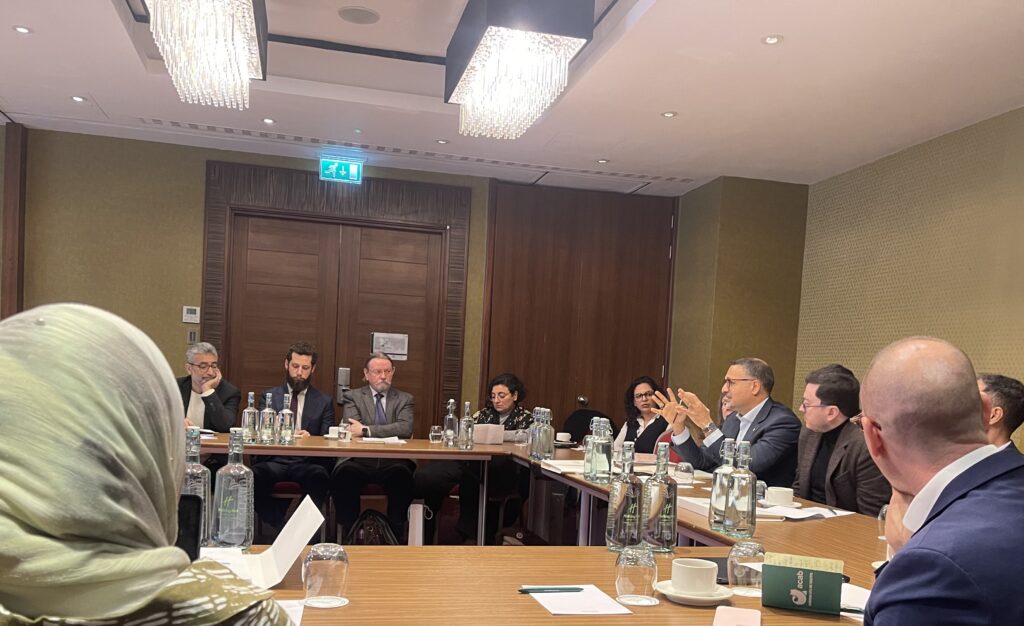
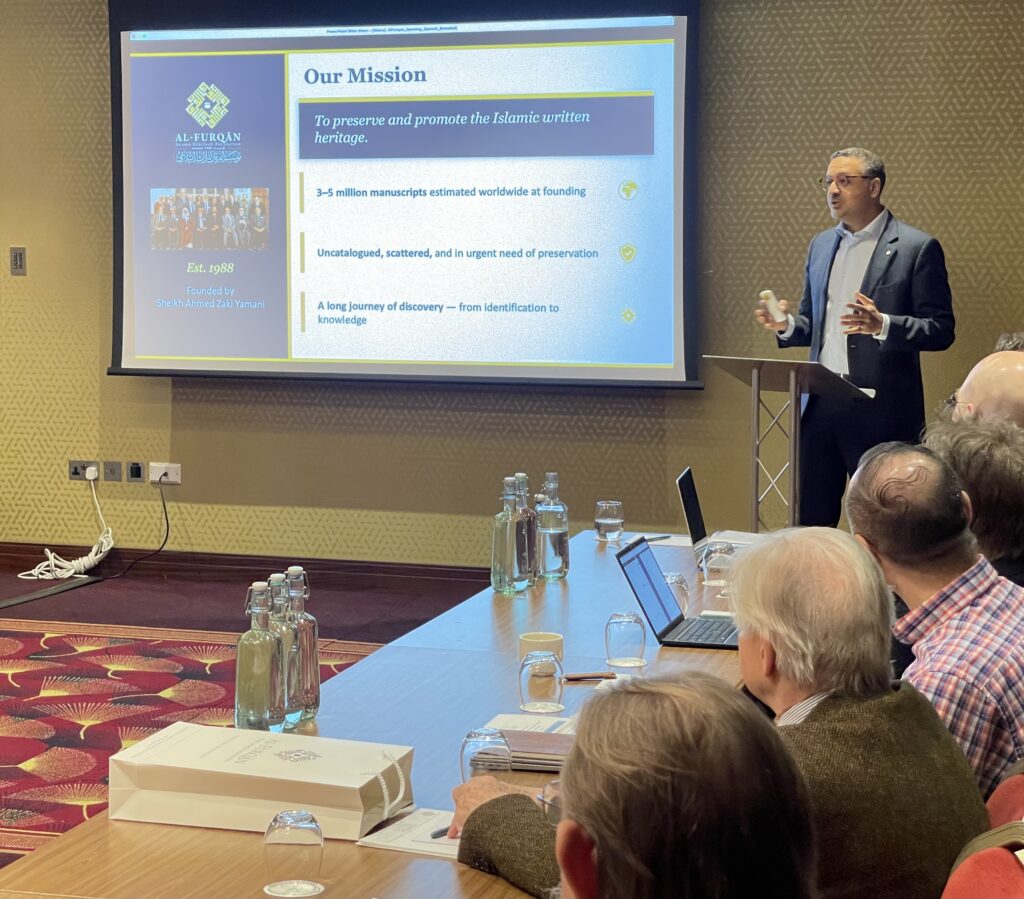
Mr. Yamani added: "And yet, we now stand at another turning point in our journey. Artificial intelligence, machine learning, advanced OCR and HTR, large language models, and Agentics are not simply accelerating research—they are reshaping it. We are moving from keyword searches to contextual analysis, from isolated records to relational knowledge networks. The question before us is no longer only how to preserve manuscripts, but how to model, interpret, and responsibly connect the knowledge they contain."
He concluded: "I am always reminded of what my father [the late Chairman and founder of Al-Furqan Foundation, Sheikh Ahmed Zaki Yamani] used to tell us, 'There is no competition in heritage work. When someone works to preserve or study a tradition, we are all stakeholders in that effort.' He believed that knowledge is not a private possession, but a shared trust. In this digital age, the tools may vary, but the responsibility remains shared, as what we build individually or together tomorrow will serve generations to come."
The floor was then opened to some of the participants who gave short talks, followed by a Q&A session.
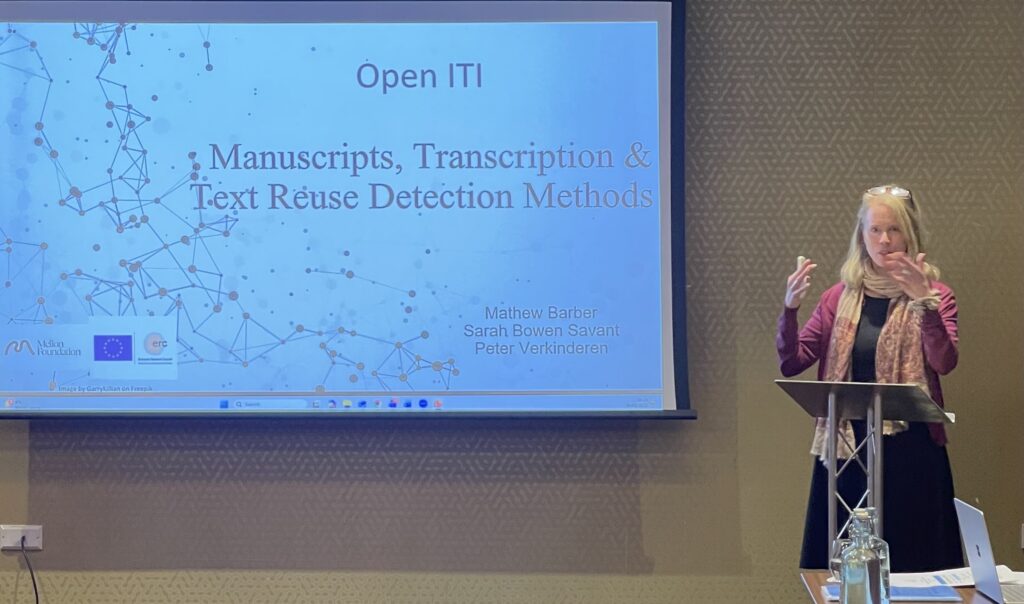
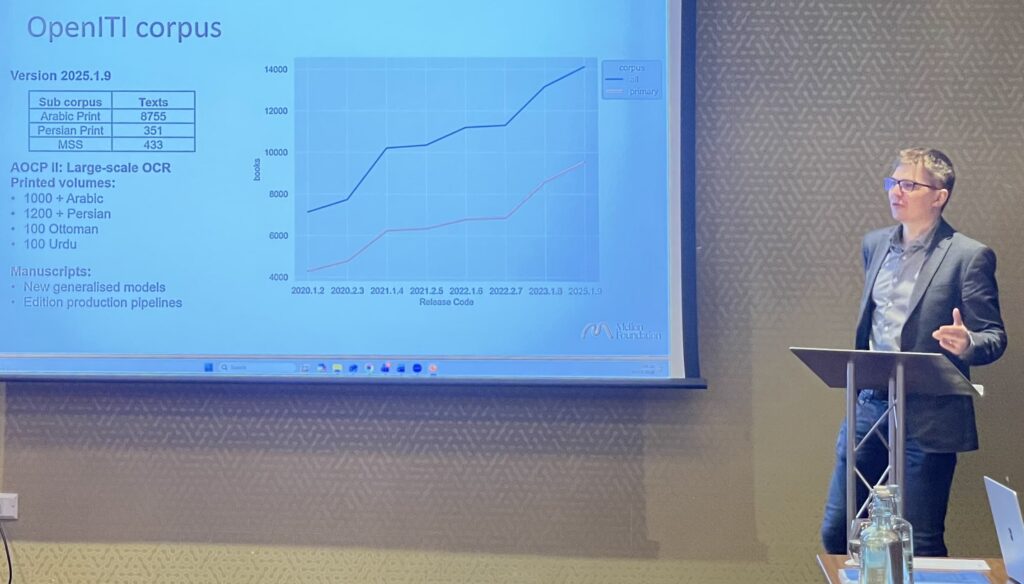
The first speakers were Sarah Bowen Savant and Mathew Barber, who gave a presentation entitled "Open ITI: Manuscripts Transcription and Text Reuse Detection Methods".
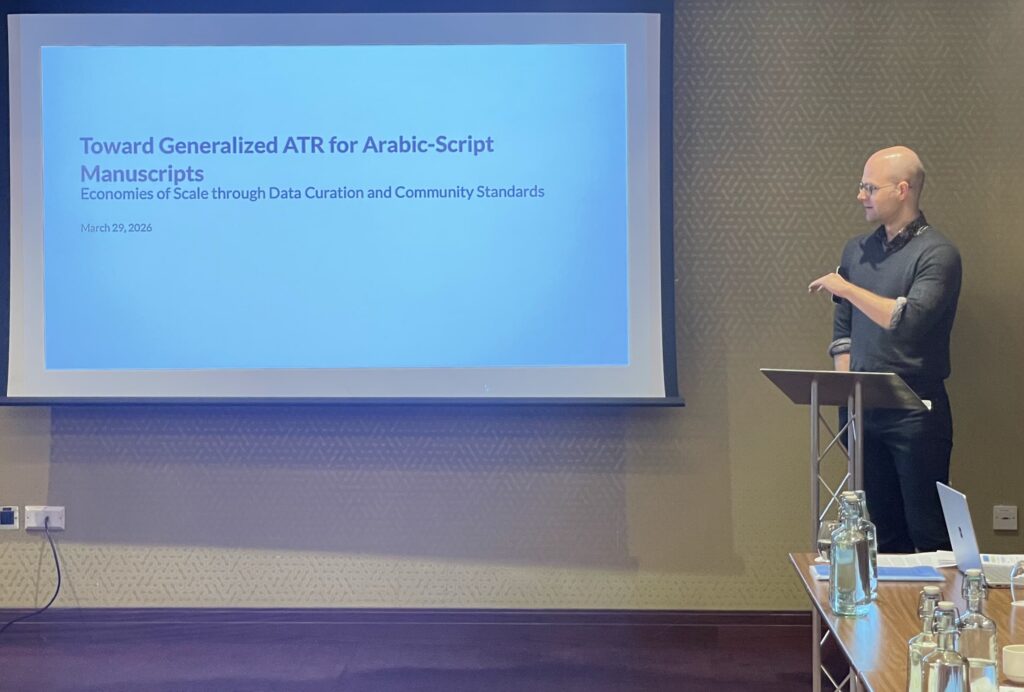
The second speaker was Benjamin Kiessling, who gave a presentation entitled "A Strategic Pathway toward Generalized ATR for Arabic-Script Material, and the Critical Interaction between AI Mechanics and Humanities Practice".
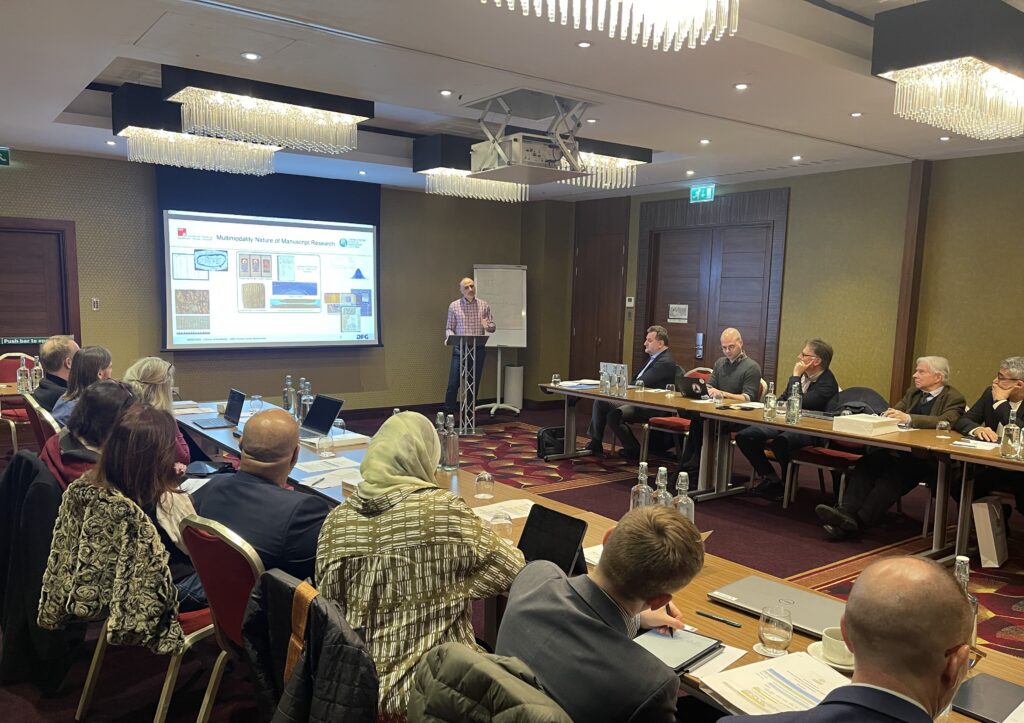
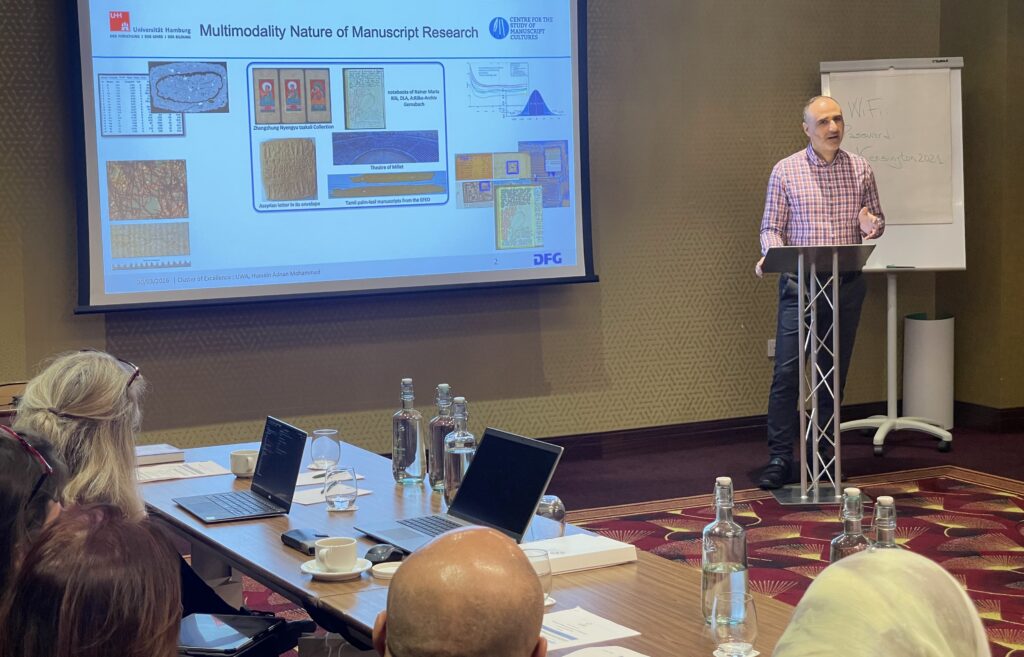
The third speaker was Hussein Mohammed, who gave a presentation entitled "Beyond Transcription: Visual Manuscript Analysis".
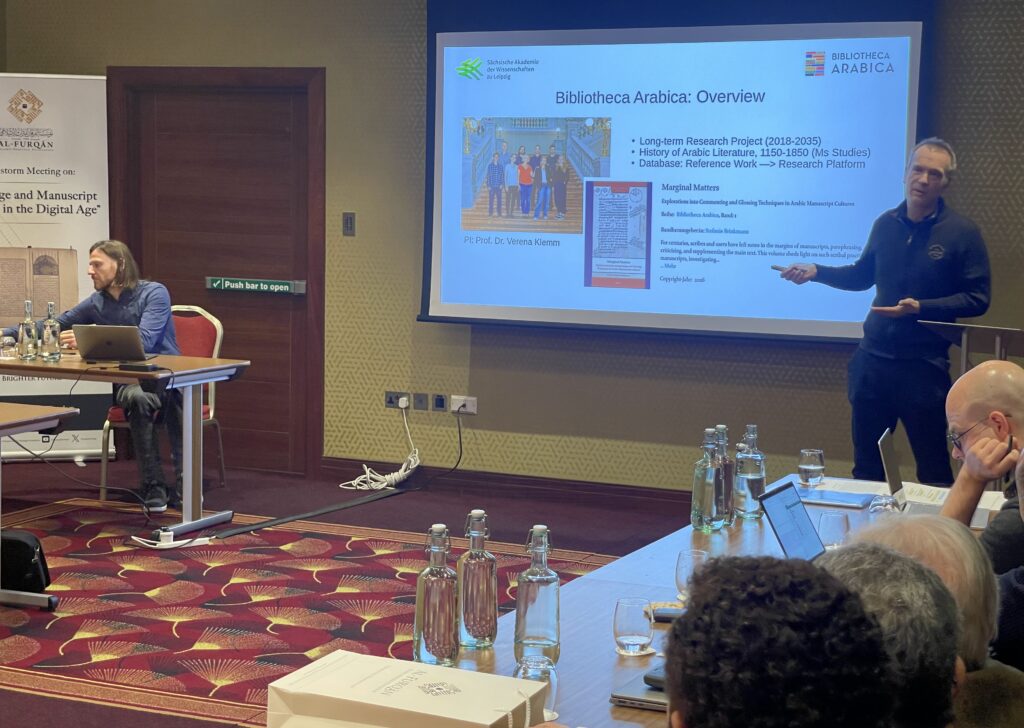
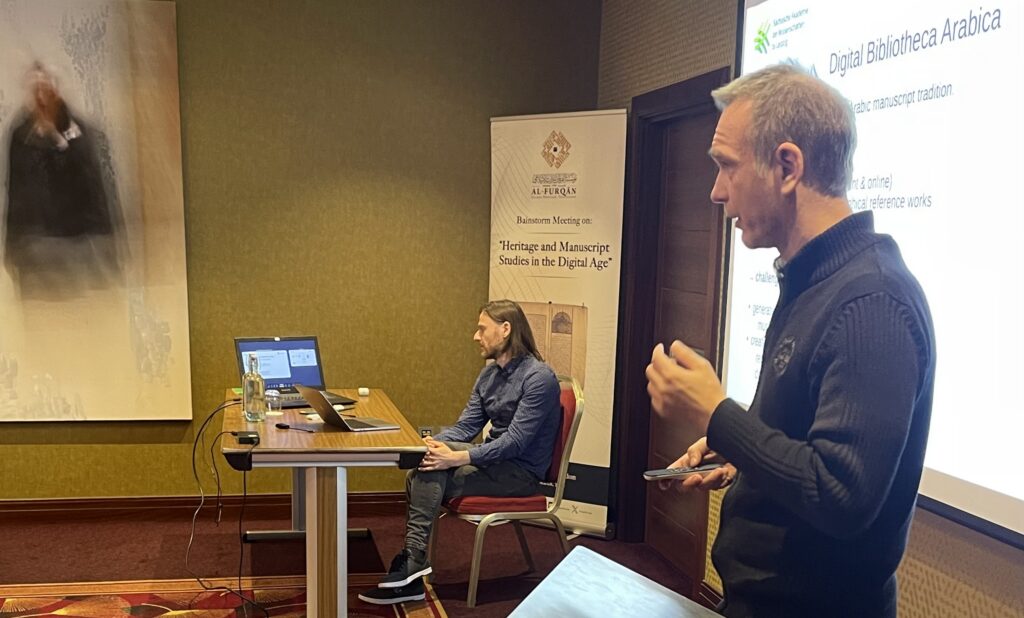
The fourth speakers were Daniel Kinitz and Martin Reckziegel, who gave a presentation entitled "Building a Knowledge Graph on Arabic Manuscript Cultures: Challenges and Limits of Automated Optimisation".
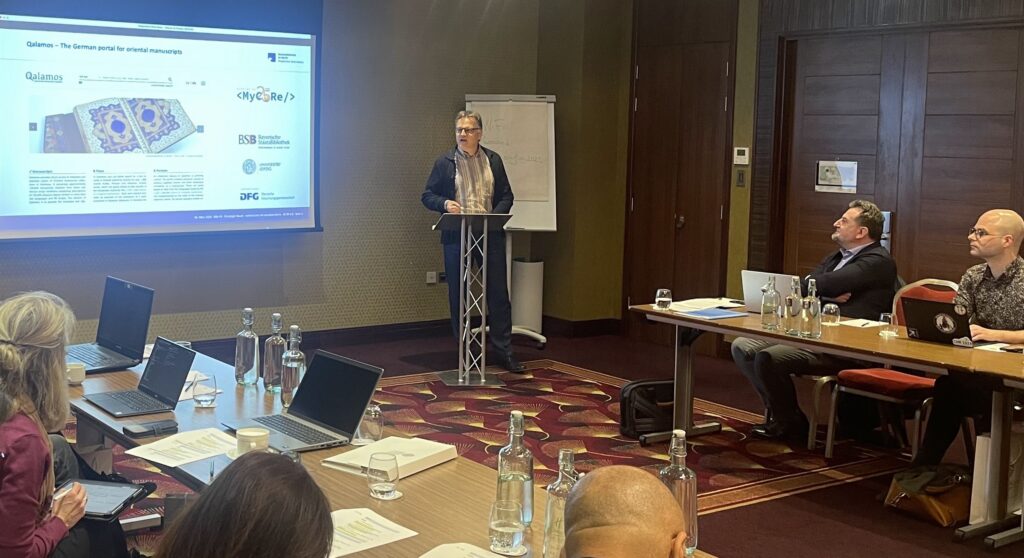
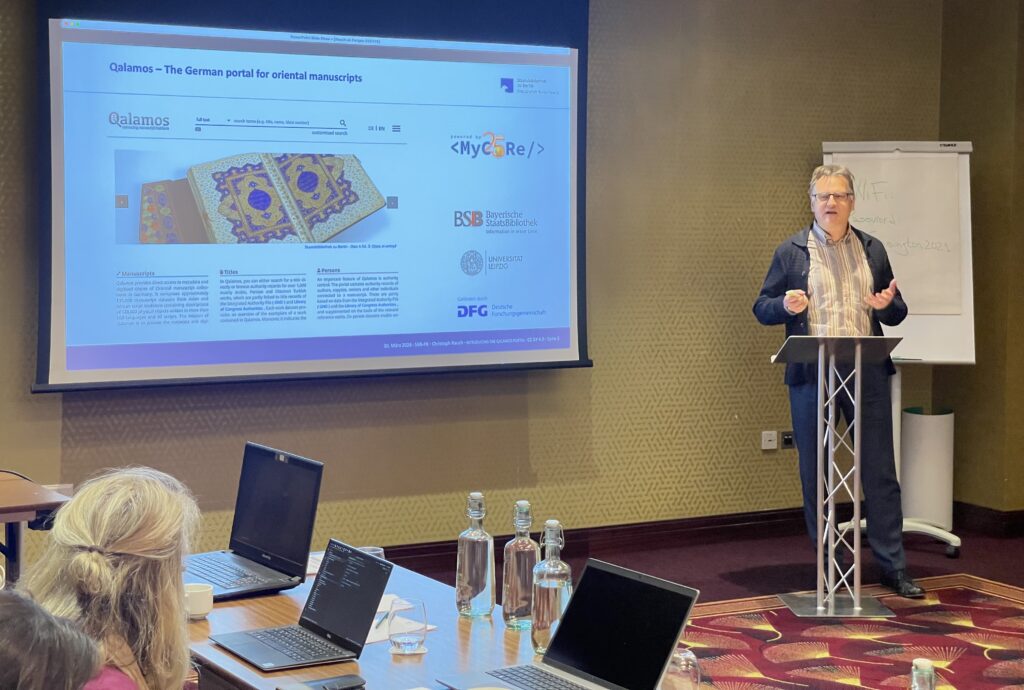
The fifth speaker was Christoph Rauch, who gave a presentation entitled "Six Years of the Qalamos Project: Experiences and New Challenges".
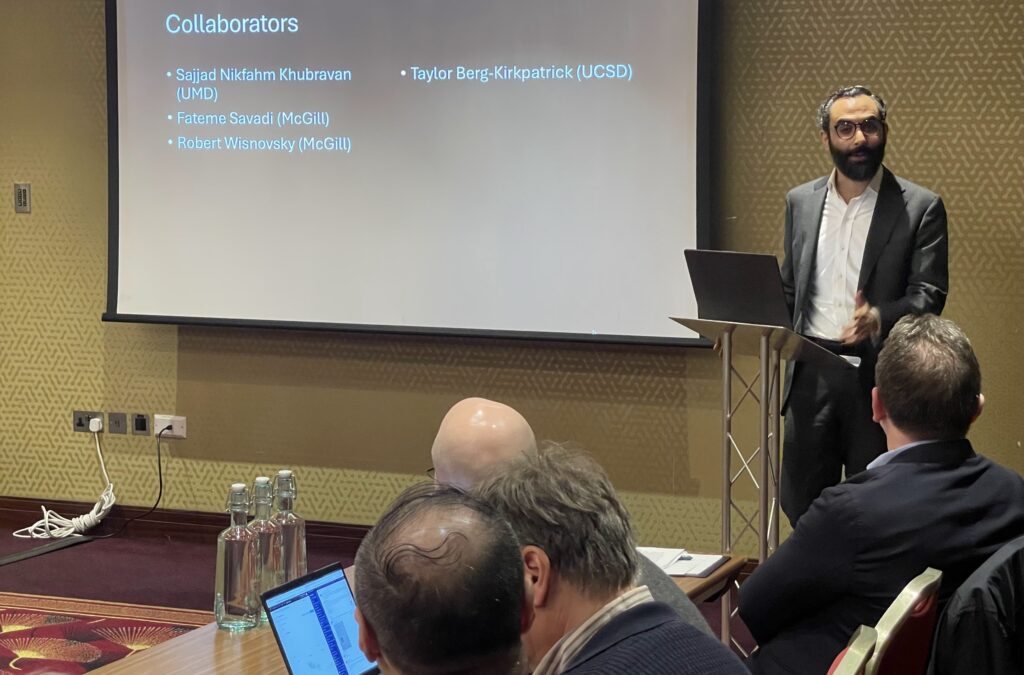
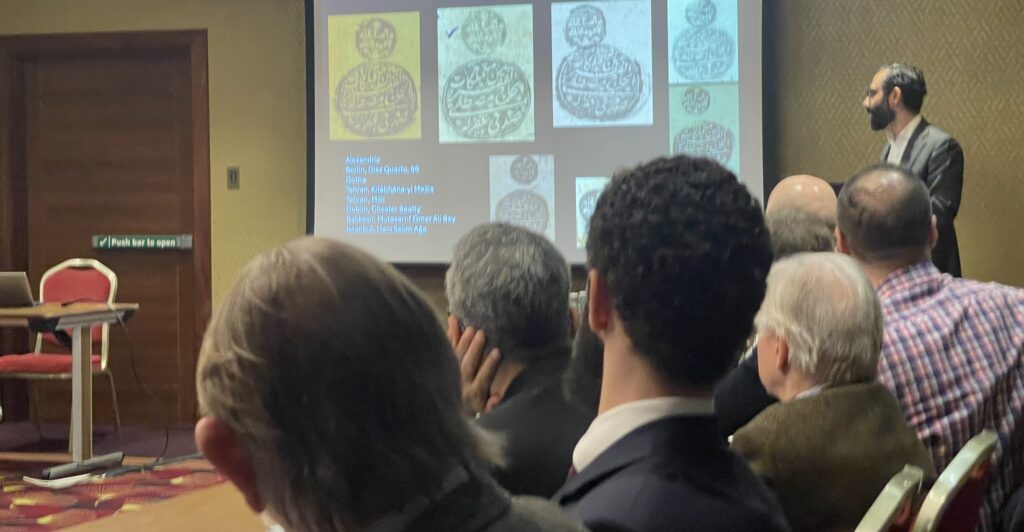
The sixth speaker was Osama Eshera, who gave a presentation entitled "AI-Assisted Detection, Analysis, and Clustering of Seal Impressions across Islamicate Manuscripts".
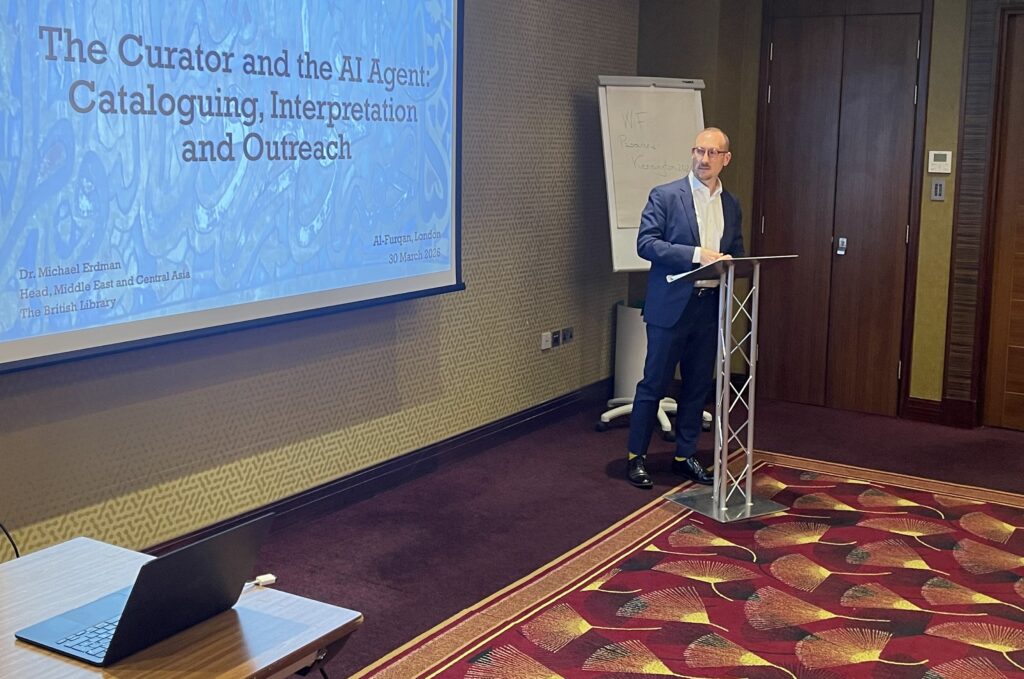
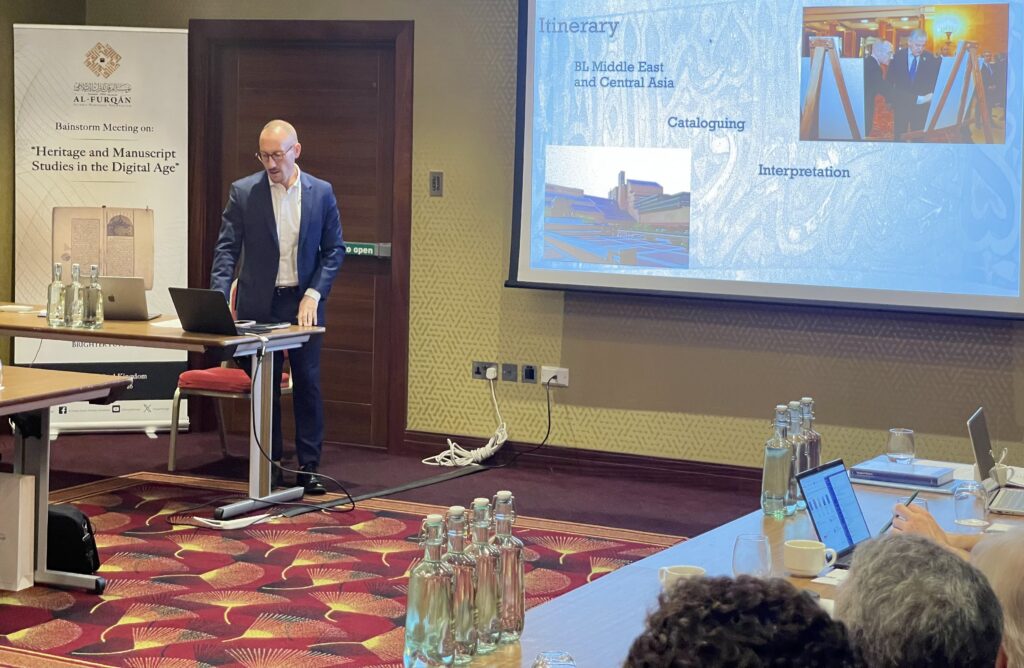
The seventh speaker was Michael Erdman, who gave a presentation entitled "In What Ways and to What Degree will AI Interact with Our Cataloguing, Digitization and Outreach Activities".
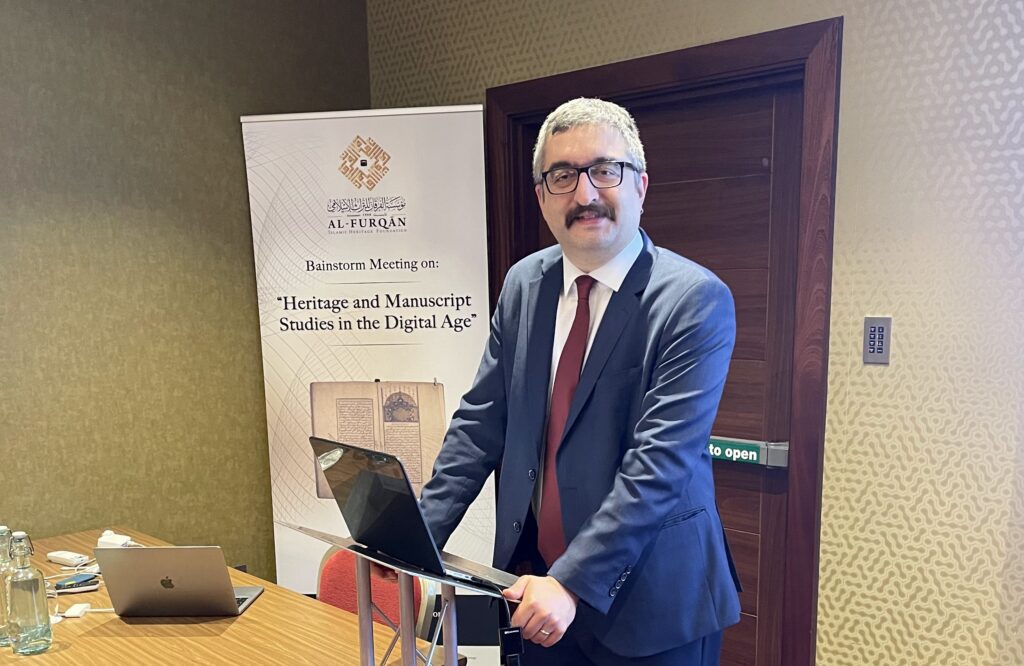
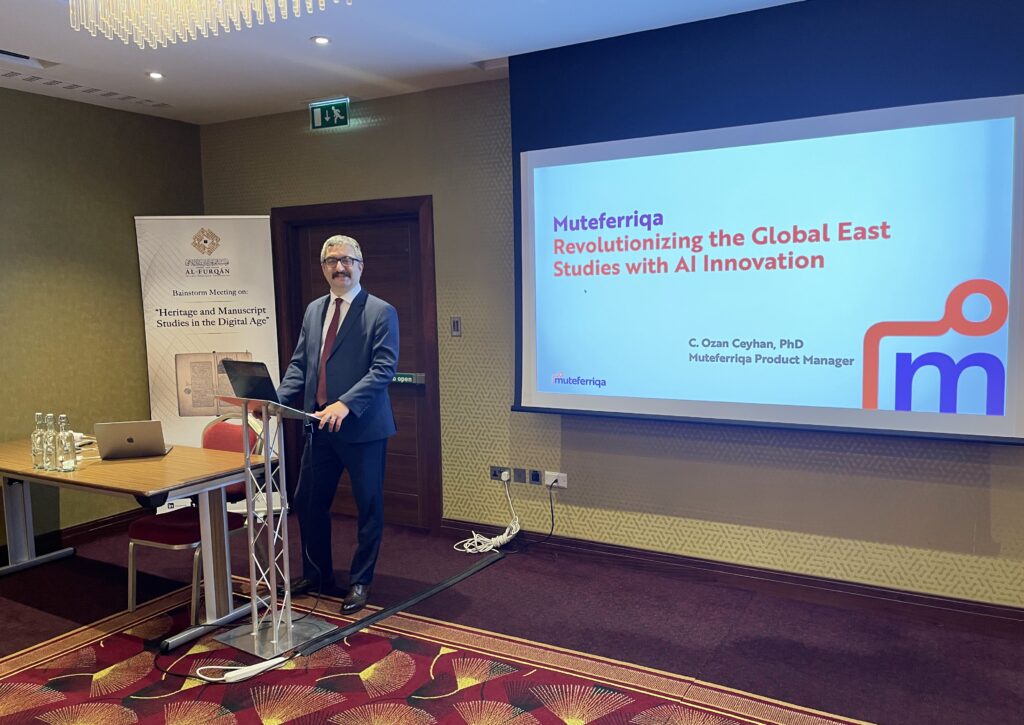
The eighth speaker was Ozan Ceyhan, who gave a presentation entitled "Muteferriqa: Revolutionizing Middle East Studies through AI Innovation".
Day 2
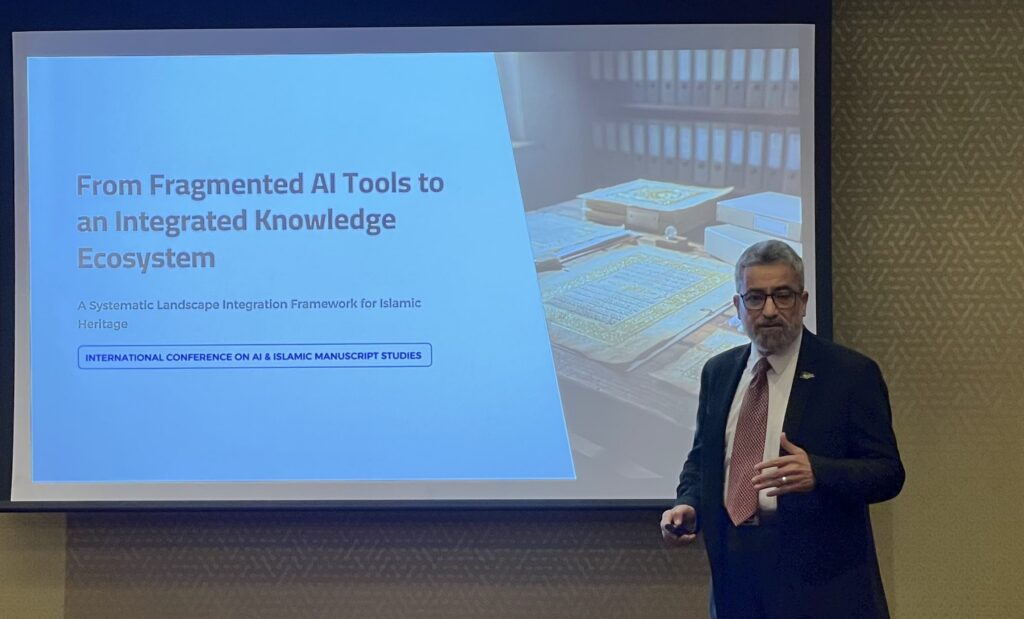
The ninth speaker was Maher Ezzat, who gave a presentation entitled "Towards an Integrated Epistemic Framework for Islamic Heritage Studies in the Age of Artificial Intelligence".
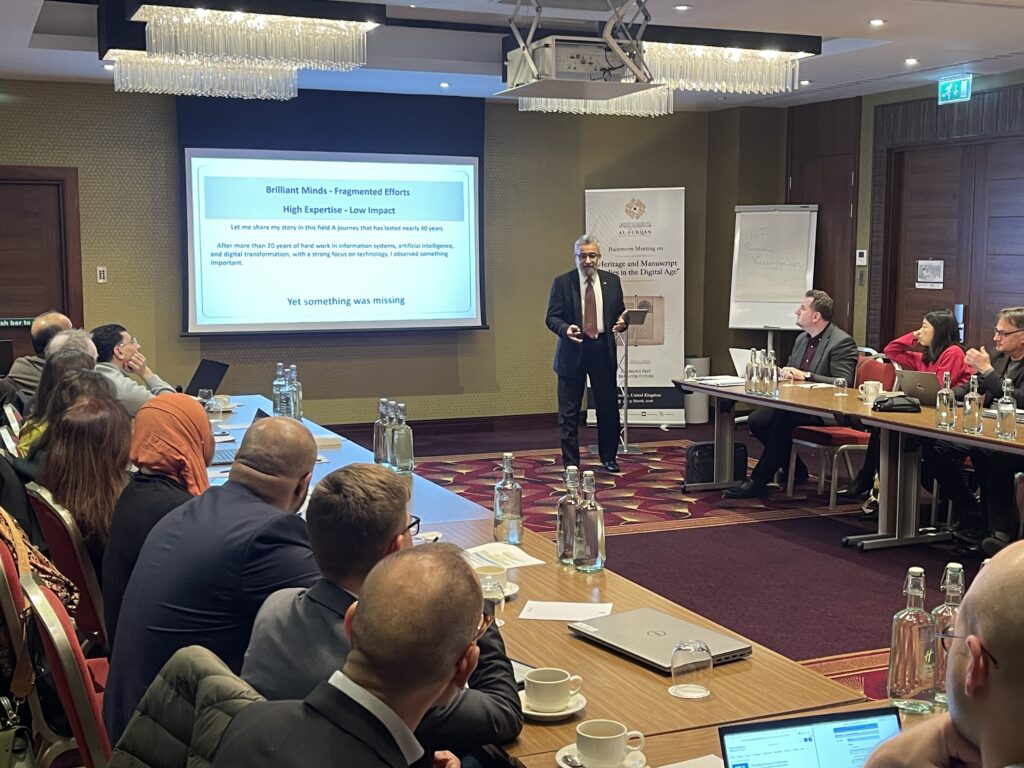
The tenth speakers were Intisar Rabb and Adnan Zulfiqar, who gave a presentation entitled "Usul.ai: Foundational AI Infrastructure for Islamic Research—Texts, Tools, Tiered Ontologies".
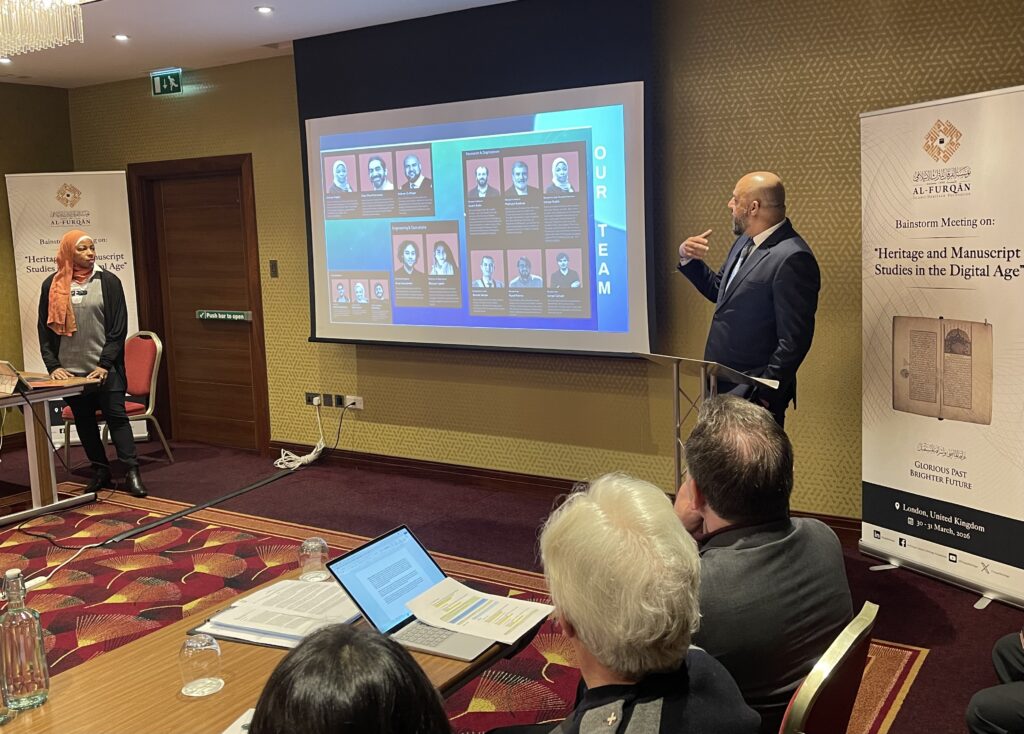
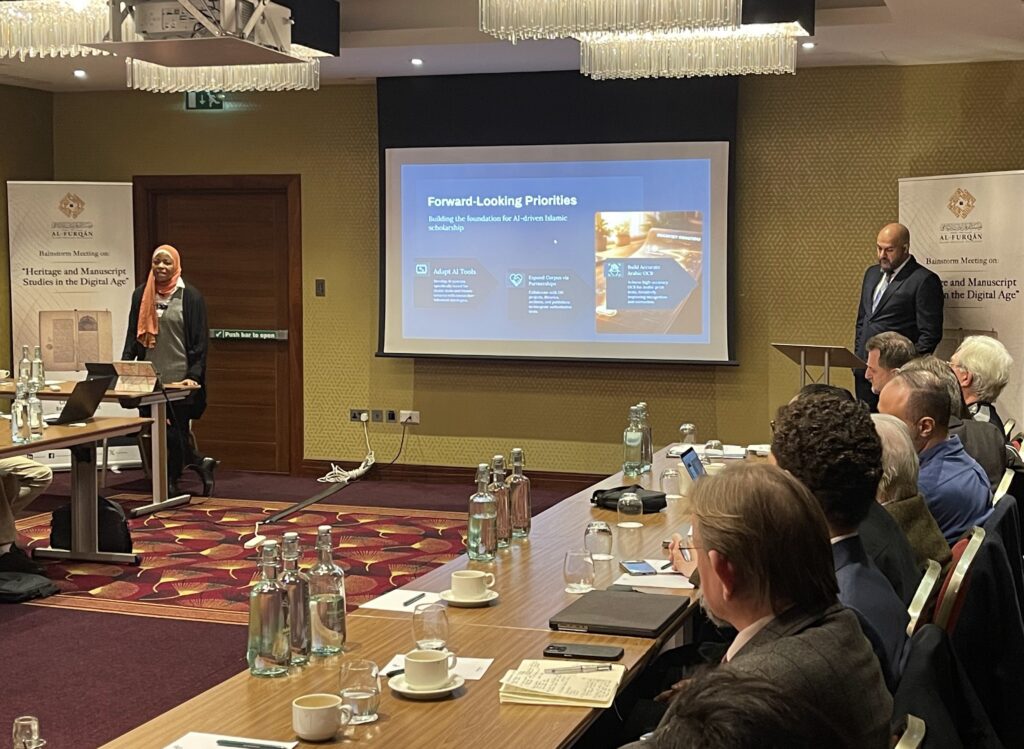
The eleventh and final speaker was Karima Benaicha, in charge of Datasets and Online Database at Al-Furqan Foundation, who gave a presentation entitled "Al-Furqan’s E-Database: Towards a Gateway to the Islamic Written Heritage".
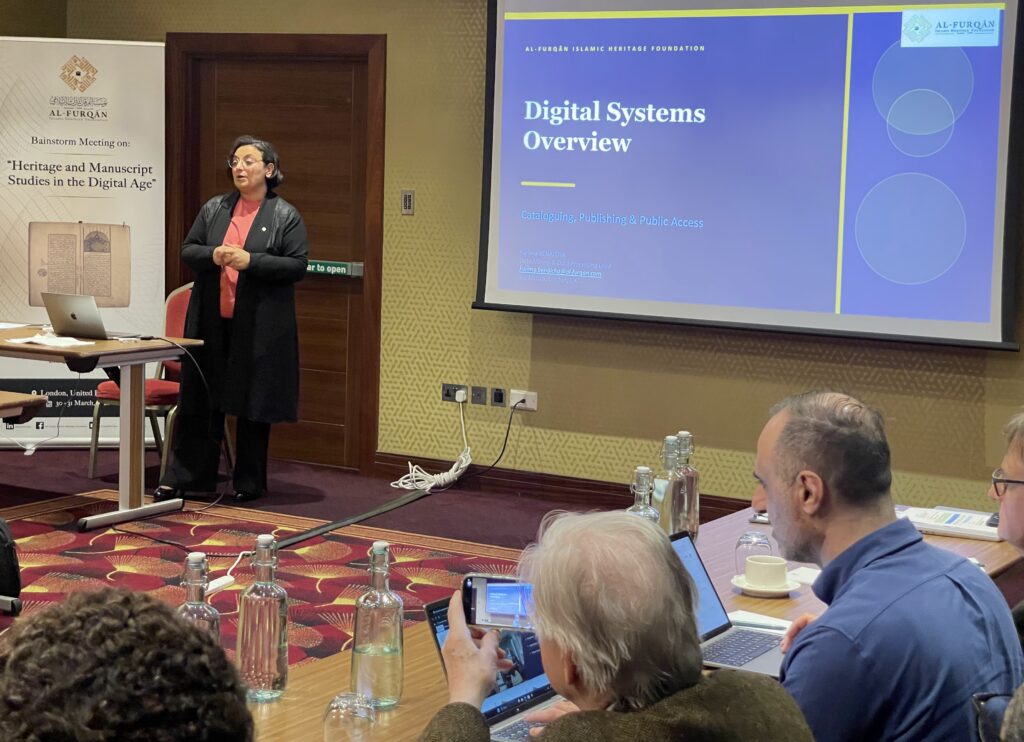
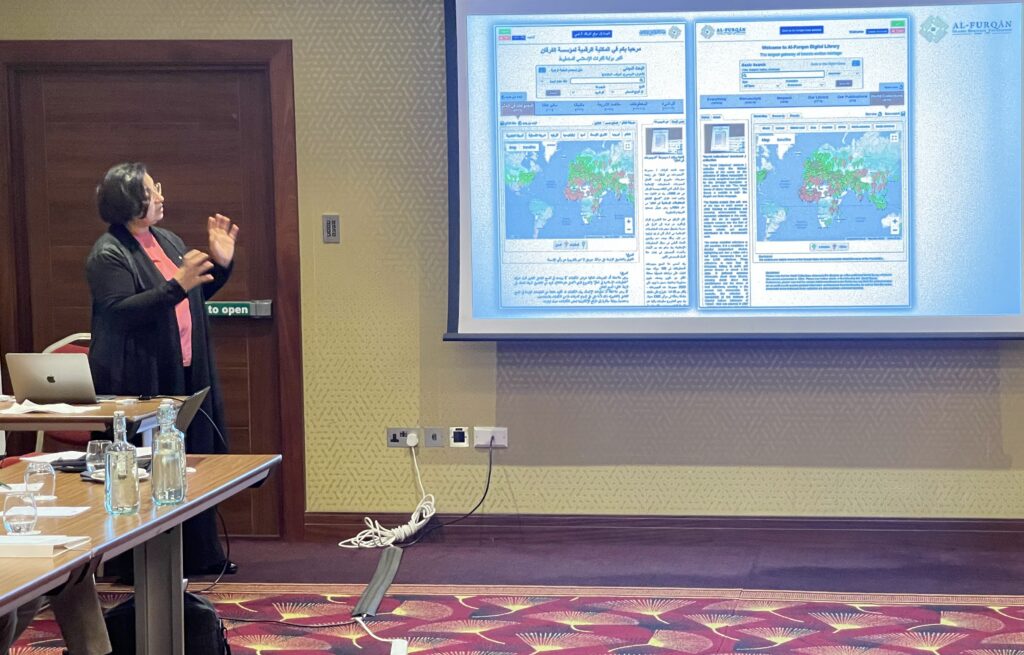
Then a group discussion was held, where all parties engaged in questions and exchanges of views. Mr. Sali Shahsivari, the Managing Director of Al-Furqan Foundation, moderated the discussion between participants. At its conclusion, he said: "we can consider this meeting as a platform which brought together the best practices in this field."
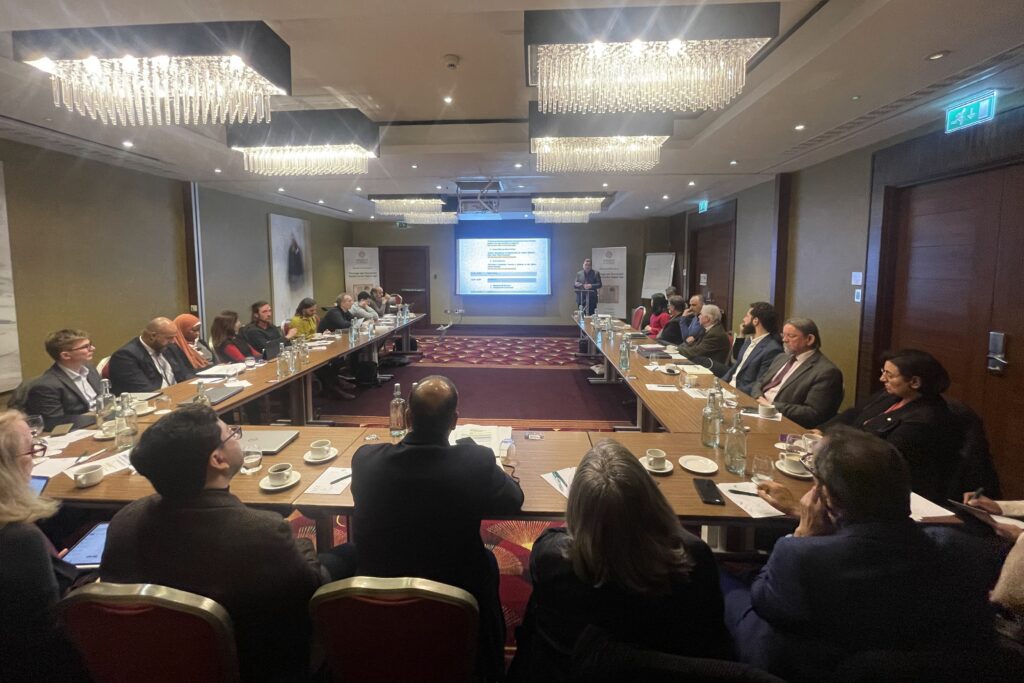
Based on the discussions and the conclusions that took place during the meeting, and, in order for this initiative and platform to continue its fruition, the following Action Plan was agreed among the participants:
1. Sharing the Contact Details of the Participants.
2. Adding - in the future - other interested members and related initiatives.
3. Establishing ways of mutual cooperation between the different initiatives in this sphere.
4. Aiming to have other similar meetings in the future, both online and in-person.
5. Discussing - in the future meetings - concrete solutions, challenges, and opportunities in this sphere.
6. Starting drafting a White Paper which would address concrete proposals and solutions in this sphere.